The Discovery of Project Marrow
The CEO’s Baby Girl: A Workplace Reverse Harem Romance (Age-Gap Billionaire Obsessions)The Discovery of Project Marrow is the central revelation that breaks Ariella Monroe’s trust in Dominic Vale and recasts their bond as an instrument of control. What had appeared to be an intoxicating, if coercive, relationship is exposed as a planned magical experiment: Ariella was not merely chosen by desire or fate, but prepared in advance as Subject A.001. The discovery joins hidden architecture, bureaucratic language, bodily evidence, and erased memory into a single indictment of the power Dominic has exercised over her.
Causes and Background
The revelation arrives after Ariella has become deeply entangled with Dominic. She is found resting in his black silk shirt after an intense night, feeling physically claimed and increasingly transformed by the darkness of their relationship. The scene’s intimacy is immediately interrupted by a message from an unknown number. Its warning directs her to the vault beneath the library and tells her to ask Luca about Project Marrow, turning private suspicion into an urgent investigation.
The warning also confirms that Dominic’s binding has another possible meaning. Rather than having bound Ariella solely to protect her, he may have used the bond to control what he had already damaged. This suspicion gains force from Jenna’s account of the previous girl: an attractive young intern who entered Dominic’s world believing she had found the job of her dreams, only to be taken and twisted into his fantasy. The earlier woman’s fate is initially conveyed through frightened oral testimony, but Project Marrow supplies the colder institutional record behind that disappearance.
Ariella’s earlier experiences have already prepared the ground for the revelation. From her first arrival at Vale Enterprises, the building and its authority have seemed oppressive; she feels that she should not have worn the dress that drew attention to her body, and Dominic’s office appears as a vast cathedral of glass and steel above the city. In that setting, his control is expressed through rules, bodily scrutiny, and discipline. His first lesson explicitly treats her unauthorized arousal as a breach to be punished. The vault later reveals that these personal rituals are connected to a larger system rather than being isolated expressions of appetite.
What Ariella Finds
Following the message, Ariella crosses the back wall of the library and discovers that a vault exists where she had never known there was one. Her fingers find a previously invisible seam in the stone. When she touches a symbol consisting of a vertical slash through a crescent moon, the wall trembles and opens, releasing cold air from the concealed chamber. The entrance is therefore not merely a door to a room but a physical manifestation of knowledge withheld from her until suspicion gives her the means to reach it.
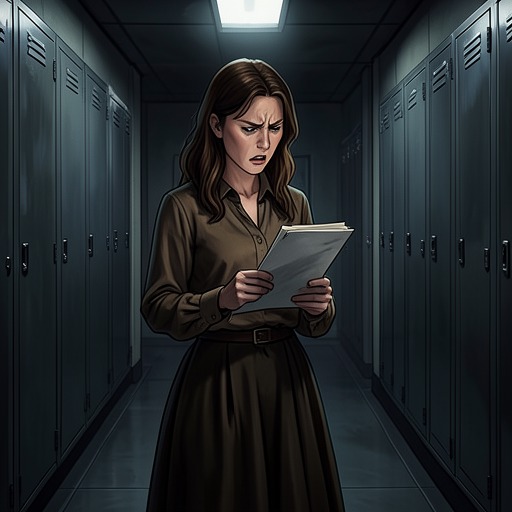
The chamber is small and circular, lined with shelves holding scrolls, files, and strange black orbs pulsing faintly inside glass cages. At its center stands a pedestal bearing a single thick file. Its label is stark: “PROJECT MARROW: SUBJECT A.001.” The formal designation strips Ariella’s identity down to a number and a category, placing her within the language of experimentation before she has fully understood that she is being studied.
Inside the file are grainy, aged photographs of a young woman bound in ritual and marked in the same manner as Ariella. The woman’s face is pale and tear-streaked, while her eyes are empty. The images establish a visual continuity between Ariella and an earlier subject, making the previous girl’s disappearance more than a rumor. The archive preserves her body as evidence even though it does not preserve her as a living person with a name, voice, or future.
The report accompanying the photographs is dry and clinical. It states that the subject displays accelerated magical adaptation when bonded with the Primary, that intimacy significantly amplifies latent channels, and that emotional attachment is unnecessary for the bond to function. It then records that the subject was terminated after attempting a breach, with secondary candidates pending. The language converts coercion, suffering, and death into procedural outcomes. It also destroys the romantic assumption that emotional attachment is the foundation of the bond: according to the report, intimacy works as a mechanism whether or not love exists.
The file contains more than records of past victims. Ariella finds arcane equations, diagrams, and spells with her own name written in fresh ink. The evidence therefore reaches backward in time. Her name was present in the project before she arrived, before she met Dominic, and before the relationship could plausibly have developed through spontaneous attraction. The most devastating conclusion is that Dominic chose her long ago not because he felt drawn to her, but because he planned her.
Consequences for the Bond
The discovery changes the meaning of nearly every earlier encounter between Ariella and Dominic. His office, his rules, his disciplinary language, and the physical intensity of their bond can no longer be read only as the private terms of a dangerous erotic arrangement. They are also components of a design that seeks accelerated magical adaptation. The body that Ariella experiences as a site of pleasure has simultaneously been treated by Dominic’s project as a conduit for power.
The report’s treatment of the earlier subject creates a direct threat to Ariella’s future. The previous candidate was terminated after trying to breach the system, and the phrase “Secondary candidates pending” suggests that the project is not an isolated failure. Ariella is one position in a continuing sequence. Her individuality is precisely what the file attempts to erase: she is reduced to Subject A.001 even as the fresh writing of her name proves that someone anticipated her arrival.
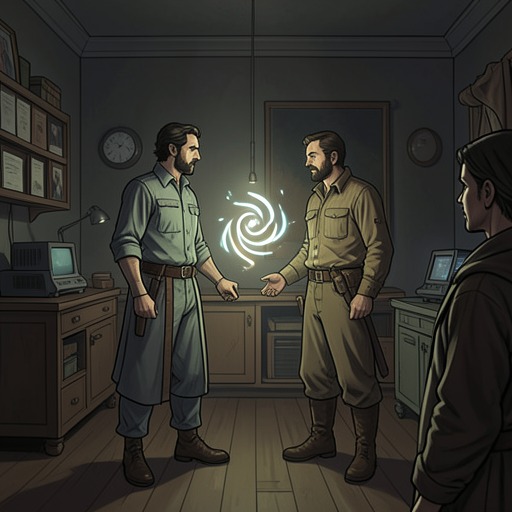
Ariella responds not by accepting the archive as an explanation but by confronting Dominic with it. She strikes the file against his chest and demands help in breaking the bond. Dominic warns that breaking it would mean losing protection and connection, forgetting the feel of his power inside her, and no longer craving or needing him. His warning reveals the bond’s double nature: it has become both a source of dependence and a structure of captivity. Ariella must consider not only whether Dominic deceived her, but also whether the magical and bodily consequences of separation have made freedom costly.
Memory, Erasure, and the Archive
The vault functions as a counter-memory to the stories told by the people around Ariella. Jenna knows that a previous girl was taken, but her account is incomplete and fearful. Isadora later claims that she and Dominic were once bonded through an ancient, powerful, unbreakable connection until he broke it, while Dominic has represented that relationship as over. These competing accounts establish a world in which the past is controlled through selective disclosure. Project Marrow is the first material record that gives Ariella something more durable than another person’s version of events.
Yet the archive is not neutral. Its photographs preserve the prior subject as an anonymous, immobilized body; its report uses clinical classifications; and its equations treat Ariella’s name as a future experimental variable. The file reveals truth while also reproducing the authority of those who created it. It tells Ariella what was done, but it does not restore the earlier woman’s voice or explain the full circumstances of her termination. The archive consequently becomes both a weapon against Dominic and evidence of the system’s power to define what will count as history.
That struggle over memory becomes still more severe when Ariella’s magic later implodes and she collapses unconscious, her power gone and her memory erased. The Project Marrow discovery thus stands at the center of a broader conflict over whether Ariella can retain an account of herself. The file gives her a past that Dominic tried to conceal; the later loss of memory threatens to remove even the knowledge she gained from it. Her identity is contested not only through physical control but through the preservation, deletion, and rewriting of experience.
Narrative Significance
As a plot event, the discovery is the story’s decisive shift from seduction to investigation and from submission to attempted resistance. Ariella enters the hidden chamber because an anonymous message redirects her attention from immediate pleasure to concealed history. The narrative then moves from the sensory aftermath of her relationship into a sequence of objects—seam, symbol, wall, shelves, pedestal, photographs, report, equations—that gradually converts suspicion into proof.
The revelation also reverses the apparent direction of choice. Dominic seems to select Ariella in the present, but the file demonstrates that he selected her before the relationship began. His authority therefore extends backward, creating the impression that her fate was already arranged. Against that design, Ariella’s demand to break the bond becomes her first clearly documented attempt to reclaim agency from the experiment’s terms.
Project Marrow remains consequential even as the story later moves toward altered power, memory loss, and a new future. Ariella eventually reveals that she is pregnant, and the silence surrounding that declaration is described as sacred, but the pregnancy cannot erase the archive’s implications. The discovery has established that intimacy, magical power, bodily autonomy, and reproduction exist within a system Dominic has attempted to plan. Its lasting significance lies in making hidden control visible: once Ariella has seen the file, neither the romance nor the bond can return to its earlier meaning.