Event 1
Ariella Monroe’s Interview and Recruitment

[Ariella Monroe’s Interview and Recruitment](entity:event-recall-event-ariella-monroe-s-interv-bd7a27301846) is the decisive threshold through which [Ariella Monroe](entity:character-recall-character-ariella-monroe-2dccb1423027) enters [Dominic Vale](entity:character-recall-character-dominic-vale-83633342c6bb)’s world. What begins at [Vale Enterprises](entity:location-recall-location-vale-enterprises-648417af470a) as a late arrival for an assistant’s position becomes an immediate selection, a private ownership arrangement, and the first visible step toward the magical and relational transformations that later redefine Ariella’s identity. The event matters because Dominic does not merely hire her: he identifies her as someone suited to submission, offers her a role that joins labor with possession, and places a hidden symbol of that new status against her body.
## Arrival at Vale Enterprises
The interview opens with Ariella Monroe passing through the revolving glass doors of Vale Enterprises, an entrance rendered as a seal closing behind her. She steps onto the obsidian marble floor in a dress she already suspects was too revealing for an ordinary interview. Its hem rises above her knees and its silk follows her figure closely, while her nervousness makes clear that she expects the day to be unusual even before she meets Dominic Vale. The setting combines corporate wealth with an intimation of something older and darker, presenting the company as both a place of employment and a threshold into a hidden order.
Her lateness immediately places her at a disadvantage. A receptionist with ice-blonde hair and cold eyes studies her and tells her that she is late, making the first social judgment of the encounter before Ariella reaches the office. The rebuke sharpens the atmosphere of scrutiny: Ariella is not entering a neutral professional process, but a space in which her appearance, timing, and reactions are being observed. The interview therefore begins with a conventional workplace vulnerability that will soon be converted into a much more intimate form of assessment.
## Meeting Dominic Vale
An escort takes Ariella upward in silence, and the charged atmosphere of the ascent anticipates the change in scale between the public lobby and Dominic Vale’s private domain. The office is vast and stark, constructed like a cathedral of glass and steel above the city. Floor-to-ceiling windows display the skyline, while a black marble desk veined with gold gives the room a ceremonial center. Behind it sits Dominic Vale, whose tailored midnight-black suit and commanding stillness make him seem less like an ordinary executive than the force governing the space.
Dominic initially concentrates on a document, tracing its page with long, elegant fingers before looking up. His attention is not casual. He circles Ariella and studies her physically and psychologically, turning the interview into an examination of susceptibility, history, and desire. He tells her that he has read her file and identifies her as having graduated at the top of her class, minored in psychology, and become fluent in two languages. He also emphasizes that she has no family ties and no obligations. Those details frame Ariella as highly capable but socially unanchored, someone whose independence can be treated by Dominic as availability.
His question about why she is really there shifts the conversation away from qualifications and toward concealed motives. The interview’s governing logic becomes clear: Dominic is interested not only in what Ariella can do, but in what she may be willing to surrender. The office’s corporate grandeur and his scrutiny make professional evaluation inseparable from a test of personal response.
## The Recruitment Offer
Dominic reveals that he instructed his staff to give Ariella the job before she had even entered the office. The decision precedes the interview, so the apparent hiring process functions less as a competition than as a staged confirmation of a choice already made. When Ariella asks why, Dominic explains that he recognizes a submissive when he sees one. His assessment reduces the distance between executive judgment and erotic classification: the quality he claims to perceive in her is not an employment skill but a disposition toward obedience.
The offer itself contains two positions at once. Dominic proposes that Ariella become his assistant and also his possession, initially in private rather than publicly. He defines the arrangement spatially: inside the office and behind its glass walls, crossing the threshold will mean belonging to him. This division between public acknowledgment and private ownership establishes the relationship’s early structure. Ariella is recruited into a workplace whose professional boundary is simultaneously used as the boundary of a concealed intimate contract.
Ariella asks what the proposal means, although the narration presents her trembling as anticipation rather than fear. Dominic interprets her bodily reaction as an answer before she articulates one, telling her that she does not need to say it because her body has already confessed. Her consent is therefore approached through a tension between spoken choice and his reading of involuntary response. When she gives the smallest motion of assent, Dominic smiles with satisfaction and possession, declares that she starts immediately, and turns back to his desk as though the decision has completed the hiring.
## The Hidden Collar and Immediate Submission
The recruitment becomes concrete when Dominic orders a collar to be delivered to Ariella’s apartment that evening. He instructs her to wear it to work the next day under her clothes, where only he will know it is present. The object turns an invisible private arrangement into a concealed bodily sign. It is simultaneously a badge of belonging, an instrument of secrecy, and a reminder that the workplace has acquired a second set of rules beneath its professional surface.
The later discipline scene clarifies the standards Dominic attaches to this new status. He praises Ariella for following the dress code, wearing the required skirt, remaining without panties, and keeping the collar tight, while calling her his girl. He then frames her arousal as unauthorized and says that Daddy is about to give her a first lesson in discipline because she entered already wet for him. The event’s employment language has thus expanded into a system of surveillance and punishment in which clothing, bodily response, and permission are regulated as signs of obedience.
Dominic’s conduct also establishes the asymmetry that defines the beginning of their relationship. He chooses Ariella before the interview, names her disposition, sets the terms of possession, prescribes the hidden collar, and interprets her reactions. Ariella nevertheless participates through compliance and an affirmative gesture, making the encounter neither a simple coercive capture nor an ordinary romantic meeting. Its dramatic tension comes from the unstable overlap of selection and consent, professional opportunity and erotic surrender, and Ariella’s conscious decision with Dominic’s power to define what that decision means.
## From Employment Threshold to Magical Destiny
Although the interview is initially framed through corporate architecture and hiring language, later developments reveal that it inaugurates a much larger transformation. Dominic eventually kneels before Ariella and tells her that their connection is not merely sexual but involves devotion, trust, and magic. He retrieves a book bound in crimson leather, leads her into a circular sigil burned into the floor, and directs her to step inside. These later ritual actions echo the first interview’s threshold imagery: entering Dominic’s office is the beginning of Ariella’s movement into spaces where ordinary social categories no longer hold.
The trajectory also contains a decisive reversal of the hierarchy first established at Vale Enterprises. Ariella later insists that the power is hers, declaring that it belongs to her, and the magic responds within her. After she rejects the identities imposed by both Dominic and [Isadora Vale](entity:character-recall-character-isadora-vale-74c14a709d74), Dominic drops to one knee, not in worship but in surrender. The woman selected as a submissive at the beginning therefore becomes capable of demanding recognition on altered terms. The original recruitment remains important precisely because later equality and autonomy emerge in contrast with its language of possession.
The relationship eventually receives a ceremonial redefinition. There is no altar, priest, or guest at the ceremony, yet Ariella and Dominic join their blood, and the sigils in the stones flare white, gold, and deep red. The private hiring encounter, which began with a collar hidden beneath work clothes, is retrospectively connected to a bond made visible through ritual and mutual participation. Ariella’s later pregnancy revelation further extends the consequences of the initial meeting: when she tells Dominic that she is pregnant, the silence is described as sacred, and his exhalation suggests the emotional weight of the future that has grown from their first threshold crossing.
## Narrative Significance
As an event, Ariella Monroe’s Interview and Recruitment compresses the book’s central conflicts into one encounter. It introduces Ariella as academically accomplished yet marked by the absence of family ties and obligations; it presents Dominic as an executive whose authority operates through preselection, psychological reading, and possessive command; and it converts a corporate interview into a private initiation. The event also foreshadows later warnings about what happened to the last girl, showing that Ariella’s recruitment occurs within a dangerous history rather than in isolation.
Its structure resembles a threshold rite more than a realistic hiring process. Ariella arrives from the public world, is escorted upward into a rarefied private chamber, is evaluated, accepts a new identity, and receives a concealed emblem to carry back into ordinary work. Yet the rite is deliberately unstable because the identity granted to her at first is not the identity she ultimately keeps. The submissive Dominic thinks he has recognized becomes the woman who later claims that the power is hers, survives competing forms of possession, and participates in a blood-bound ceremony on terms that no longer reproduce the original hierarchy.
The interview therefore functions as both recruitment and foreshadowing. It creates the initial bond between Ariella Monroe and Dominic Vale, supplies the first rules of their private relationship, and establishes the book’s recurring question of whether submission can remain meaningful when one party controls the terms of recognition. Every later transformation—magical awakening, resistance, surrender, reversal, ceremony, and pregnancy—draws significance from the fact that Ariella’s story began with a job she had already been chosen to receive and a collar she was asked to conceal beneath her professional clothes.
Event 2
The Library Initiation

[The Library Initiation](entity:event-recall-event-the-library-initiation-70c2d5d4d018) is the decisive threshold at which [Ariella Monroe](entity:character-recall-character-ariella-monroe-2dccb1423027) enters [Dominic Vale](entity:character-recall-character-dominic-vale-83633342c6bb)’s concealed magical world and is formally recognized by it. What first appears to be a private encounter in [Dominic Vale Penthouse](entity:location-recall-location-dominic-vale-711295853847) becomes an initiation into an older order of power: the library is not merely a room filled with books, but a sacred and responsive space that accepts Ariella after she inscribes her name in a [Crimson Leather Book](entity:object-recall-object-crimson-leather-book-06716b122a59).
## Causes and Background
The initiation follows Ariella’s earlier arrival at [Vale Enterprises](entity:location-recall-location-vale-enterprises-648417af470a), where the atmosphere already suggested that Dominic’s authority exceeded ordinary corporate power. She had entered the building wearing a dress she knew was unusually revealing, sensing that the day would not be ordinary, and was brought upward toward Dominic’s office, a vast glass-and-steel space suspended over the city. That office establishes the public mask of his power: wealth, architecture, status, and control. The library initiation exposes what lies beneath it.
The immediate path to the library is opened by the elevator. Instead of returning Ariella to the familiar modern spaces of Dominic Vale Penthouse, it delivers her to a low-lit, golden environment whose atmosphere is shaped by old books, leather, silence, and an explicitly primal darkness. The transition is therefore spatial as well as narrative. Ariella leaves the recognizable world of business and enters a place governed by unfamiliar rules, where the silence is described as thick and sacred rather than merely quiet.
## Entry into the Hidden Library
The entrance itself marks the separation between the ordinary and the occult. Double doors of ancient wood stand ajar, carved with symbols Ariella cannot read and resembling a forgotten language. Their gothic design distinguishes the space from the corporate modernity associated with Dominic’s public identity, while the tingling air and Ariella’s prickling skin establish that the building is not inert scenery. The architecture behaves like a boundary that must be crossed, and the library beyond it is presented as a place outside the familiar world.
Dominic explains that his inheritance is not simply financial. He was born into a legacy of power older than money, language, and even the city itself. His claim places the library within a lineage rather than treating it as a private collection assembled through wealth. He also tells Ariella that he owns truths, secrets, and boundaries invisible to most people. The revelation changes the meaning of his earlier authority: the CEO who appeared to control a company is also the custodian of hidden knowledge and supernatural limits.
## The Necklace and the Act of Naming
The [Onyx Pendant](entity:object-recall-object-onyx-pendant-32d1d56c7bfd) Ariella wears becomes central to the initiation. Dominic identifies it as more than a mark, calling it a key, and tells her that wearing it gives her a connection to the library and its truths. The pendant thus functions simultaneously as an emblem of her relationship with Dominic and as an instrument of access. Its meaning expands from personal possession into magical authorization.
The initiation then takes the form of a deliberate writing ritual. Dominic leads Ariella to a heavy leather chair, sits her down, and kneels before her, a reversal that complicates his otherwise predatory and kinglike presentation. He frames what is occurring as more than sex, defining it through devotion, trust, and magic. He retrieves the Crimson Leather Book, opens it to a blank page, and instructs Ariella to write her name. The blankness makes the act prospective: the page contains no prior declaration, and Ariella must create the sign by which she will be recognized.
When she writes “Ariella Monroe,” the ink shimmers silver and sinks into the page like water. The response is immediate and physical. Her skin tingles, the air shifts, books rustle behind her, the fire roars, and the pendant at her throat pulses with light. These reactions establish that the act is not symbolic in a merely decorative sense. Her name produces a change in the environment, and the library answers her inscription as though it possesses its own agency.
## Recognition and Consequences
Dominic tells Ariella that she has taken the first step and that the library has accepted her. Acceptance is the event’s crucial consequence. Ariella is not simply shown a secret room; she is admitted into it through a process that joins her identity to the library’s magical structure. The sequence converts knowledge into belonging, making her entry irreversible in significance even though the later consequences are not yet fully explained.
The scene also changes the terms of Dominic and Ariella’s relationship. Earlier, Dominic’s control is expressed through erotic discipline, including the assertion that Ariella’s arousal is unauthorized and subject to punishment. In the library, that same power is recast through initiation. He remains the guide and interpreter, but his kneeling posture and language of devotion present the encounter as a mutual investment in a larger system. The erotic bond is not discarded; it is absorbed into a framework of trust, ritual, inheritance, and supernatural consequence.
The library’s acceptance also places Ariella in danger of knowledge that exceeds her understanding. Dominic admits that he has touched and bound himself to things capable of driving others mad, and that power is taken and claimed rather than passively granted. His warning gives the initiation an ominous double edge. Ariella has gained access, but access means exposure to the same older forces that have shaped Dominic. The event therefore offers empowerment and vulnerability at once.
## Narrative and Thematic Significance
As a narrative structure, the initiation is a crossing of thresholds. Ariella moves from a public institution into a hidden chamber, from a modern office into gothic architecture, from an observed interview subject into a named participant, and from an erotic arrangement into a magical compact. The contrast between the black-marble corporate office and the ancient library makes Dominic’s identity legible as layered: modern wealth is only the visible surface of an older inheritance.
The library’s sacred silence, responsive fire, ancient doors, and animated books give the event the character of a rite rather than an exposition scene. Its power comes from the tension between ceremony and coercion. Ariella chooses to take the pen and write, yet Dominic controls the setting, explains its rules, and determines the significance of her act. The initiation consequently dramatizes the book’s recurring concern with submission and autonomy: Ariella is admitted through an act of her own hand, but within a structure created and guarded by Dominic.
The event also establishes naming as a source of transformation. Ariella’s full name is not merely recorded; it becomes the trigger for recognition, causing the ink, pendant, fire, air, and books to respond. Her identity enters the magical order through inscription, suggesting that belonging is produced through an embodied declaration rather than granted by Dominic alone. The library accepts her, but it does so after she has placed her own name upon its page.
The initiation’s later importance is foreshadowed by the book’s broader reversals. [Jenna](entity:character-recall-character-jenna-65f88e27192a) warns Ariella about the fate of the last girl, reminding her that Dominic’s version of events is incomplete and that entry into his world may carry a history of harm. Much later, [Isadora Vale](entity:character-recall-character-isadora-vale-74c14a709d74) attempts to redirect Ariella’s understanding of her body and power, while Ariella ultimately reveals that she is pregnant. Against those developments, the library scene reads as the first formal moment in which Ariella becomes more than an outsider to Dominic’s hidden legacy. It is the point at which the library, the pendant, and the family’s supernatural history begin to recognize her as part of the story.
Event 3
The Binding

[The Binding](entity:event-recall-event-the-binding-a179e859770b) is the magical rite in which [Dominic Vale](entity:character-recall-character-dominic-vale-83633342c6bb) binds [Ariella Monroe](entity:character-recall-character-ariella-monroe-2dccb1423027)’s body, power, and soul to him. Staged in the [Vale Library](entity:object-recall-object-vale-library-fdc5afb72470), the ceremony turns their intimate relationship into a supernatural connection: the ritual circle disappears when the binding takes hold, but its magic remains, and Ariella’s identity and power become part of what the bond will shape.
## Background and Setting
The rite follows Ariella’s arrival at the Vale Library, a space concealed beyond the familiar elevator route. Instead of opening onto Dominic’s penthouse, the elevator reveals a dim, golden-lit library whose old books and charged atmosphere distinguish it from the world outside. Its fire responds to a word Dominic speaks, rising to reveal symbols carved into the shelves; Ariella’s pendant warms against her skin. Dominic tells her that the library remembers who she is and who she could become, suggesting that the place is not merely a setting but an active witness to the power about to emerge.
Before the binding begins, Dominic kneels before Ariella and presents the act as more than physical intimacy: he connects it to devotion, trust, and magic. A crimson leather book rests open with Ariella’s name glowing on its page. The transition from the library’s revelation to the ceremony’s charged circle therefore links her newly recognized potential to a deliberate, consequential pact.
## The Ritual and Its Seal
Dominic defines the binding as an act joining more than bodies: “Tonight, you bind yourself to me,” he tells Ariella, specifying that her power and soul are also at stake. When he asks whether she will surrender, she agrees. He leads her to the center of a circular sigil burned into the floor, where she lies as her pendant rests against her and begins to glow in response to the circle’s energy.
Dominic walks the circle’s perimeter, chanting in an unknown language. The symbols pulse brighter, and he describes the sensation as the bond waking: it recognizes Ariella and wants her. He then enters the circle and declares that he will seal it. The rite thus makes the space itself part of the binding: the sigil, the chant, and the pendant respond together as the ceremony moves from a spoken commitment toward a supernatural transformation.
At the binding’s climax, Dominic claims Ariella as his in body, soul, and magic. When he reaches his own climax, she feels the binding settle over her like a second skin and a lock clicking into place. The circle vanishes when she opens her eyes, but the magic remains. Dominic describes what follows as her learning to live as his bonded submissive and discovering what her power can do; the ceremony therefore establishes both a possessive relationship and a continuing magical tutelage.
## Afterlives and Reversal
The binding’s possessive terms do not remain the story’s final arrangement of power. In a later intimate encounter, Ariella takes the active position and names the change as taking, owning, and becoming. She rejects Dominic’s admiration as the measure of what she has gained, insisting that the power is hers. The contrast makes the original rite consequential beyond its moment of apparent submission: the magic it awakened becomes part of a later assertion of agency, not simply a permanent extension of Dominic’s claim.
That reversal does not make the first binding disappear from the relationship’s history. After Ariella is returned to her rooftop in the rain, the story later shows Dominic dropping to one knee—not in worship, but in surrender. The gesture reverses the hierarchy embodied by the earlier rite, in which he directed the ceremony and defined her as his bonded submissive. The change is expressed through an altered physical posture and an altered balance between them, rather than through a narrated explanation that the original magic has been broken.
The later ceremony makes the contrast formal. It has no altar, priest, or guests; Ariella and Dominic cut their hands and press them together, their mingled blood accompanying sigils that flare white, gold, and then deep red. The scene presents a new bond through mutual action, unlike the earlier rite’s circle, chant, and explicit claim of ownership. The Binding therefore serves as the first decisive magical union in a sequence whose later meaning is transformed: its lasting importance lies not only in the power it establishes, but also in the subsequent struggle over who may claim, direct, or share that power.
## From Interview to Initiation
The Binding’s significance sharpens against Ariella Monroe’s first entrance into Dominic Vale’s world. At [Vale Enterprises](entity:location-recall-location-vale-enterprises-648417af470a), she crosses revolving glass doors onto obsidian marble, already sensing something ancient beneath the corporate surface; the dress she had chosen despite her nerves feels like a sign that the day will not be ordinary. Her first meeting with Dominic takes place in a vast glass-and-steel office, where he sits behind a black marble desk reviewing a document. The later rite transforms that impersonal setting of business and hierarchy into a magical encounter in which Ariella’s power and soul are explicitly at stake. This contrast frames the binding as a passage from an initially professional meeting into a relationship made supernatural and intimate.
Event 4
Isadora’s Return

[Isadora’s Return](entity:event-recall-event-isadora-s-return-3595fb136223) is the event in which [Isadora Vale](entity:character-recall-character-isadora-vale-74c14a709d74) reenters [Dominic Vale](entity:character-recall-character-dominic-vale-83633342c6bb)’s world and immediately destabilizes the relationship between Dominic and [Ariella Monroe](entity:character-recall-character-ariella-monroe-2dccb1423027). Her appearance is not merely a return of a former lover or business partner: it reveals that Ariella’s bond with Dominic belongs to an older magical history, while presenting Ariella with the possibility that her power and identity exceed the limits Dominic has allowed her to understand.
## Causes and Background
The event occurs in Dominic Vale’s office two nights after a ritual has left Ariella feeling new magic moving beneath her skin. She is standing beside Dominic’s desk and reviewing an agenda when the atmosphere changes before any visible intruder appears. The air becomes colder and sharper, and the room seems to hold its breath. This bodily and environmental disturbance marks Isadora’s arrival as a magical intrusion rather than an ordinary social visit, linking her return to the transformation already beginning within Ariella.
The doors then open and reveal Isadora Vale, whom Ariella also remembers as Isadora Black from difficult-to-find news clippings. Those fragments identify her as a former business partner and Dominic’s ex, but the scene gives the past a more dangerous dimension. Isadora enters with the authority of someone accustomed to possession, wearing a blood-red sheath dress and moving across the marble in stilettos. Her refined, controlled power resembles Dominic’s, yet her black, gleaming eyes combine amusement and fury as she assesses Ariella as though she were an intruder in territory Isadora still considers her own.
## What Happens
Isadora makes her objective explicit when Dominic asks what she wants. She answers that she wants power, then turns her attention to Ariella and declares that this time she wants her. The claim chills Ariella because it converts her from an observer of Dominic and Isadora’s history into the central object of their conflict. Isadora can sense that Dominic has bonded Ariella and recognizes the raw, untouched magic within her. She describes Ariella as untethered and unaware of what she is, implying that Dominic’s bond has not explained or contained the full nature of Ariella’s abilities.
Dominic responds with a possessive assertion that Ariella is his, but Isadora immediately disputes its completeness. She moves closer to Ariella and circles her in a gesture that recalls the way Dominic once examined Ariella, making the encounter a deliberate rivalry over who may interpret and control her. Isadora insists that Ariella is something new and more powerful than Dominic has allowed her to believe. The conflict therefore concerns not only romantic possession but also magical knowledge: Isadora presents herself as the person willing to name a potential Dominic has concealed or failed to disclose.
When Ariella demands an explanation, Isadora attacks the silence surrounding Dominic’s past. She asks whether he ever told Ariella how they met and reveals that she and Dominic were bonded as well. She characterizes their connection as ancient, powerful, and unbreakable until Dominic broke it. Ariella knows only that the relationship ended, so Isadora’s account turns a supposedly closed chapter into an unresolved wound. The revelation also establishes a structural parallel between the two relationships: Dominic has bonded Ariella after once sharing a profound bond with Isadora.
Isadora explains that breaking such a connection costs pieces of the self permanently. She says that she lost part of herself and accuses Dominic of giving his own portion to someone else before his wounds had healed. Dominic rejects her version, but Isadora insists that it is exactly what happened. She then broadens the accusation, claiming that Dominic has repeated the pattern by bonding another girl too young to understand what she is offering and too eager to resist his voice. Her words frame Ariella’s surrender as potentially compromised by unequal knowledge and power.
Ariella refuses to let Isadora define her choice entirely. She answers that she chose Dominic and chose to surrender, insisting that he did not force her. Isadora does not deny the apparent voluntariness of that decision; instead, she identifies it as the danger. In Isadora’s view, Ariella believes she chose while still having barely begun to understand what she is or what she might become without Dominic. The dispute introduces the central tension of the return: surrender may be experienced as agency while remaining shaped by ignorance, magical dependence, and Dominic’s authority.
Isadora then states that she wants Ariella to come with her. Dominic tells her that she has no right to make demands, but Isadora answers that Dominic made Ariella a player in their world and therefore gave her the right to choose a side. The argument shifts the language of the encounter from ownership to allegiance. Ariella is still being claimed, but she is also being positioned as an emerging participant whose decision could alter the balance between the former bonded partners.
## Ultimatum and Immediate Stakes
Dominic does not resolve the dispute. Instead, the silence becomes suffocating, and Isadora accepts his request for time only on strict terms. She gives him three days and promises to come for Ariella after that period. The deadline transforms an emotionally charged confrontation into a scheduled threat. Isadora’s departure through the elevator does not end the danger; her measured walk and the closing doors leave behind an explicit countdown, while Ariella looks to Dominic with physical pain in her chest.
The immediate value shift is from apparent security to contested vulnerability. Ariella began the scene beside Dominic’s desk, engaged in ordinary office work while privately experiencing the excitement and uncertainty of new magic. She ends it aware that Dominic’s past bond has a living claimant, that Isadora can perceive her magical condition, and that an enforced choice is approaching. Dominic’s claim over Ariella is no longer uncontested, and Ariella’s understanding of her own consent is no longer stable.
## Consequences and Narrative Significance
Isadora’s return functions as a threshold event in Ariella’s awakening. The new magic beneath Ariella’s skin had previously been an inward development following the ritual; Isadora makes it externally legible and politically dangerous. By recognizing Ariella as powerful, untethered, and potentially something new, Isadora gives the awakening a social consequence. Ariella is not simply learning what she can do; she is becoming valuable to competing powers that want to shape or possess that knowledge.
The event also exposes a concealed history that reinterprets Dominic and Ariella’s bond. Dominic’s past with Isadora is not presented as an ordinary failed romance but as an ancient magical connection whose rupture caused lasting loss. Isadora’s accusation that Dominic has repeated the same pattern makes Ariella’s relationship part of a cycle rather than an isolated attachment. Her arrival thus links the present bond to an earlier bond, making repetition, injury, and unfinished claims central to the conflict.
Isadora occupies several opposing roles at once. She is a former partner returning as an antagonist, a source of information about Dominic, a rival claimant to Ariella, and a possible herald of Ariella’s independent power. Her warning may be self-serving because she openly wants Ariella, yet it remains consequential because it identifies a question Dominic has not answered: what is Ariella apart from the bond that currently defines her? The three-day ultimatum ensures that this question cannot remain abstract. Before the deadline expires, Ariella must confront both Isadora’s demand and the possibility that choosing Dominic without full knowledge is not the same as choosing freely.
Event 5
The Garden of Thorns Revelation
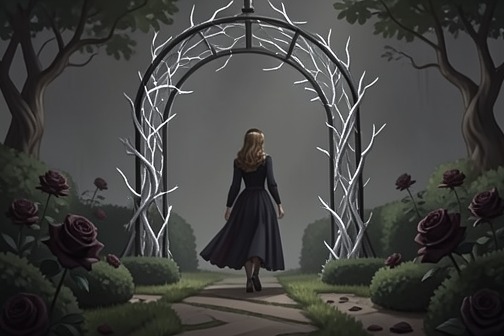
[The Garden of Thorns Revelation](entity:event-recall-event-the-garden-of-thorns-re-d123d6a2a97d) is the event in which [Ariella Monroe](entity:character-recall-character-ariella-monroe-2dccb1423027) crosses into [Dominic Vale](entity:character-recall-character-dominic-vale-83633342c6bb)’s concealed magical garden and receives the truth she has demanded about his former bond with [Isadora Vale](entity:character-recall-character-isadora-vale-74c14a709d74). The revelation exposes the danger beneath Dominic Vale’s guarded authority, forces Ariella Monroe to confront possible futures for herself, and ends with her choosing not to flee from either the garden or the relationship.
## Entry into the Hidden Garden
The event begins when the gate to the [Garden of Thorns](entity:object-recall-object-garden-of-thorns-49bb01f7b0e5) opens by itself. Ariella Monroe enters hesitantly beneath an iron archway wrapped in silver-bright thorns, while Dominic Vale follows behind her in silence. The garden is not part of the ordinary world: it lies in a hollow beneath [Vale Estate](entity:location-recall-location-vale-b117d0be7723), concealed by glamour and charm and inaccessible to ordinary sight. Its atmosphere is explicitly magical, carrying an uneasy mixture of lavender, danger, and longing.
The setting immediately behaves as an active force rather than a passive backdrop. Dark roses bloom in unnatural forms, including spirals, stars, and slowly blinking eyes; the hedges twist into shifting patterns; and the paths fork and reform so that anyone wandering alone could lose the way out. Some plants appear luminous and beautiful, while others are gnarled, thorn-covered, and leaking black nectar. The garden therefore externalizes the contradiction at the center of the revelation: desire can be alluring, but the same hidden power can also become consuming and disorienting.
Dominic Vale names the place as his Garden of Thorns and explains its governing principle: it shows what a person needs rather than what that person wants. He tells Ariella Monroe that he brought her there because she asked for truth, making the garden a deliberate ordeal rather than a romantic excursion. Truth is presented as something that blooms in an environment designed to strip away comfortable illusions.
## Dominic Vale’s Confession About Isadora Vale
As Dominic Vale guides Ariella Monroe through the maze, he finally confirms that Isadora Vale’s account of their history is not entirely false. Isadora Vale was his bonded partner long ago, and he describes them as two storms tangled together: powerful, beautiful, and terrible. This admission revises Ariella Monroe’s understanding of the conflict. Isadora Vale is not merely an outside threat or a figure from Dominic Vale’s past; she was once joined to him through a bond of genuine intensity.
Dominic Vale says that the bond ended because Isadora Vale broke her vow. He also admits that he believed he could control her, despite recognizing her as powerful and clever. According to his confession, Isadora Vale continually wanted more and used him to obtain it. The admission gives the failed relationship a double structure: Dominic Vale was frightened by Isadora Vale’s ambition, but he was also implicated in the attempt to master someone he could not safely control.
The central danger is revealed when Dominic Vale explains that Isadora Vale tried to siphon power from their bond and claim his essence, including his magic, for herself. He states that he broke the bond because otherwise Isadora Vale would have consumed him. This history clarifies why Dominic Vale is afraid of what might happen with Ariella Monroe. His caution is not abstract possessiveness or simple reluctance; it is shaped by a previous bond in which intimacy became a mechanism for extraction and survival required rupture.
## The Garden’s Visions and Ariella Monroe’s Choice
After entering a circle within the garden, Ariella Monroe experiences a sudden magical dislocation: the world tilts and visions strike her with the force of lightning. She sees herself laughing in Dominic Vale’s arms, but also bound, gagged, and screaming his name in pleasure. She sees Isadora Vale kissing her, with the kiss carrying both power and warning. Finally, she sees herself alone, radiant and crowned in moonlight, with silver-glowing eyes.
The visions refuse to reduce Ariella Monroe’s future to one predetermined path. They place romantic attachment, sexual surrender, danger involving Isadora Vale, and solitary power beside one another without explaining which possibility will prevail. The garden thus reveals not a prophecy with a single answer but a field of potential identities. Ariella Monroe’s uncertainty is part of the revelation: she can recognize that the visions show what she could become without yet knowing which self she will choose.
Dominic Vale catches Ariella Monroe when she nearly falls and asks what she saw. She answers that she does not know, but thinks the garden showed her what she could be. His response supplies the event’s interpretive key. He says the path is not only about him, sex, or power; it is about choice. The statement shifts the scene’s value from fear of domination toward conscious agency. Ariella Monroe’s decision matters precisely because the garden has shown her several forms of vulnerability and strength rather than granting her a safe, simplified answer.
## Consequences and Aftermath
Ariella Monroe answers the revelation by telling Dominic Vale that she chose him. The declaration does not erase the danger disclosed in the garden, nor does it deny the history of Isadora Vale’s destructive bond. Instead, it establishes that Ariella Monroe’s participation is meant to be an act of choice rather than an unconscious repetition of Dominic Vale’s past.
The encounter culminates in intimacy beneath the stars. Afterward, Ariella Monroe tells Dominic Vale that she does not want to run, and he assures her that she will not. She then says she is no longer afraid of the garden. These final statements mark the event’s emotional reversal. At the entrance, the garden represents an unknowable threat hidden beneath Vale Estate; by the end, Ariella Monroe has confronted its revelations and accepted the risk without pretending that the risk has disappeared.
## Narrative Significance
The Garden of Thorns Revelation functions as both confession and initiation. Its concealed location separates it from ordinary reality, while its shifting paths and living plants turn psychological conflict into a supernatural landscape. The garden’s rule that it shows need rather than desire allows the event to expose truths that the characters might otherwise evade: Dominic Vale’s former bond with Isadora Vale, the violence latent in magical intimacy, and Ariella Monroe’s capacity to become something beyond a passive attachment to either powerful figure.
The event also mediates a fundamental opposition between surrender and autonomy. Ariella Monroe is shown images of bondage and pleasure, but also of solitary radiance and power; Dominic Vale names the issue as choice rather than ownership. Her concluding refusal to flee does not resolve the tension between submission and independence. It gives that tension a new condition: Ariella Monroe remains within the dangerous relationship while claiming the decision as her own. In this sense, the revelation changes the meaning of surrender from an imposed fate into a choice that must continually be confronted and reaffirmed.
Event 6
Ariella’s Awakening

[Ariella’s Awakening](entity:event-recall-event-ariella-s-awakening-244c842a9a87) marks [Ariella Monroe](entity:character-recall-character-ariella-monroe-2dccb1423027)’s transformation from a woman shaped by the magical bond with [Dominic Vale](entity:character-recall-character-dominic-vale-83633342c6bb) into an active conduit of ancient, untamed power. Its decisive significance lies in the reversal of agency: what initially seems like a force awakening inside her becomes something she learns to command, culminating in her destruction of a barrier that should have confined her and her return to the rooftop in the rain.
## The First Signs of Awakening
The event begins after the binding ritual in the library, when Ariella discovers that her body and perception no longer operate as they once did. Moonlight follows her home, clinging to her skin as she stands before her bedroom mirror, while the mark above her hipbone remains alive beneath the memory of Dominic’s kiss during the binding. When she touches the mark, the lights in the room flicker. The response is immediate and physical rather than intellectual: her body registers a disturbance before she can explain it, and the room itself appears to answer her presence.
The phenomenon soon becomes more specific. Ariella recognizes that small things obey her. A fireplace flares when she whispers warm; the windows fog in swirling patterns when she says private; and the mirror shimmers as though it recognizes her more intimately than she recognizes herself. These incidents establish the awakening as a material force distributed through her surroundings, not merely a private change in mood or belief. The objects and elements of the room participate in the discovery, turning an ordinary bedroom into the first testing ground of her emerging power.
## The Revelation of Her Lineage
Dominic Vale does not appear surprised when Ariella comes to him seeking an explanation. He identifies what is happening as an awakening and tells her that her lineage is not human. According to his explanation, she was born with dormant blood, and Dominic’s magic, carried through their bond, has stirred it into activity. The revelation changes the meaning of her earlier experiences: the flickering lights, obedient fire, fogged windows, and responsive mirror are not isolated disturbances but early manifestations of inherited power.
Dominic further distinguishes Ariella from the role she has occupied within their relationship. She is not merely a submissive; she is a conduit through which ancient, untamed, hungry power can move. Most people would not survive such a force, but Ariella is beginning to channel it. The disclosure therefore gives her a dangerous identity as well as an explanation. Her awakening is both inheritance and risk, because the power is not presented as naturally gentle or automatically obedient.
## Command, Resistance, and Desire
The practical demand of the awakening is made explicit when Dominic directs Ariella to a room beneath the tower. There, she is to call the magic and command it. The alternative is stark: if she cannot command the power, the power will command her. This condition makes control the central conflict of the event. Ariella is not simply receiving a gift; she is being forced to establish a relation of mastery with something capable of overwhelming her.
That struggle also enters her relationship with Dominic. When he explains that he withheld the truth because power like hers breaks before it builds and because he wanted to shield her, Ariella rejects protection that resembles confinement. She states that she does not want even a golden cage, and Dominic answers by inviting her to be the storm beside him. The exchange reframes the bond as a contested space between shelter and autonomy: his knowledge gives him authority over the interpretation of her power, while her refusal insists that awakening must not become another form of ownership.
Ariella then takes control of their physical encounter. She pushes Dominic onto the bed, straddles him, pins his hands, and directs the movement and intensity of the exchange. Her eyes glow faintly, and the experience is presented not as passive surrender but as a declaration of rising force. Her claim that the power is hers converts erotic dominance into a visible sign of magical self-possession. The awakening therefore links bodily awareness, desire, and supernatural agency without treating them as separate developments.
## From Discovery to Escape
The strongest proof of Ariella’s awakening comes later, when [Isadora Vale](entity:character-recall-character-isadora-vale-74c14a709d74) tells her that she cannot yet portal out because the bond will not allow it. Ariella turns with her eyes glowing faintly and refuses the imposed limit. She raises her hands, and the pendant at her throat shines more brightly than ever before. The pendant functions within the scene as an active participant in the release of power, responding at the moment Ariella converts resistance into command.
Ariella commands the space to yield. The room cracks, the air splits, and the barrier gives way. She disappears and returns to her rooftop, back in the rain. This escape completes the movement begun in the bedroom: the awakening progresses from unexplained bodily disturbance, to recognition of inherited identity, to deliberate control, and finally to an act that overcomes magical restraint. The event’s transformation is therefore measured not only by what Ariella learns about herself, but by what the surrounding world can no longer prevent her from doing.
## Agency, Embodiment, and Material Power
Ariella’s Awakening is defined by a movement from sensation to interpretation and then from interpretation to action. The first evidence arrives through the body: touching the binding mark makes the lights flicker, while sharper thoughts, deeper dreams, and altered bodily responses signal that the change is not confined to conscious intention. Before Ariella possesses a vocabulary for what is happening, the environment answers her. Fire responds to a whispered command, windows fog at a spoken request for privacy, and the mirror shimmers as though it recognizes an identity still concealed from her. The awakening thus appears as an assemblage of bodily intensity, inherited magic, Dominic Vale’s bond, and materially responsive surroundings rather than as an isolated talent suddenly possessed by an individual.
The revelation that Ariella’s lineage is not human gives these disturbances a new historical and ontological meaning. Dominic explains that dormant blood has been stirred awake by his magic, identifying her as a conduit rather than merely a submissive within their established power relation. The term carries a double implication: Ariella can channel ancient, untamed, hungry power, but she is also vulnerable to becoming its channel without remaining its master. The instruction to enter the room beneath the tower and command the magic makes this danger concrete. Failure would reverse the relation of agency, allowing the power to command her instead.
Ariella’s response to Dominic’s warning shows that her awakening is also a struggle over the terms by which she will be protected, named, and controlled. Dominic says that power like hers breaks before it builds and that he withheld the truth in an effort to shield her. Ariella rejects that protection when it resembles a golden cage, refusing to exchange supernatural danger for dependence disguised as safety. Her subsequent physical dominance of Dominic gives the dispute an embodied form: she pushes him down, pins his hands, and directs the encounter while her eyes glow faintly. The scene makes her rising power legible through action rather than explanation, turning desire into an arena in which she tests whether the bond can contain her or must acknowledge her force.
The later confrontation with Isadora Vale confirms that this agency has become operational. Although Isadora says the bond prevents Ariella from leaving through a portal, Ariella refuses the limitation, raises her hands, and causes the pendant at her throat to shine more intensely than before. When she commands the space to yield, the room cracks and the air splits, enabling her to disappear and return to her rooftop in the rain. The sequence completes the event’s progression from involuntary signs to conscious command: Ariella does not merely discover that power exists within her; she demonstrates that a structure meant to confine her can be made to open.
## The Awakening as Transformation
Ariella’s Awakening follows a transformation plot in which discovery, danger, and self-assertion arrive together. Ariella first encounters power as an unexplained disturbance in her body and surroundings, then receives a name for it through Dominic Vale’s account of her nonhuman lineage, and finally proves its force by making space itself yield. The sequence is not a simple acquisition of supernatural ability. It is a renegotiation of who or what possesses agency: Ariella’s dormant blood, Dominic Vale’s magic, the binding mark, the pendant, and the responsive environment all participate in her emergence as a conduit, yet the decisive movement is her refusal to remain merely the channel through which other powers act.
Ariella’s Awakening also establishes a distinctive tension between inherited force and deliberate self-possession. The awakening does not erase the danger of power; the magic remains ancient, untamed, and capable of commanding her if she fails to command it. What changes is Ariella’s position within that danger. She moves from touching a living mark and witnessing inexplicable reactions in her room to directing a charged encounter with Dominic Vale, then to breaking through the spatial restriction imposed by the bond. Each stage converts passive evidence into chosen action. Even the escape is not presented as a return to safety or a final mastery of the supernatural. Ariella reappears on her rooftop in the rain, carrying the consequences of what she has become and demonstrating that the structures surrounding her can no longer define the limits of her movement. The event therefore functions as a threshold: Ariella remains connected to Dominic Vale’s magic and vulnerable to the force coursing through her, but she has acquired the capacity to answer command with command, transforming awakening from a condition imposed upon her into the beginning of her own ascendancy.
Event 7
The Discovery of Project Marrow

[The Discovery of Project Marrow](entity:event-recall-event-the-discovery-of-projec-41332eb53a26) is the central revelation that breaks [Ariella Monroe](entity:character-recall-character-ariella-monroe-2dccb1423027)’s trust in [Dominic Vale](entity:character-recall-character-dominic-vale-83633342c6bb) and recasts their bond as an instrument of control. What had appeared to be an intoxicating, if coercive, relationship is exposed as a planned magical experiment: Ariella was not merely chosen by desire or fate, but prepared in advance as Subject A.001. The discovery joins hidden architecture, bureaucratic language, bodily evidence, and erased memory into a single indictment of the power Dominic has exercised over her.
## Causes and Background
The revelation arrives after Ariella has become deeply entangled with Dominic. She is found resting in his black silk shirt after an intense night, feeling physically claimed and increasingly transformed by the darkness of their relationship. The scene’s intimacy is immediately interrupted by a message from an unknown number. Its warning directs her to the vault beneath the library and tells her to ask [Luca](entity:character-recall-character-luca-aa8721da92cd) about [Project Marrow](entity:concept-recall-concept-project-marrow-7e8e164e3638), turning private suspicion into an urgent investigation.
The warning also confirms that Dominic’s binding has another possible meaning. Rather than having bound Ariella solely to protect her, he may have used the bond to control what he had already damaged. This suspicion gains force from [Jenna](entity:character-recall-character-jenna-65f88e27192a)’s account of the previous girl: an attractive young intern who entered Dominic’s world believing she had found the job of her dreams, only to be taken and twisted into his fantasy. The earlier woman’s fate is initially conveyed through frightened oral testimony, but Project Marrow supplies the colder institutional record behind that disappearance.
Ariella’s earlier experiences have already prepared the ground for the revelation. From her first arrival at [Vale Enterprises](entity:location-recall-location-vale-enterprises-648417af470a), the building and its authority have seemed oppressive; she feels that she should not have worn the dress that drew attention to her body, and Dominic’s office appears as a vast cathedral of glass and steel above the city. In that setting, his control is expressed through rules, bodily scrutiny, and discipline. His first lesson explicitly treats her unauthorized arousal as a breach to be punished. The vault later reveals that these personal rituals are connected to a larger system rather than being isolated expressions of appetite.
## What Ariella Finds
Following the message, Ariella crosses the back wall of the library and discovers that a vault exists where she had never known there was one. Her fingers find a previously invisible seam in the stone. When she touches a symbol consisting of a vertical slash through a crescent moon, the wall trembles and opens, releasing cold air from the concealed chamber. The entrance is therefore not merely a door to a room but a physical manifestation of knowledge withheld from her until suspicion gives her the means to reach it.
The chamber is small and circular, lined with shelves holding scrolls, files, and strange black orbs pulsing faintly inside glass cages. At its center stands a pedestal bearing a single thick file. Its label is stark: “PROJECT MARROW: SUBJECT A.001.” The formal designation strips Ariella’s identity down to a number and a category, placing her within the language of experimentation before she has fully understood that she is being studied.
Inside the file are grainy, aged photographs of a young woman bound in ritual and marked in the same manner as Ariella. The woman’s face is pale and tear-streaked, while her eyes are empty. The images establish a visual continuity between Ariella and an earlier subject, making the previous girl’s disappearance more than a rumor. The archive preserves her body as evidence even though it does not preserve her as a living person with a name, voice, or future.
The report accompanying the photographs is dry and clinical. It states that the subject displays accelerated magical adaptation when bonded with the Primary, that intimacy significantly amplifies latent channels, and that emotional attachment is unnecessary for the bond to function. It then records that the subject was terminated after attempting a breach, with secondary candidates pending. The language converts coercion, suffering, and death into procedural outcomes. It also destroys the romantic assumption that emotional attachment is the foundation of the bond: according to the report, intimacy works as a mechanism whether or not love exists.
The file contains more than records of past victims. Ariella finds arcane equations, diagrams, and spells with her own name written in fresh ink. The evidence therefore reaches backward in time. Her name was present in the project before she arrived, before she met Dominic, and before the relationship could plausibly have developed through spontaneous attraction. The most devastating conclusion is that Dominic chose her long ago not because he felt drawn to her, but because he planned her.
## Consequences for the Bond
The discovery changes the meaning of nearly every earlier encounter between Ariella and Dominic. His office, his rules, his disciplinary language, and the physical intensity of their bond can no longer be read only as the private terms of a dangerous erotic arrangement. They are also components of a design that seeks accelerated magical adaptation. The body that Ariella experiences as a site of pleasure has simultaneously been treated by Dominic’s project as a conduit for power.
The report’s treatment of the earlier subject creates a direct threat to Ariella’s future. The previous candidate was terminated after trying to breach the system, and the phrase “Secondary candidates pending” suggests that the project is not an isolated failure. Ariella is one position in a continuing sequence. Her individuality is precisely what the file attempts to erase: she is reduced to Subject A.001 even as the fresh writing of her name proves that someone anticipated her arrival.
Ariella responds not by accepting the archive as an explanation but by confronting Dominic with it. She strikes the file against his chest and demands help in breaking the bond. Dominic warns that breaking it would mean losing protection and connection, forgetting the feel of his power inside her, and no longer craving or needing him. His warning reveals the bond’s double nature: it has become both a source of dependence and a structure of captivity. Ariella must consider not only whether Dominic deceived her, but also whether the magical and bodily consequences of separation have made freedom costly.
## Memory, Erasure, and the Archive
The vault functions as a counter-memory to the stories told by the people around Ariella. Jenna knows that a previous girl was taken, but her account is incomplete and fearful. Isadora later claims that she and Dominic were once bonded through an ancient, powerful, unbreakable connection until he broke it, while Dominic has represented that relationship as over. These competing accounts establish a world in which the past is controlled through selective disclosure. Project Marrow is the first material record that gives Ariella something more durable than another person’s version of events.
Yet the archive is not neutral. Its photographs preserve the prior subject as an anonymous, immobilized body; its report uses clinical classifications; and its equations treat Ariella’s name as a future experimental variable. The file reveals truth while also reproducing the authority of those who created it. It tells Ariella what was done, but it does not restore the earlier woman’s voice or explain the full circumstances of her termination. The archive consequently becomes both a weapon against Dominic and evidence of the system’s power to define what will count as history.
That struggle over memory becomes still more severe when Ariella’s magic later implodes and she collapses unconscious, her power gone and her memory erased. The Project Marrow discovery thus stands at the center of a broader conflict over whether Ariella can retain an account of herself. The file gives her a past that Dominic tried to conceal; the later loss of memory threatens to remove even the knowledge she gained from it. Her identity is contested not only through physical control but through the preservation, deletion, and rewriting of experience.
## Narrative Significance
As a plot event, the discovery is the story’s decisive shift from seduction to investigation and from submission to attempted resistance. Ariella enters the hidden chamber because an anonymous message redirects her attention from immediate pleasure to concealed history. The narrative then moves from the sensory aftermath of her relationship into a sequence of objects—seam, symbol, wall, shelves, pedestal, photographs, report, equations—that gradually converts suspicion into proof.
The revelation also reverses the apparent direction of choice. Dominic seems to select Ariella in the present, but the file demonstrates that he selected her before the relationship began. His authority therefore extends backward, creating the impression that her fate was already arranged. Against that design, Ariella’s demand to break the bond becomes her first clearly documented attempt to reclaim agency from the experiment’s terms.
Project Marrow remains consequential even as the story later moves toward altered power, memory loss, and a new future. Ariella eventually reveals that she is pregnant, and the silence surrounding that declaration is described as sacred, but the pregnancy cannot erase the archive’s implications. The discovery has established that intimacy, magical power, bodily autonomy, and reproduction exist within a system Dominic has attempted to plan. Its lasting significance lies in making hidden control visible: once Ariella has seen the file, neither the romance nor the bond can return to its earlier meaning.
Event 8
Ariella’s Kidnapping by Isadora

[Ariella’s Kidnapping by Isadora](entity:event-recall-event-ariella-s-kidnapping-by-30baca930864) is the turning-point abduction in which Ariella is removed from the threshold of severing her bond with [Dominic Vale](entity:character-recall-character-dominic-vale-83633342c6bb) and forced into an encounter that confuses captivity, desire, and liberation. The event begins as an attempted escape from a magical relationship and ends with Ariella returning to the storm transformed from someone preparing to break a tether into someone ready to command the power inside her and personally confront her captor.
## Causes and Background
At 2:17 a.m., during a violent storm, Ariella stands on a rooftop with her [Onyx Pendant](entity:object-recall-object-onyx-pendant-32d1d56c7bfd) clenched in her fist. Her hair is soaked, lightning is reflected in her eyes, and her decision has become explicit: she is going to sever the bond. Below her, [Luca](entity:character-recall-character-luca-aa8721da92cd) has prepared the ritual chamber, lighting candles and drawing the necessary circles so that the severing spell is only a whisper away. Ariella understands the act not as a casual change but as an internal wound; she can already sense the hollowness she is about to carve into herself. The scene therefore places freedom and loss in direct opposition before [Isadora Vale](entity:character-recall-character-isadora-vale-74c14a709d74) intervenes.
Ariella never reaches the ritual. As she turns to leave the rooftop, the world disappears in a flash of light and a disorienting lurch. The abduction is sudden rather than negotiated: an external magical force interrupts Ariella at the precise moment when she has chosen to reclaim control over her bond and her future. That timing makes Isadora’s action more than a change of location. It is an attack on Ariella’s decision-making at the threshold of an irreversible act.
## Abduction and Imposed Encounter
Ariella arrives in a room cloaked in velvet and shadows, marked by the scent of jasmine, sex, and betrayal, while Isadora Vale waits in a high-backed chair with a dark, shimmering drink. Isadora frames the seizure as a temporary intervention, claiming that Ariella could not be allowed to surrender Dominic Vale so easily and describing the act as having “borrowed” her for the night. Ariella identifies the act plainly as kidnapping; Isadora answers by renaming it relocation and treating Ariella’s emotional and sexual state as evidence that she is not prepared to make a world-altering decision. The exchange establishes the event’s central conflict: Ariella’s attempt to determine her own fate is met by Isadora’s confident substitution of her own judgment, even as Ariella insists that she does not belong to Isadora.
## Desire, Consent, and the Fractured Bond
The encounter becomes more coercive as Isadora Vale exploits the instability of Ariella’s magical bond with Dominic Vale. The bond remains present but weak, unstable, and close to snapping; within that interval, desire enters the space opened by Ariella’s uncertainty. Isadora presses her lips to Ariella’s neck, and Ariella responds physically, moaning before Isadora’s sustained attention drives her to orgasm. The scene deliberately refuses to resolve that response into simple consent. Ariella’s body reacts, but her later accusation makes clear that bodily sensation has not erased her objection: she tells Isadora that she was tricked and insists, “I didn’t consent—” Isadora counters that Ariella did not say no and treats feeling as a more honest form of self-knowledge than anything Dominic has permitted. That argument turns pleasure into a contested form of power rather than proof of freedom, leaving Ariella with rage and confusion instead of reconciliation.
## Escape, Reversal, and Aftermath
Ariella’s resistance does not end with an argument about consent; it becomes an act of magical refusal. When Isadora Vale tells her that the bond prevents her from portaling away, Ariella turns back with her eyes faintly glowing and declares that she will break the walls down instead. The Onyx Pendant at her throat shines more brightly than it ever has, linking the crisis of the bond to the emergence of a power that no longer behaves as a passive inheritance or merely as an instrument of another person’s will. Isadora recognizes the impossibility of what is happening, but Ariella no longer listens. She commands the room to yield, and the space answers by cracking as the air splits around her. The escape is therefore not granted by Isadora and not achieved through the severing ritual prepared by Luca; Ariella forces it into being through direct command.
The magical rupture returns Ariella to the rain, where she lands on her knees, panting, soaked, furious, and charged with power as well as shame. Dominic Vale appears moments later and kneels beside her, but Ariella refuses his immediate touch. His expression hardens, and he announces that he will kill Isadora. Ariella rejects even this attempted substitution of action, rising on shaking legs to insist that she will kill Isadora herself. The power inside her flares, and the narration explicitly separates that force from possession by Dominic: it is not active because she is his. The event consequently ends as a reversal of the expected rescue pattern. Ariella is physically recovered from Isadora’s room, but she does not return to the previous hierarchy as a rescued possession; she returns prepared to confront the woman who abducted her and to claim responsibility for the power that made her escape possible.
## Narrative Significance
The kidnapping functions as a hybrid of abduction, temptation, escape, and transformation. Isadora Vale’s intervention interrupts Ariella at the edge of a ritual designed to sever the Dominic–Ariella [Magical Bond](entity:concept-recall-concept-magical-bond-bcde20e3178a), then places her inside a scene where captivity is described as freedom and physical response is used to challenge her stated intentions. The value shift is consequently double-edged: Ariella loses control over where she is and what encounter takes place, yet the violation of that control provokes a more forceful assertion of agency than the planned ritual had produced. Her passage through the room does not settle whether desire can liberate her, but it exposes the danger of allowing either Isadora or Dominic Vale to define liberation on her behalf.
The return to the storm gives the episode its decisive culmination. Ariella has not simply escaped a room; she has crossed from attempting to cut a tether into commanding the surrounding space, and from being spoken for into naming her own retaliation. Her shame and fury remain unresolved, so the awakening is not presented as clean emancipation. Instead, the event binds power to consequence: Ariella’s new strength emerges through coercion, confusion, and rupture, then immediately becomes the basis for a direct confrontation with Isadora Vale. In that sense, Ariella’s Kidnapping by Isadora marks the point at which her struggle over the bond becomes a struggle over who may define her body, her choices, and the source of her power.
Event 9
The Reckoning

[The Reckoning](entity:event-recall-event-the-reckoning-83c2c1126cc8) is the climactic battle at [Vale Estate](entity:location-recall-location-vale-b117d0be7723) where [Ariella Monroe](entity:character-recall-character-ariella-monroe-2dccb1423027) converts accumulated anger, betrayal, and magical awakening into an independent moral and political choice. Its decisive significance lies in the reversal of ownership: the woman once bound and used by [Dominic Vale](entity:character-recall-character-dominic-vale-83633342c6bb) becomes the power who judges [Isadora Vale](entity:character-recall-character-isadora-vale-74c14a709d74), determines the terms of Dominic’s place beside her, and defines freedom without surrendering desire.
## Causes and Setting
The confrontation begins in the southern courtyard of Vale Estate, a space marked by moonlit ruins and broken marble statues left from an older war that Dominic Vale had never discussed. The setting makes the battle more than a private quarrel. It places Ariella inside a damaged history whose violence has been concealed from her, while the courtyard becomes a threshold between the inherited order represented by the Vale family and the future she intends to create.
Ariella no longer runs from the forces that have shaped her. She arrives as a hunter, with silver light permanently burning behind her eyes. The onyx pendant, previously associated with submission, has changed function: it now pulses as a conduit anchoring her power, anger, and purpose. Its altered meaning condenses the event’s central reversal. The same object that once signified control now helps Ariella act from power that she claims as her own.
Her immediate objective is explicit: Isadora will pay. Yet Dominic is also placed under judgment. Ariella states that he must either stand with her or face the same judgment, making the battle a test of their relationship as well as an attack on Isadora. When Dominic says that he is with her, Ariella answers that he was also with her when he bound her, used her, and built her, and that he cannot now pretend those actions were always motivated by love. Dominic admits that he cannot undo the lies or choose them away, but offers to bleed for them. Their exchange establishes guilt without resolving it in advance; his participation must be earned through consequences rather than declarations.
## The Battle with Isadora
The battle starts when the air splits and the veil tears open, allowing Isadora to enter like a queen returning to a stolen throne. The imagery frames her arrival as a bid to reclaim authority, not merely an appearance by an enemy. Ariella steps forward and declares, “I am the fire,” identifying herself with the elemental force that will oppose Isadora’s command.
Isadora answers with a cyclone of dark vines and cursed winds. The attack is violent, directed, and visibly shaped by her magical will, but Ariella does not meet it through panic or retreat. She stands still with her eyes closed while the pendant glows, then opens her palms and breaks the spell in mid-air. The movement from stillness to intervention presents her power as controlled rather than merely explosive: she does not simply survive Isadora’s assault but interrupts its structure.
The earth then responds to Ariella’s magic. It rips open beneath Isadora as vines burst upward, seize her wrists and ankles, and hold her aloft like a goddess bound for sacrifice. Isadora recognizes the reversal even while trapped, calling Ariella finally powerful and dangerous. Ariella answers with the declaration, “Finally free.” The exchange marks freedom as the value that changes hands during the scene. Isadora still possesses the language of judgment and recognition, but Ariella now determines what that recognition means.
## The Choice Between Revenge and Transformation
With Isadora immobilized, Ariella raises her hands and says that Isadora has to die. Dominic, having staggered back to his feet, tells her to wait and warns that she does not need to become Isadora in order to defeat her. His intervention introduces the event’s ethical crisis: victory could reproduce the logic of domination that Ariella has suffered, turning liberation into a new form of tyranny.
Ariella resolves the crisis through a punishment that is both devastating and deliberately limited. She walks forward slowly and in control, places her fingertips against Isadora’s forehead, and says, “I don’t need to kill you. I just need you to forget.” The spell passes through Ariella and into Isadora. Isadora’s eyes widen, her scream becomes soundless, and her magic implodes inward, collapsing like a star going dark. She falls unconscious, her power gone and her memory erased.
The result is therefore not a conventional execution. Ariella removes Isadora’s ability to continue the magical conflict and destroys the identity built around that power, but she refuses to kill her. The choice distinguishes Ariella from both figures who have tried to define her. She does not remain Dominic’s bound subject, and she does not become Isadora’s violent double.
## Consequences and New Terms
After Isadora’s defeat, Dominic asks why Ariella did not kill her. Ariella explains that she is not Isadora, not Dominic, but herself at last. Her answer turns the battle’s external victory into a declaration of identity. Selfhood is not presented as a private feeling detached from action; it is established through the precise form of power Ariella chooses to exercise when killing would be available.
Dominic then drops to one knee, explicitly not in worship but in surrender. The gesture reverses the hierarchy that governed their earlier relationship. He is no longer positioned as the unquestioned owner or god before whom Ariella must submit. Yet Ariella does not answer surrender with complete emotional withdrawal. She tells him that she still wants him, provided he can stand beside her as her equal rather than as her owner or god, while still being hers.
Dominic rises and takes her hand, answering, “Always.” Their reconciliation is conditional rather than restorative in the sense of returning to the old arrangement. The past cannot be undone, as Dominic has already admitted, but the relationship is given a new proposed structure: desire may remain, while ownership is rejected and equality becomes the condition of intimacy.
## Narrative Significance
The garden behind them blooms again, producing roses without thorns and vines without chains. This final image supplies a visual consequence for the change Ariella has enacted. The garden does not merely become beautiful; its two defining dangers are removed. Thorns no longer turn beauty into injury, and vines no longer turn connection into captivity. The transformation echoes the battle’s movement from coercive bonds to chosen relation.
The Reckoning combines revenge, rescue, transformation, and ascension, but bends each pattern through Ariella’s restraint. She begins with a demand that Isadora pay and ends with Isadora defeated, powerless, and amnesiac rather than dead. She begins by questioning whether Dominic can stand with her and ends by allowing him to take her hand only under terms she defines. Thus the event’s final victory is not simply the defeat of Isadora’s magic. Ariella wins the right to decide what justice, freedom, love, and power will mean after the violence that produced her.
Event 10
Ariella Takes the Lead

[Ariella Takes the Lead](entity:event-recall-event-ariella-takes-the-lead-91a5c9f7e514) is the event in which [Ariella Monroe](entity:character-recall-character-ariella-monroe-2dccb1423027) converts a history of commanded submission into conscious control. Her arrival at [Vale Enterprises](entity:location-recall-location-vale-enterprises-648417af470a) marks the reversal plainly: she is no longer the girl who trembled beneath [Dominic Vale](entity:character-recall-character-dominic-vale-83633342c6bb)’s gaze, but a woman whose pulse does not stutter beneath anyone’s command, including his. The scene therefore changes more than the balance between two lovers. It establishes Ariella’s freedom as an active power, one she can exercise within the very institution that once represented Dominic’s authority.
## Arrival at Vale Enterprises
Ariella enters Vale Enterprises in a tailored white suit, its sharp, close-fitting design emphasizing a new public confidence. Her neck is completely bare: there is no collar, no pendant, and nothing to signify an external claim upon her. The absence is as important as the clothing itself. She does not merely announce that an old symbol of possession has been removed; she makes bodily autonomy visible as she crosses into Dominic’s domain.
The employees do not approach her. Ariella now walks with Dominic’s authority as well as her own, a combination that makes her presence newly untouchable. The private elevator obeys her touch, its doors opening with reverence, and the top floor gives way to Dominic’s office. These details turn the building into a visible measure of her changed status: the machinery of his world no longer confines or screens her, but responds to her.
## The Reversal of Authority
Dominic is waiting by the window, watching the skyline from his office. His reflection meets Ariella’s before he turns, creating a visual confrontation between the man who once orchestrated her movements and the woman who has learned to direct herself. What she finds is not the same figure who controlled every movement like a conductor directing a favored instrument. He has become the man who bled beside her and watched her change.
His smile remains slow and hungry, but its meaning has shifted. It carries less ownership and more reverence, registering that Ariella’s transformation cannot be absorbed into his former command. When he reaches for her waist, she stops his hand in midair. The gesture is small, immediate, and decisive: consent is no longer assumed merely because Dominic desires contact.
Ariella then states the new terms without qualification. She decides when contact occurs, how it occurs, and whether it occurs at all; Dominic cannot touch her unless she permits it. His answer is submission to the rule. The scene’s central value shifts from imposed ownership to chosen authority, and the change is secured not by Dominic granting her power but by Ariella exercising it before he can act.
## Ariella Commands Dominic
Ariella’s authority becomes unmistakable when she orders Dominic to kneel. Dominic Vale, a man whose reputation makes kings flinch and queens beg, sinks to the floor at her feet without hesitation. His bowed head and shallow breath place the former architect of her submission inside the posture he once demanded from her. The reversal is not presented as a simple humiliation, however; it is a test of whether he can recognize the person she has become.
She continues by directing his body with precise instructions, ordering him to keep his hands flat and his eyes forward. He obeys. Ariella then retrieves the smooth black leather straps he once used on her. Their significance lies in their history: the straps are not new instruments invented for this encounter, but objects associated with Dominic’s earlier power. In her hands, they become evidence that she can take the forms and tools of his dominance, rearrange their meaning, and use them under her own conditions. Dominic stiffens and moans, while Ariella asks whether he trusts her, making trust the necessary foundation beneath the reversal.
## Trust, Pleasure, and Reciprocal Submission
The question of trust reframes the encounter’s power exchange. Ariella does not simply imitate Dominic’s former methods; she pauses over the black leather straps and makes his response part of the new structure. The objects retain the memory of what he once used on her, yet his stiffening and moan show that their meaning has changed with the change in command. Under Ariella’s direction, the straps no longer represent an unquestioned power imposed from above. They become instruments whose use depends on her judgment and on Dominic’s willingness to place himself in her care.
That reversal reaches its most intimate expression when Ariella unbinds him and pushes him into the chair behind the desk. The movement shifts him from the floor into the position associated with his office, but the familiar setting no longer restores his control. Ariella straddles him and directs the sexual encounter herself, guiding his body while his hands hover and tremble in expectation. She then permits contact by commanding him to touch her. Permission, rather than assumption, governs the scene: Dominic’s desire remains present, but it can be acted upon only through the boundaries Ariella establishes.
The encounter closes by holding authority and attachment together rather than treating them as opposites. Ariella tells Dominic that he is still hers, and he answers, “Always.” His response acknowledges that her new power does not require the destruction of their bond. Instead, their relationship survives through a transformed arrangement in which her leadership is explicit, his submission is voluntary within the scene, and possession is answered by reciprocal recognition. The city outside appears to bend toward the final image, while Ariella Monroe is named as the person who truly rules now.
## Trust, Pleasure, and Reciprocal Submission
The question of trust reframes the encounter’s power exchange. Ariella does not simply imitate Dominic’s former methods; she pauses over the black leather straps and makes his response part of the new structure. The objects retain the memory of what he once used on her, yet his stiffening and moan show that their meaning has changed with the change in command. Under Ariella’s direction, the straps no longer represent an unquestioned power imposed from above. They become instruments whose use depends on her judgment and on Dominic’s willingness to place himself in her care.
The question of trust reframes the encounter’s power exchange. Ariella does not simply imitate Dominic’s former methods; she pauses over the black leather straps and makes his response part of the new structure. The objects retain the memory of what he once used on her, yet his stiffening and moan show that their meaning has changed with the change in command. Under Ariella’s direction, the straps no longer represent an unquestioned power imposed from above. They become instruments whose use depends on her judgment and on Dominic’s willingness to place himself in her care.
## Trust, Pleasure, and Reciprocal Submission
The encounter’s deepest reversal lies in the way Ariella makes trust, rather than fear or automatic obedience, the condition of Dominic’s submission. The smooth black leather straps carry the memory of his former authority because he once used them on her, but their meaning changes when she takes them from the drawer and controls their use. Dominic stiffens and moans, revealing that the familiar instruments now operate within a different relationship to power: Ariella is not merely reproducing his methods, but deciding what they mean and how far they may reach. Her question, “Do you trust me?” makes that change explicit. The scene therefore places authority alongside responsibility, requiring Dominic to accept her judgment as fully as he once expected her to accept his.
The encounter reaches its clearest physical reversal when Ariella releases Dominic from the straps and drives him into the chair behind his own desk. The setting still belongs to the executive who once commanded every movement, yet the desk no longer restores his authority; Ariella straddles him and controls the pace and direction of their intimacy. Dominic’s hands hover and tremble while he waits for instruction, a detail that makes his restraint deliberate rather than helpless. Only when Ariella commands him to touch her does contact become permitted. Desire remains between them, but it now operates inside conditions she establishes, making consent the mechanism through which pleasure is granted rather than an assumption attached to Dominic’s power.
## Trust, Pleasure, and Reciprocal Submission
The encounter’s deepest reversal lies in the way Ariella makes trust, rather than fear or automatic obedience, the condition of Dominic’s submission. The smooth black leather straps carry the memory of his former authority because he once used them on her, but their meaning changes when she takes them from the drawer and controls their use. Dominic stiffens and moans, revealing that the familiar instruments now operate within a different relationship to power: Ariella is not merely reproducing his methods, but deciding what they mean and how far they may reach. Her question, “Do you trust me?” makes that change explicit. The scene therefore places authority alongside responsibility, requiring Dominic to accept her judgment as fully as he once expected her to accept his.
Event 11
The Mutual Essence Ceremony

[The Mutual Essence Ceremony](entity:event-recall-event-the-mutual-essence-cere-3aae5bb75107) is the culminating rite through which [Ariella Monroe](entity:character-recall-character-ariella-monroe-2dccb1423027) and [Dominic Vale](entity:character-recall-character-dominic-vale-83633342c6bb) redefine their bond. Unlike the earlier structures of domination that marked their relationship, this ceremony does not make Ariella an object of ownership. It turns mutual power into an explicit choice: she offers her strength as a gift, he offers his darkness as protection, and together they reject the language of possession in favor of a shared identity.
## Setting and Separation from Earlier Bonds
The ceremony takes place at night in an open natural space, under the stars, with the wind as witness and the moon functioning as its vow. Its privacy is essential: there is no altar, priest, or audience, and no written record, ring, or conventional promise capable of containing what Ariella and Dominic have become. The absence of institutional witnesses separates the rite from ordinary marriage and from the formal mechanisms that previously governed Ariella’s submission.
That contrast reaches back through the relationship’s earlier magical episodes. Dominic once knelt before Ariella while presenting the act as devotion, trust, and magic, then led her into a circular sigil and required her obedience. Later, Ariella claimed the awakening power as her own, while Dominic’s kneeling came to signify surrender rather than worship. The Mutual Essence Ceremony gathers those earlier images and reverses their meaning: the circle is no longer simply a site into which Ariella is placed, and kneeling is no longer evidence of her subordination. The ceremony occurs after betrayal, survival, and Ariella’s recovery of selfhood, so its central question is not whether she belongs to Dominic, but whether she can choose intimacy without relinquishing herself.
## Participants, Implements, and the Blood Rite
Only Ariella and Dominic stand at the center of the ceremony, but [Luca](entity:character-recall-character-luca-aa8721da92cd) serves as its immediate ritual witness and officiant. Dominic appears with his chest bare, the rune of his bloodline drawn across his skin in silver ash, while Luca carries an obsidian bowl of oil and a moonstone dagger. The materials give the scene a distinct magical and bodily vocabulary: oil prepares or seals, moonstone lends the blade an otherworldly quality, and blood makes the bond physically irreversible.
Luca states that the rite must be sealed with intention, placing the emphasis on conscious purpose rather than involuntary enchantment. Ariella accepts the dagger without fear and with clarity. Dominic extends his hand, palm upward, and she cuts her own palm first before cutting his. Neither flinches. Their wounds are therefore reciprocal acts rather than a punishment imposed on one participant by the other; Ariella initiates the exchange, and Dominic submits his body to the same deliberate vulnerability.
When they press their hands together, their blood mingles and heat moves through them. The sigils carved into the stones ignite in stages, changing from white to gold and then to deep red. The progression makes the rite visible as a transformation: the ceremony begins in formal magical structure, intensifies into shared force, and culminates in a color associated with blood, desire, and embodied commitment. The physical marks do not merely decorate the ritual. They register a new relation in which both participants are altered by the same act.
## Vows, Reversal, and Shared Identity
The ceremony’s decisive movement occurs in the vows, which convert the blood exchange from a magical procedure into an ethical redefinition of the relationship. Ariella gives Dominic her strength, explicitly describing it not as surrender but as a gift. Dominic answers by giving her his darkness, not as a burden but as a shield. Their language therefore preserves difference while making protection reciprocal: she is not absorbed into his power, and he does not claim her strength as a resource. When Ariella says that she is not his and Dominic answers that he is not hers, the rite directly repudiates the possessive formula that had governed their earlier bond. Their shared declaration, “We are ours,” replaces ownership with mutual belonging and makes equality the ceremony’s central magical principle.
The scene’s imagery confirms that this is not a symbolic adjustment but a supernatural transformation. At the couple’s joined hands, the surrounding sigils flare white, gold, and finally deep red before the light around them explodes in an exhalation described as fusion rather than violence. Ariella’s mark brightens on her skin, Dominic’s chest burns with a corresponding fire, and the [Silver Flame Pendant](entity:object-recall-object-silver-flame-pendant-a37315088bcb) she wears glows until it embeds itself in her chest and vanishes. The rite thus inscribes their mutual essence into their bodies, while also making the former external token of their bond part of Ariella herself. The result is neither the erasure of individuality nor a return to the earlier ownership structure; it is a shared magical state formed through two deliberate offerings.
Ariella’s altered position is reinforced by the gesture that follows. Dominic draws her close, but she enters his embrace neither as a submissive nor as a prize. She is presented as a force made flesh: a woman who has chosen the ceremony after surviving betrayal and becoming her own savior, yet who still chooses to return to desire. This embrace matters because it joins intimacy to recovered agency rather than treating agency and desire as opposing conditions. The fire pit in the glade then blazes to life on its own as they walk toward it hand in hand and step into the circle of stones, giving the rite a final image of voluntary passage into a shared future.
## Consequences, Recognition, and New Terms of Intimacy
The ceremony’s meaning becomes clearest after the supernatural display has subsided. Ariella explains that the decisive change was not the rite itself, but the moment when she stopped needing to belong to anyone and began wanting to share everything. Her distinction separates dependence from chosen intimacy: she does not return to Dominic because the old claim has been restored, but because she can now participate without surrendering the self she fought to recover. Dominic’s whispered assertion that she is his therefore remains deliberately unsettled by the vows that preceded it. The language of possession survives as an erotic residue, yet it no longer defines the bond’s legal or magical foundation; the ceremony has already established that neither belongs to the other and that their binding is mutual.
## Narrative Function and Value Shift
As a late turning point, The Mutual Essence Ceremony gathers the book’s recurring images of collars, marks, circles, kneeling, and magical binding into a new arrangement. Early scenes frame Ariella’s body and obedience as territory controlled by Dominic, while later reversals allow her to claim power in her own name. The ceremony does not erase those earlier structures; it answers them. Dominic’s earlier kneeling before Ariella was associated with the revelation that their relationship involved devotion, trust, and magic, and his later kneeling is explicitly identified as surrender rather than worship. In the final rite, however, neither partner is reduced to a fixed role. Ariella gives without being conquered, Dominic protects without possessing, and both accept vulnerability through the same blood-marked action.
The value shift is consequently from ownership to reciprocity, and from imposed identity to self-authored relation. The ceremony’s private setting, absence of conventional authorities, reciprocal wounds, and fused sigils make intention more important than public recognition. Ariella’s final understanding of belonging gives the event its emotional resolution: freedom does not require the rejection of desire, and desire does not require a return to submission. The rite’s promise is therefore not that power has disappeared, but that power can be shared under terms Ariella consciously chooses.
## Later Revelation and Lasting Significance
The ceremony also establishes the immediate emotional and magical context for the ending’s pregnancy revelation. After the rite, Ariella tells Dominic that she is pregnant, and his response is framed by a silence described as sacred before he exhales as though he had been holding the breath since before meeting her. The revelation extends the ceremony’s movement from a private bond into a future capable of producing another life. It does not replace the equal bond with domestic conventionality; instead, it confirms that the relationship’s new form has consequences beyond the two participants.
The event is thus both culmination and threshold. It closes Ariella’s movement from a young woman entering Dominic’s world under rules she did not author to a woman who can define the terms of a magical partnership, while opening the final phase in which that partnership becomes generative. Its most important transformation is not the disappearance of dominance, desire, or danger, but their reorganization around explicit mutuality. The fused light, the vanished pendant, the handclasp, and the declaration that they are theirs together give physical form to a conclusion in which Ariella remains fully herself precisely because she chooses to share her strength.
## Later Revelation and Lasting Significance
The Mutual Essence Ceremony also establishes the immediate emotional and magical context for the ending’s pregnancy revelation. After the rite, Ariella Monroe tells Dominic Vale that she is pregnant, and his response is framed by a silence described as sacred before he exhales as though he had been holding the breath since before meeting her. The revelation extends the ceremony’s movement from a private bond into a future capable of producing another life. It does not replace their equal bond with domestic conventionality; instead, it confirms that the relationship’s new form has consequences beyond the two participants.
The event is therefore both culmination and threshold. It closes Ariella Monroe’s movement from a young woman entering Dominic Vale’s world under rules she did not author to a woman who can define the terms of a magical partnership, while opening the final phase in which that partnership becomes generative. Its most important transformation is not the disappearance of dominance, desire, or danger, but their reorganization around explicit mutuality. The fused light, the vanished Silver Flame Pendant, the handclasp, and the declaration that they are theirs together give physical form to a conclusion in which Ariella Monroe remains fully herself precisely because she chooses to share her strength.
Event 12
Ariella’s Pregnancy Revelation

[Ariella’s Pregnancy Revelation](entity:event-recall-event-ariella-s-pregnancy-rev-8ecae3dfc76b) is the decisive turning point of the final chapter: Ariella tells Dominic that she is pregnant, and the announcement recasts everything between them. What begins as a private disclosure on the penthouse balcony becomes a test of whether Dominic can understand intimacy as something other than ownership. His first response is terror, but Ariella answers that they will protect the child together, establishing the partnership that the story’s earlier power struggles had not yet fully achieved.
## Setting and Immediate Circumstances
The revelation takes place at dawn, under a pink sky, on the balcony of [Dominic Vale Penthouse](entity:location-recall-location-dominic-vale-711295853847). The setting follows the darkness and turbulence of the preceding narrative with an image of softness and anticipation. Ariella sits wrapped in one of Dominic’s button-down shirts, her bare legs swinging above the waking city, while the tea in her hands has already gone cold. The domestic stillness is important: the announcement does not occur during a confrontation, a ritual, or a display of magical force, but in an intimate pause after the storm.
Ariella begins by speaking about what it means to create something after spending a lifetime being shaped by someone else. The statement connects pregnancy to her larger struggle for self-definition. Her body has previously been treated as a site of discipline, desire, magical inscription, and conflict: Dominic’s first lesson in discipline includes a spank, his binding is sealed through a mark beneath her navel, and that mark later pulses as a living sign on her skin. In the pregnancy scene, however, Ariella uses her body to deliver knowledge on her own terms. She reaches for Dominic’s hand and guides it to her stomach, making physical contact the means by which the hidden future becomes undeniable.
## The Announcement and Dominic’s Reaction
At the moment of disclosure, Ariella’s stomach is still flat and unchanged, although she knows that this will not last. Dominic freezes when he understands what she is telling him. Ariella then states the revelation plainly: she is pregnant. The silence that follows is described as sacred, marking a sharp change in the emotional register of their relationship. Earlier scenes attach power to command, bodily control, and ritualized submission; here, the pause creates room for astonishment and responsibility.
Dominic’s reaction combines possession with reverence. His hand trembles as it spreads across Ariella’s belly, a gesture characterized as a new form of possession and a new kind of reverence. The paired description preserves the contradiction at the heart of his character: he still instinctively relates to what is precious through the language of claiming, yet the gesture is no longer presented only as control. It is also fearfully attentive, as if the child has made the consequences of his power suddenly tangible.
The tenderness does not erase Dominic’s anxiety. He warns that he is dangerous and invokes both his blood and his magic as possible threats to the child. His fear gives the announcement a concrete stake: pregnancy does not simply promise emotional fulfillment, but raises the question of whether the violent or supernatural inheritance associated with Dominic can be safely carried forward. Ariella refuses to let that fear define the future. She counters that she is powerful too and declares that they will protect the child together, shifting the scene from Dominic’s solitary danger to a shared obligation.
## From Possession to Partnership
Dominic’s response to Ariella’s certainty is physical and reverent. He kisses her neck, shoulder, and cheek, then steps back and kneels before her, pressing his forehead to her belly. The kneeling reverses the familiar hierarchy established in the opening chapters, when he occupies the position of predator, king, employer, disciplinarian, and magical authority. It also differs from the earlier ritual in which he kneels before Ariella while declaring that their connection is devotion, trust, and magic. In the pregnancy revelation, his kneeling is directed toward the vulnerable life represented by her body, and the gesture exposes a tenderness that power alone cannot command.
Dominic imagines the child as a daughter and tells Ariella that she will teach her to rule, while he will teach her to yield. The exchange preserves the couple’s characteristic tension between dominance and surrender, but it places that tension inside a future family structure rather than an isolated erotic contract. Ariella’s authority is no longer merely something she must seize from Dominic; it becomes a capacity that she is expected to pass on. Dominic’s yielding, meanwhile, is not simply a temporary reversal of their sexual roles. It becomes part of the imagined education of their child.
The emotional culmination comes when Dominic tells Ariella that she is everything not because she is his, but because she chose to be. This distinction directly revises the possessive logic that has governed much of their relationship. The statement acknowledges choice as the basis of their bond, even though the language and history of claiming remain present. Ariella’s pregnancy therefore changes the meaning of belonging: what once appeared as ownership is reinterpreted, at least in this final movement, as a chosen attachment with mutual stakes.
## Consequences and Later Family Future
The revelation is followed by a compressed account of the months that come after it. Ariella becomes a woman who leads with power and pleasure, a lover who dominates and surrenders in equal measure, and a mother who protects with fire and kisses with lightning. These descriptions do not discard the identities she has developed through the story; they combine them. Her maternity is not portrayed as a retreat from power or desire, but as another form through which both can be exercised.
Dominic’s position changes alongside hers. He stands beside Ariella not as her master and not as her captor, but as her partner. This is the event’s central relational consequence. The announcement does not merely add a child to an existing romance; it forces the relationship to adopt a different structure. The earlier pattern of command and obedience remains part of their history, yet the ending insists that their shared future cannot be defined solely by that pattern.
The consequence is confirmed by the daughter’s birth under a full moon. She arrives screaming like thunder, with silver and wild eyes, combining the imagery of storm, magic, and inheritance that has followed Ariella and Dominic throughout the narrative. Dominic’s first words to the newborn repeat the possessive phrase he once used toward Ariella, but its repetition now carries an altered charge. The phrase links mother and daughter through his continuing instinct to claim, while the preceding transformation toward partnership leaves the reader to measure the distance between old possession and the family bond he now inhabits.
## Narrative Significance
As a final-chapter event, Ariella’s pregnancy disclosure functions as both recognition and reversal. It reveals a fact that changes the couple’s immediate future, but its deeper force lies in the way it reorganizes the story’s central oppositions: domination and surrender, danger and protection, shaping and creation, captivity and choice. Ariella’s body, once subjected to discipline and permanently marked by Dominic’s magic, becomes the source of a future she announces and defines herself.
The event also completes a recurring bodily arc. The story moves from the charged dress Ariella believes she should not have worn, through the physical lesson imposed on her, through the burning mark sealed beneath her navel and its later pulse of life, toward the hand trembling over her belly. Earlier bodily sensations register fear, pleasure, shame, and power before those experiences can be fully named. In the pregnancy scene, bodily knowledge becomes explicit language and shared responsibility. The body is no longer only the place where authority acts; it is evidence, messenger, and creative force.
The ending does not pretend that Dominic’s danger has vanished. He still names his blood and magic as threats, and his first instinct remains expressed through possession. What changes is the response to that danger. Ariella meets it as an equal rather than as someone waiting to be disciplined or rescued, and Dominic accepts a position beside her. The birth of their daughter consequently serves as the story’s final image of transformation: a child born under the full moon from a relationship that began in shadow, carrying forward both its violence and its newly chosen promise.
Event 13
The Birth of Ariella and Dominic’s Daughter
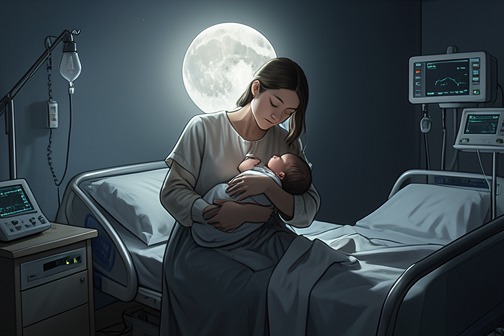
[The Birth of Ariella and Dominic’s Daughter](entity:event-recall-event-the-birth-of-ariella-an-ad3acd4a7316) is the final familial and symbolic consequence of Ariella’s transformation. The child is born under a full moon to Ariella and Dominic, and her arrival completes the movement from a relationship defined by domination and captivity toward one defined by chosen partnership. The birth therefore matters not only as a new life entering the story, but as the point at which the couple’s altered understanding of power becomes an inheritance.
## Causes and Background
The birth follows Ariella’s pregnancy revelation, when she tells Dominic, “I’m pregnant.” His response is presented as a release of a breath held since before he had met her, giving the revelation an almost sacred emotional weight. By the time the child arrives, Ariella is no longer confined to the identity imposed on her at the beginning of the story. Her earlier entrance into [Vale Enterprises](entity:location-recall-location-vale-enterprises-648417af470a) had placed her beneath Dominic’s immense institutional and personal power: she arrived anxious, wearing the dress she felt compelled to choose, and was brought into an office described as a glass-and-steel cathedral above the city, where Dominic appeared as the man who would undo her. The later birth gains its force from that contrast, because the woman who first entered his world under pressure now becomes a mother who protects with authority.
Ariella’s transformation has also passed through explicit conflict over bodily control. Dominic’s early discipline treats her body as subject to his rules, including the assertion that he is giving her a first lesson because her arousal was unauthorized. [Jenna](entity:character-recall-character-jenna-65f88e27192a)’s warning about what happened to the last girl exposes the danger surrounding the version of Dominic that Ariella has been permitted to see. Isadora offers a competing interpretation of Ariella’s body, dropping to her knees and promising worship rather than Dominic’s weapon-like use of it. These opposing claims establish the stakes that the birth ultimately revises: Ariella’s body is no longer merely an object of another person’s authority, but the source and protector of a future she helps define.
## What Happens
The daughter is born under a full moon, screaming like thunder, with silver and wild eyes. The full moon gives the event a heightened, nonordinary setting, while the child’s cry and striking eyes mark her immediately as powerful and distinct rather than passive or decorative. The scene does not treat birth as a quiet epilogue detached from the preceding conflicts. Instead, its physical intensity carries forward the story’s recurring language of power, fire, desire, and magic into the next generation.
Dominic’s first words to the newborn repeat the words he once whispered to her mother: “You’re mine.” The repetition makes the moment deliberately ambivalent. It recalls the possessive language that shaped the earlier relationship, yet its significance has changed because Dominic now stands beside Ariella as her partner, “not as her master, not as her captor.” The words thus carry both memory and revision. They preserve the couple’s intimate vocabulary while placing it inside a family whose emotional order has already been transformed.
The baby smiles in response, and the narration frames that smile as recognition: she already knows. The child’s response converts what might have remained a declaration of possession into an inherited sign of belonging and mutual familiarity. The scene does not explain the child’s knowledge through exposition; it presents it as an immediate bond among mother, father, and daughter, allowing the repeated phrase and the baby’s reaction to perform the change in meaning.
## Consequences and Aftermath
The months surrounding the birth establish Ariella as a woman who leads with power and pleasure, a lover who both dominates and surrenders in equal measure, and a mother who protects with fire and kisses with lightning. These descriptions preserve the contradictions that have defined her development rather than reducing her to a single role. Motherhood does not erase her erotic or political agency. Instead, it joins those dimensions to a new protective force, making her maternal identity an extension of her reclaimed power.
Dominic’s position changes with hers. He remains beside Ariella, but the narration expressly rejects the former categories of master and captor and names him her partner. That distinction is the event’s central relational consequence. The daughter is born into a partnership that has been chosen rather than simply enforced, so her existence confirms a change in the structure of the household as well as an expansion of it.
The child also becomes the story’s future-facing figure. Ariella has rewritten the rules of power and love, and the daughter is destined to inherit everything. “Everything” links material inheritance with the larger legacy of the mother’s transformation: the child inherits not only what the parents possess, but the revised terms by which possession, desire, authority, and love are understood. The ending therefore extends beyond the birth itself, suggesting that Ariella’s revolution will continue through the daughter’s life.
## Narrative Significance
As the culminating event, the birth turns the plot’s earlier value shift from coercion toward chosen connection into a generational one. The story begins with Ariella entering Dominic’s sphere as a vulnerable applicant beneath the gravity of his power and passes through rules, threats, competing claims, and bodily conflict. It ends with Ariella as an empowered mother and Dominic as her partner, while their daughter arrives under the full moon as visible proof that the old arrangement has not merely been survived but transformed.
The scene also uses recurrence to make change legible. Dominic’s [“You’re mine”](entity:expression-recall-expression-you-re-mine-e747c3a56c6f) is repeated from mother to daughter, but the surrounding circumstances prevent the phrase from meaning exactly what it meant before. The daughter’s smile seals that altered meaning, and the final emphasis falls on Ariella’s rewriting of the rules rather than Dominic’s original claim. Birth thus becomes both an ending and a beginning: the conclusion of Ariella’s movement into power, and the opening of a future in which that power has become inheritance.