
Faith and Doubt
The Cabin at the End of the WorldThis flow traces how religious belief and skepticism shape Eric, Andrew, and the visitors’ interpretations without producing certainty.
increasing Bearing strength in each event
 decreasing
Bearing strength in each eventdecreasingDifferent Beliefs at Home
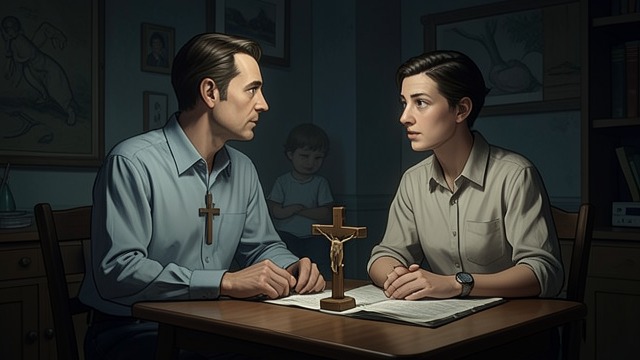
Different Beliefs at Home
A Private Faith
Eric identifies as Catholic and sometimes goes to church. Andrew is an agnostic and does not want Wen to be forced into a religion.
A Family Agreement
They agree that Wen can decide for herself when she is older. Eric accepts the arrangement despite occasionally feeling that faith is an important part of himself.
Their differences are intimate and negotiated, unlike the visitors’ attempt to impose a single explanation on the family.
God as an Explanation
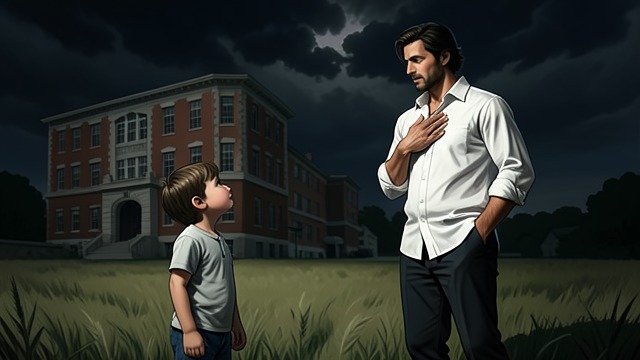
God as an Explanation
Leonard Names a Source
Wen asks who is making Leonard do this, and he answers, “God.” He admits that he does not understand why the command exists.
A Child’s Moral Challenge
Wen says Leonard’s God sounds like a killer. Leonard cannot give her an explanation that makes the violence seem just.
Faith becomes a claim the characters must answer for rather than a comforting abstraction.
A Prayer Under Pressure
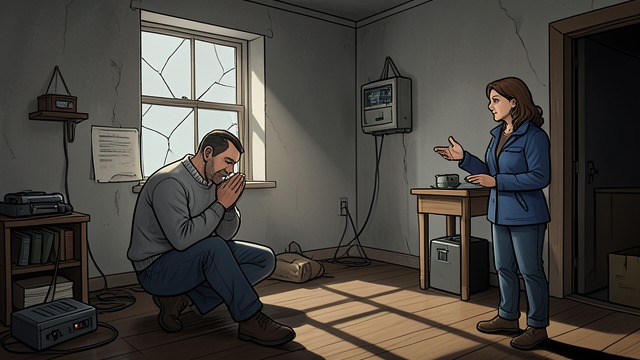
A Prayer Under Pressure
Eric’s Habit of Prayer
As the crisis worsens, Eric prays for help even while questioning the visitors’ account. His Catholic faith offers familiar language but no clear answer.
Conflict with Andrew
Andrew argues that the disasters can be manipulated or misinterpreted. Eric sometimes agrees and sometimes finds the evidence difficult to dismiss.
Their disagreement is also an intimate negotiation about how to endure uncertainty together.
The Visitors’ Divine Test
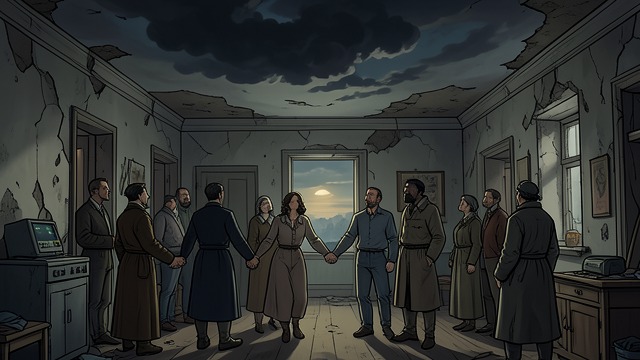
The Visitors’ Divine Test
Suffering Recast
Leonard describes the family as chosen and the ordeal as a test. Sabrina and Adriane repeat parts of the same claim even as their confidence falters.
Doubt About the Source
The group cannot explain why God would require kidnapping and death. Their certainty depends on accepting the command without understanding it.
The novel questions whether divine language can conceal human decisions and responsibility.
Faith Without Assurance
Faith Without Assurance
No Answer Arrives
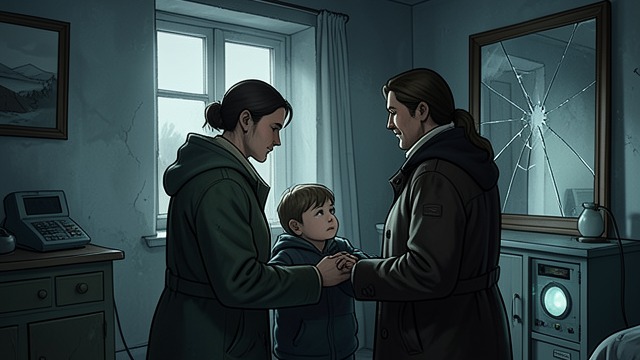
Eric considers sacrifice and prays, but no vision appears to confirm what he should do. Andrew refuses to turn uncertainty into permission to kill.
A Human Commitment
The couple chooses to continue together without knowing whether God, delusion, or catastrophe explains the events. Their care does not depend on certainty.
The ending leaves religious questions open while making moral responsibility unavoidable.
Before the cabin vacation
The first night of captivity
The second morning in the cabin
After the family rejects the ultimatum
In the final storm
