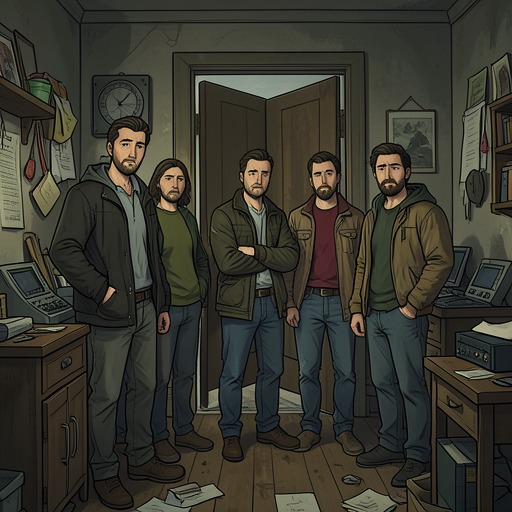
“There’s always a choice”
The Cabin at the End of the World“There’s always a choice” is Andrew’s brief answer to the intruders’ claim that they have no choice but to impose a sacrifice. Its force lies in the tension between moral agency and captivity: the family may be offered alternatives, but every alternative has been shaped by a threat against their lives and the rest of humanity.
The First Exchange
Leonard tells Andrew that he and the other intruders are ordinary people caught in an extraordinary situation, insisting that they did not choose to be there and that they have no choice. Andrew answers, “There’s always a choice.” Leonard accepts the wording—“Yes, okay, you’re right, Andrew”—but immediately qualifies it: some choices are more difficult than others, and the intruders have chosen to be there because they believe it is the only way they can help. The exchange establishes a recurring argument over what choice means. For Leonard, the phrase can accommodate the intruders’ claimed necessity; for Andrew, it refuses to let necessity erase responsibility.
Leonard checks his oversized, black-banded wristwatch and calls the others together because it is almost time. Andrew asks what the time is for, points out that they do not need to keep the family tied up in order to talk, and struggles against his restraints. The scene places the abstract disagreement beside the material conditions in which it is being made: Andrew can insist on choice, but he is bound while the intruders control the room and the approaching deadline.
A Choice Under Threat
Leonard spells out the demand: Andrew’s family must willingly choose one of its three members to die. If they do not choose and carry out the sacrifice, Leonard says, the rest of humanity—more than seven billion people—will perish, while the family survives to witness the end. The language of willingness therefore sits inside an ultimatum with catastrophic consequences attached to refusal. Leonard’s account turns a constrained decision into a claimed moral obligation: he presents compliance as the route to saving the world, even as the family is captive and the intruders set the terms.
When Wen pleads not to be killed, Leonard promises that the intruders will not kill her or her parents, and will not touch them again beyond what was required to enter the cabin and make them listen. But the promise is conditional in practice: the family must remain there until it chooses or its allotted time runs out. Leonard does not remove the threat; he distinguishes between the intruders directly harming the family and the deadline they say the family must meet. That distinction sharpens the gap between the appearance of a choice and the freedom to make one.
Reframing the Deadline
After news coverage of a devastating earthquake and tsunami, Leonard gives the family the same choice again, now calling it a gift. He says they can make the “difficult, selfless choice” the next morning and save the world, or let the clock move another minute closer to permanent midnight, as it did earlier. He promises that the intruders will tend to their needs within reason and otherwise leave them alone to reflect. The repeated presentation attempts to convert a threat into an opportunity for self-sacrifice; the stipulated deadline and the family’s confinement remain unchanged.
Andrew rejects the delay, saying that they do not need to wait until morning and will not change their minds. Later, when Sabrina insists that the family must choose, Eric tries to keep the intruders talking. He asks Adriane about the restaurants where she worked and urges everyone to talk a little longer. The intruders do not answer and draw together instead. In this moment, the problem is not simply whether a choice exists, but who controls the time in which it can be made: Eric’s effort to prolong the conversation is a small attempt to resist the deadline without accepting its terms.
From Defiance to an Unanswered Question
Later, Andrew asks Eric directly, “Do you think one of us has to be killed by the other to keep the world from ending?” He cuts through the explanations surrounding the reported disasters and asks whether the central claim is true. Eric responds by questioning why the four intruders would invent it and put the family through the ordeal; Andrew points out that Eric has not answered him. The phrase has shifted from a rebuke to Leonard’s fatalism into a question Andrew presses within his family: whether an asserted necessity should determine what they do.
Across these exchanges, the line does not prove that every apparent alternative is genuinely free, nor does it settle whether the intruders’ prophecy is true. It holds open a narrower but consequential claim: even when circumstances are imposed, people remain answerable for how they respond. The intruders use the language of necessity and gift to justify their demand; Andrew’s insistence keeps the moral burden of that demand visible.