God
The Cabin at the End of the WorldGod is never directly present in the evidence of the cabin crisis; instead, God becomes the name through which Leonard explains the visions and the demand for a sacrifice. That gap between an unseen authority and the brutal actions attributed to it makes belief itself part of the conflict: Leonard speaks as though the command is binding, while the people trapped with him question both its source and its justice.
Identity and the Claims Made in God's Name
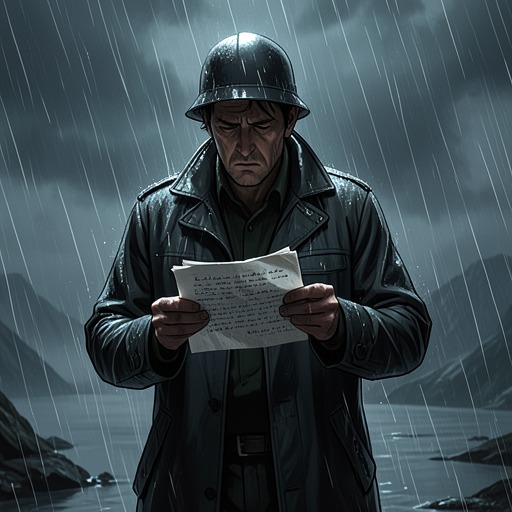
Leonard identifies God as the force compelling him and the others to act. When Andrew asks who is making them do this, Leonard answers with a single word, sheepishly, with relief and terror both apparent in his reaction. The answer supplies a source for the visitors’ mandate but does not settle whether the visions truly come from God. Leonard offers no explanation for why God would demand such suffering; when Wen asks that question, he admits he is not sure and says he cannot change what has been set in motion.
Leonard’s account rests on shared visions. He says that he, Sabrina, and Adriane saw the lake and the red cabin, including details such as the dirt road and the grain of the front door. In his telling, the visions revealed a family that would have to make a sacrifice to save everyone. He frames the crisis as a test chosen for all of them, including Andrew, Eric, and Wen, and warns that failure will bring the end of the world. Yet his insistence that the suffering will not last forever sits uneasily beside the immediate threat to the family: divine purpose is asserted, but the meaning and fairness of that purpose remain unexplained.
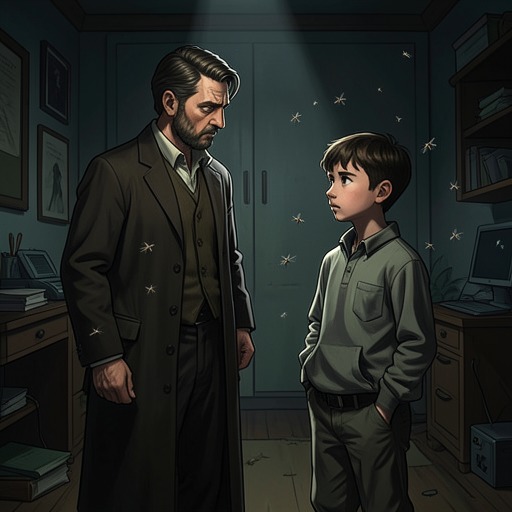
The family’s different relationships to religion sharpen that uncertainty. Wen has heard about many religions from Andrew and knows that Eric believes in God and sometimes goes to church alone; she is unsure what she believes herself. Before Wen’s adoption, Eric agreed with the agnostic Andrew that they would not baptize her or impose a religion on her, leaving her free to choose when she was older. Eric is a self-described cautious Catholic who finds comfort in familiar prayers, songs, and the sensory rituals of church, but he still hurriedly insists that God would not cause the ordeal while silently praying for the family’s safe release. His faith offers comfort without giving him confidence that Leonard’s claims are true.
The Command Made Flesh
The claim of divine authority turns into coordinated violence when Leonard announces, “The choice has been made.” Sabrina and Redmond move forward with their weapons in measured, soldierlike steps while Leonard remains behind them; the scene gives the supposed command a human choreography, not a visible divine source. Eric pleads with them to stop, and Andrew strains against his ropes, but neither can reach the attackers. Adriane swings her clawed staff into Redmond’s face. Leonard then circles behind him, waits for his turn, and brings down the sledgehammer end of a weapon made from a sun-bleached boat oar. The blow crushes Redmond’s chest; blood sprays across Andrew’s legs and the visitors’ clothes. Nothing in the scene verifies that God directed the killing. What it shows is people enacting a sacred mandate through their own bodies and weapons.
Leonard’s certainty does not spare him from recognizing the human cost. After Adriane is shot, he crawls past her body, weeping and whispering apologies, yet continues toward what he believes he has been commanded to do. He understands this journey as penance for breaking his promise to Wen: he had assured her that her parents would not sacrifice her and that he would protect her. His relief that Adriane’s death removes the burden of killing her himself, and his fear that the failures may be his fault, expose the strain beneath his claim to be only a vessel. The language of obedience offers him a way to keep going, but it cannot erase his responsibility for what he does.
Sabrina eventually forces the theological question Leonard cannot resolve. She calls the demand capricious and cruel, asking what kind of God or universe would require it. Leonard first sighs without answering; pressed again, he replies, “The one we have.” The exchange gives no comforting account of divine justice and no proof that the command is truly divine. Sabrina drops her staff, calling the situation hell. By then, belief has not made the violence intelligible or brought the visitors together: Leonard and Sabrina share a look of isolation before the calamity they believe is unavoidable. God remains unseen, while the consequences attributed to God are concrete, bodily, and borne by people who must choose whether to obey.
Narrative Significance
God functions less as a speaking character than as the disputed authority invoked to make the visitors’ actions seem necessary. The visions give Leonard a story about selection, testing, and catastrophe, but they do not give him an answer to Wen’s question about why God would demand this. His admission that he does not know leaves the central claim intact while exposing its limits: he treats the command as unchangeable without understanding its purpose. The distinction matters because certainty about what must be done is not the same as knowledge of who requires it.
The visitors’ language also shifts the burden of agency. Leonard calls himself a vessel and describes the sacrifice as a test, yet the command reaches the family through people who restrain, threaten, and injure them. When Sabrina asks what kind of God could want such suffering, Leonard’s reply, “The one we have,” closes off explanation rather than supplying one. The phrase names the frightening possibility that divine authority, as the characters experience it, offers no guarantee of goodness or intelligible justice. The narrative leaves that possibility unresolved: it records the belief and its consequences, but never gives God a direct voice that could confirm the visitors’ interpretation.
The Unstable Identity of the Sacrifice
Leonard’s own account exposes how much the supposed command depends on judgments that can falter. He briefly suggests that Redmond might not be the man Andrew recognizes: thirteen years have passed, Leonard notes, and the man is more than fifty pounds heavier. Later, after Redmond has been killed, Leonard believes Andrew’s claim that Redmond had assaulted him. That belief shakes Leonard’s faith in what he is doing, but does not stop him from continuing. The obligation survives a question about the victim’s identity without becoming any clearer in purpose.
The word sacrifice therefore rests on unstable ground: a promised saving of the world is bound to disputed visions, a possibly mistaken identification, and decisions made by frightened people. Leonard’s language of being a vessel cannot make those decisions impersonal. His account of penance for breaking his promise to Wen, and his fear that the failures are his fault, register a conscience still attached to individual responsibility even as he tries to submit it to divine command. The narrative leaves that contradiction unresolved: an authority invoked as absolute reaches the family through human choices that remain uncertain, consequential, and impossible to undo.