Light and Darkness
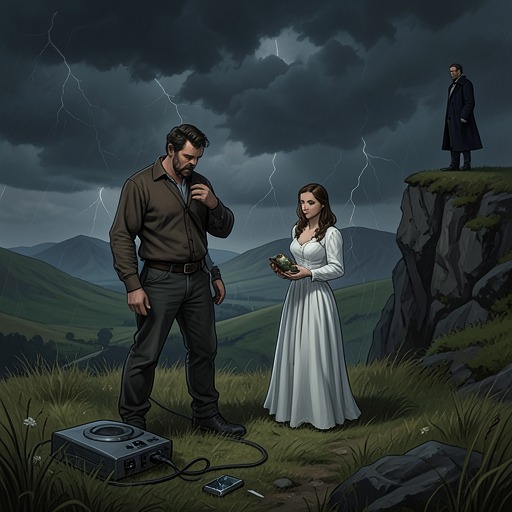
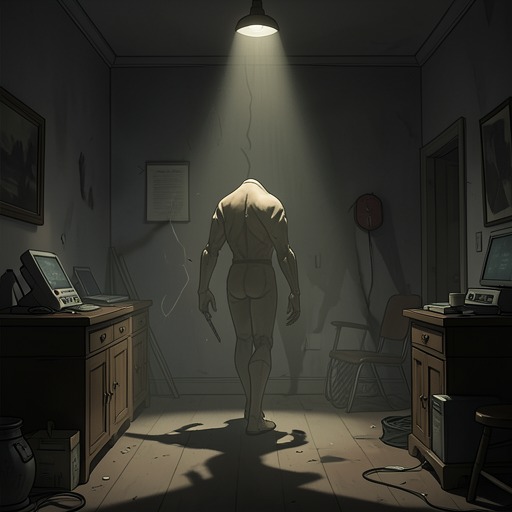
The Cabin at the End of the WorldLight and Darkness is a recurring motif in which neither illumination nor obscurity guarantees safety. Brightness brings Eric into contact with an experience he cannot understand, while darkness is a source of fear for Wen and a condition in which danger can hide. Across the cabin scenes, light and dark shape the family’s perception of the disaster, making visibility itself feel threatening and leaving the distinction between revelation and terror unresolved.
Light as Exposure
Sunlight enters the cabin not as reassurance but as a force that interrupts Eric’s awareness. In one moment, it flashes brightly inside and Eric is washed away. The brief, stark image makes light seem less like ordinary illumination than an overwhelming power capable of erasing the person exposed to it. The episode is linked to his recurring uncertainty about the figure in the light: he worries over whether he saw it at all, and cannot settle what the experience means.
The sunlight’s return intensifies that uncertainty. As a warm breeze moves through the screen slider, the cabin’s oppressive atmosphere is also marked by a garbage smell that grows stronger by the minute. Andrew catches Eric’s eye and nods. Eric tries to decide whether the gesture means encouragement, secret knowledge, or a signal that Andrew’s ropes are looser than his own. Then the light flashes again, and Eric turns away, afraid of being exposed to it before he is ready. The moment places a small, ambiguous exchange between the two men beside a threat Eric experiences as larger than the cabin itself; the flash interrupts interpretation rather than clarifying it.
Wen’s Night and the Fear of Shadows
For Wen, darkness has been an everyday fear long before the cabin siege. At home she sleeps with a plain white night-light, preferring a bulb without a cartoon or animal shape because unusual shapes can make frightening shadows. She also wants the hall and bathroom lights left on, with the bathroom door open. Her parents have tried to explain that her developing brain needs darkness for proper rest, but Wen jokes that she does not want her brain growing too fast for her head. The humor does not remove the seriousness of her need for light: when a parent secretly switches off a light, she experiences it as betrayal, and once announces that she will have a terrible day because of it.
In the cabin, Wen wakes without remembering that she has woken. She surveys the room with her eyes before moving her head, waiting until she believes everyone else is asleep. The cabin is dark, though not entirely; the bathroom light does not count for her because its door is shut. She wonders whether she has slept through a whole day and woken on the next night. Her familiar fear of sleeping without adequate light now meets the disorientation of captivity, where even the time of day and the security of the room are uncertain.
The contrast with home makes the cabin’s darkness more than a departure from her routine. Wen remembers playfully leaping between mattresses as if they were rafts in a cold sea or rocks amid lava, but under these circumstances she moves carefully so as not to disturb Sabrina or Adriane, who are asleep nearby. When Wen whispers that she wants a light, she is told to return to bed and promised an explanation for why none was left on. The exchange gives her ordinary request a new weight: the lights she depends on are absent in a room where she cannot control who is present or what has happened while she slept.
The Uncertain Voice and the Safer Darkness
An echo comes to Wen from an unknown speaker. It might be her own voice, one or both of her fathers, or somebody else. It repeats Andrew’s earlier words and urges her to run outside, warning her not to worry about Redmond because he will never get up again. The voice tells her not to fear the darkness outside, but to fear what is happening and will happen inside. Its urgency turns the familiar opposition between lit safety and dark danger inside out: the dark beyond the cabin is presented as preferable to whatever waits within it.
Wen cannot act on the warning. She apologizes to the voice in her thoughts, considers sitting beside one of her fathers, and sees that both men are asleep with their heads slumped forward. She returns to her mattress and hides beneath the blankets, her face against a cold pillow. The scene does not resolve whether the voice is memory, intuition, or something other than either. Instead, it holds Wen between competing fears: the darkness she has always resisted and the apparent danger of remaining where there is little light.
The Screen, Disaster, and the Limits of Seeing
Light also accompanies the family’s attempt to understand the disasters shown on television. Eric is shaken by news images that appear to fulfill a prophecy, and by the recorded roar of the ocean and screams coming through the speakers. The sounds feel disturbingly authentic to him, while the fading afternoon sunlight forces his eyes closed. He remains troubled by the memory of the figure in light he may or may not have seen. The broadcast seems to offer evidence about what is happening in the world, yet it deepens rather than settles his uncertainty about what he has witnessed.
That uncertainty is set against the Oregon coastline’s destruction. Haystack Rock shrinks into the rising ocean; the rocks that had resembled shark fins disappear, along with the people running up the beach and most of the beach itself. The image gives the threatened coast a visible, particular form, but its apparent confirmation of disaster cannot answer every question facing the family. Andrew tells Eric that what is happening on television proves or means nothing and asks him not to watch. The screen can show catastrophe, but seeing it does not necessarily provide reassurance or a clear interpretation.
Later, the television’s black screen reflects Eric’s face and the cabin in muted tones. He considers Leonard’s request to turn it on and wonders what the image might establish: perhaps nothing, perhaps whether the promised calamity has ended, perhaps whether everyone is gone. The possibility that the screen will light up frightens him as much as the prospect of darkness. He imagines the void not as blackness but as a sea of burning, relentless light. The screen therefore concentrates the motif’s central tension: darkness may conceal the world’s end, while light may reveal it in a form Eric cannot bear. Neither state offers him the certainty he wants.
The Motif’s Significance
The repeated flashes, household lights, shadow fears, and television images connect private vulnerability to the scale of the approaching disasters. Wen’s night-light is small and ordinary, but its absence measures how far the cabin has departed from the familiar routines that once made her feel safe. Eric’s fear of exposure, by contrast, makes brightness feel like an encounter he cannot control. Their different responses prevent light and dark from settling into a simple moral code.
Instead, the motif sustains a form of uncertainty central to the cabin scenes. Light can expose Eric to a possible presence, illuminate devastating news, or arrive at a moment when he is not ready to look; darkness can unsettle Wen, conceal events, or be named as a refuge from what is happening inside. The family’s need to see and understand the crisis persists, but vision does not guarantee knowledge. In this pattern, brightness and obscurity are not answers to the danger so much as the conditions through which the characters experience its reach.