Worldwide airplane crashes
The Cabin at the End of the WorldWorldwide airplane crashes enter the story through television coverage in the besieged cabin, where each new disaster tests the visitors’ claim that the world can be saved only by sacrifice. News reports confirm as many as seven planes have crashed without warning; after Leonard’s death, Eric and Andrew connect the crashes to the predicted fall from the sky, while the cause remains unconfirmed.
Background: A Command and a Sequence of Disasters
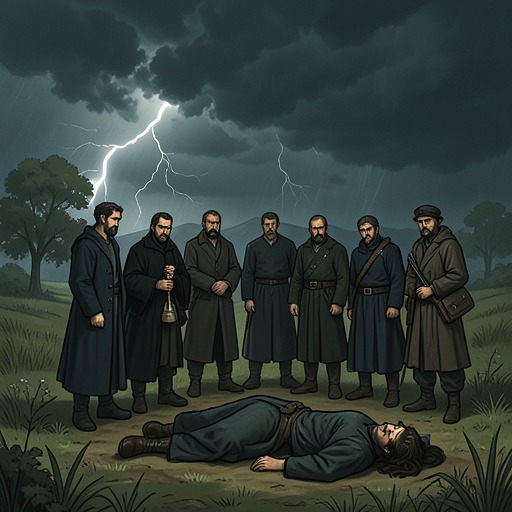
Leonard tells the family that he and the other visitors received the same message at 11:50 p.m. the previous Monday. He describes them as strangers united by a vision that has become a command. The family, he says, must willingly choose and kill one of its three members; if they refuse, the rest of humanity will perish, leaving the family alive to witness the aftermath. He presents the choice as both terrible and unavoidable, and says the visitors are messengers or a mechanism through which the message must pass.
The television’s earlier reports give this ultimatum an increasingly alarming context. A 7.9-magnitude earthquake in the Aleutian Islands prompts tsunami advisories along the Pacific coast and a strong warning for Hawaii. The Pacific Tsunami Warning Center reports that a wave estimated at fifteen to twenty feet is moving toward the islands. Coverage then shows water inundating a resort on Kauai and damaging other coastal locations. The spokesperson says early warnings allowed evacuations; at that point, no injuries or deaths have been reported.
A second earthquake deepens the crisis: an 8.6-magnitude tremor strikes near Oregon, in the Cascadia Subduction Zone, an area long feared by scientists as the site of a potentially catastrophic quake. Leonard treats the earthquake as confirmation that the family’s refusal has consequences. Sabrina later summarizes the visitors’ interpretation as a sequence: Redmond dies, then the earthquake and tsunami occur; Adriane dies, then the bird flu spreads. She warns that further deaths among the visitors will be followed by further calamities. This is the visitors’ account of the pattern, not proof that sacrifice causes the disasters.
The Broadcast and the Crashes
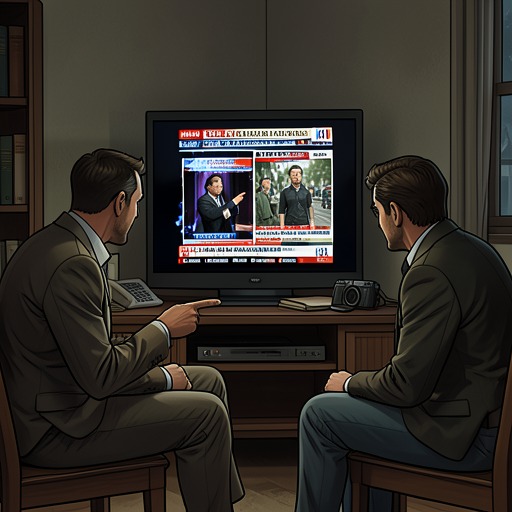
The airplane disaster appears on the television while Sabrina is urging Andrew and Eric to leave the cabin. News coverage interrupts a program about bird flu with images of wrecked aircraft: smoking crash sites in fields and wreckage floating offshore. The commentator reports confirmation of as many as seven planes down without warning or distress calls. Airports around the world are cancelling flights, and officials face increasing speculation about a coordinated cyberattack on aircraft flight-management systems; the report does not establish that such an attack occurred.
Eric’s encounter with the coverage is bound up with the cabin’s uneasy relationship to the television. Earlier, Leonard insists that he watch the disaster reports, and the broadcast of the Hawaiian tsunami keeps the family focused on the screen. Later, as Eric reaches for the television’s power button, a fly crawls across the screen and guides his hand toward it. The resulting images overwhelm him, including scenes of airports, hospitals, crowded streets, and masked people. The flight-crash report then makes the visitors’ prediction of falling skies seem newly literal.
Interpretation and Aftermath
The timing gives the crashes their force within the siege. After Leonard is killed, the reports of planes falling arrive as another apparent fulfillment of the visitors’ warnings. Eric tells Andrew that commercial airplanes crashed at the same time and that the events followed Leonard’s death. Andrew challenges both the prediction and the scale of the pattern, recalling that plane crashes occur and noting that a smaller aircraft had recently crashed into a house in Duxbury. Eric distinguishes that accident from multiple commercial planes apparently going down together, then recognizes that his own account may not be entirely accurate.
The sequence therefore remains suspended between corroboration and uncertainty. The broadcasts present concrete disasters, but they do not prove the visitors’ claim that the family’s choices control them; the proposed cyberattack supplies another possible explanation without resolving the evidence. For Eric and Andrew, however, the reports are no longer remote images. They become part of the immediate pressure to interpret the deaths and disasters as a single pattern, even as Andrew’s doubts resist the explanation the visitors offer.