
Trophies and the Theft of Personhood
The CageKen’s collection of body parts and personal keepsakes exposes his desire to convert living women into possessions that can be retained after their deaths.
increasing Bearing strength in each event
 decreasing
Bearing strength in each eventdecreasingA Repeated Fingertip
A Signature Trophy
The Missing Piece
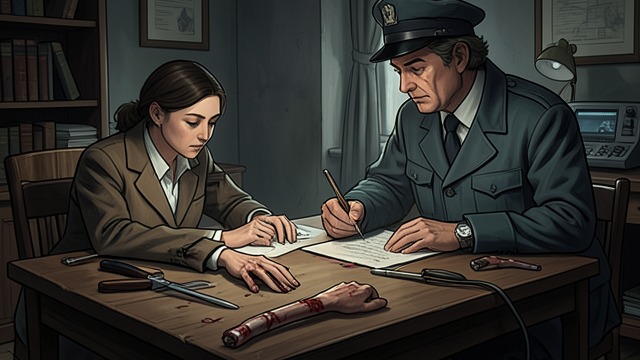
At Louise Usher’s body, Bill Nicol notices that the top joint of her left little finger has been removed. The same injury has appeared on earlier victims, making it a repeated signature rather than an accidental wound.
The mutilation links the murders while telling the officers that the killer takes something from each woman. It is both evidence of method and a deliberate claim over the victim’s body.
A Personal Token
The repeated fingertip suggests that the killer wants the women remembered according to his own design. The investigators must understand the trophies without allowing his chosen display to define the victims.
Distinctive Keepsakes
Each Victim Made Unique
Individual Tokens
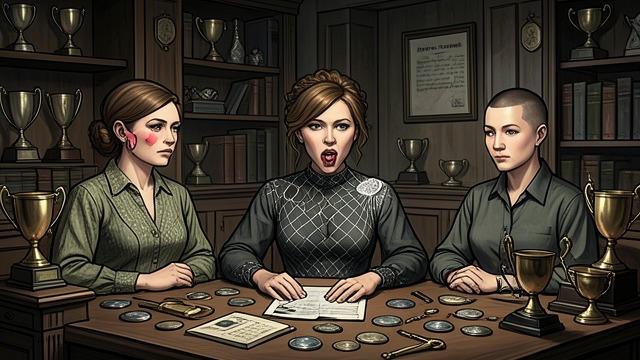
The victims lose more than the same fingertip: one loses an ear and earrings, another a tongue with its stud, and Louise has her long hair cut away. Felicity will later lose a tattoo, making the collection increasingly personal.
These choices suggest that Ken notices an individual feature and converts it into an object he can keep. His language reduces a person to the token he has taken from her.
Violence as Possession
The trophies make murder continue beyond the moment of death. They turn remembered bodies into a private collection and reveal how thoroughly the killer confuses intimacy with ownership.
Felicity's Tattoo Removed
A Trophy Cut From Skin
A Murder Made Into Display
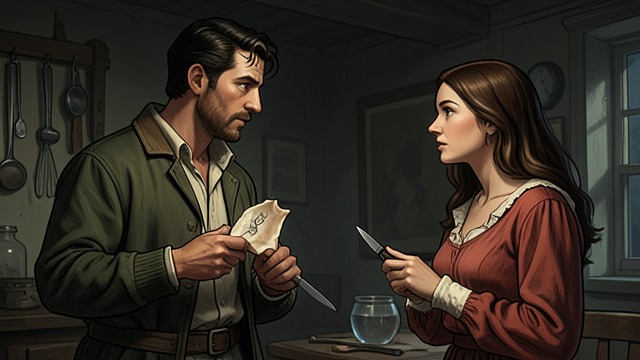
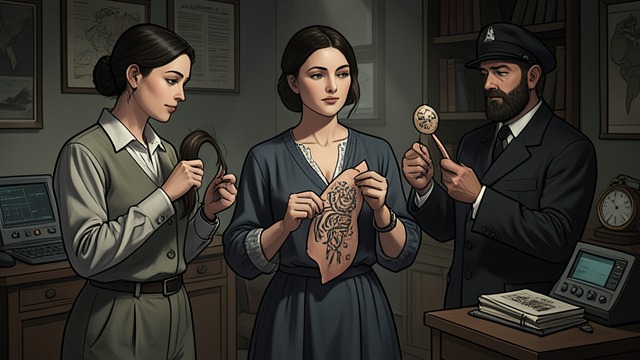
After strangling Felicity, Ken cuts the tattoo from her hip and shows it to Jill as though it were an attractive souvenir. He also removes the usual fingertip and stores both pieces in liquid.
The tattoo had marked Felicity’s body as hers; Ken treats it as a detachable possession. His calm explanation makes the appropriation as revealing as the violence itself.
A Witness Carries the Truth
Jill sees the act and later tells Zoe what happened. The trophy is intended to preserve Ken’s private memory, but the surviving women make it evidence against him.
The Collection Discovered
The Drawers Open
A Private Archive
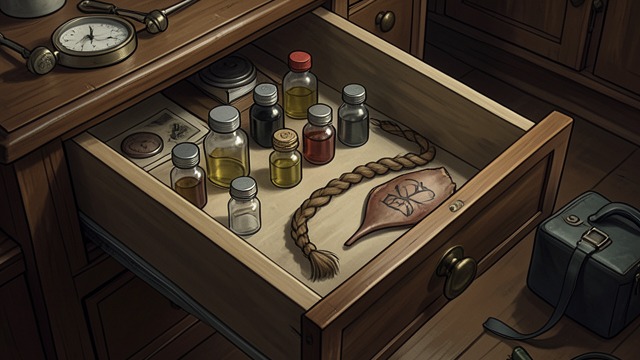
Police searching Ken’s late mother’s house find vials containing fingertips, Louise’s plaited hair, and the piece of skin bearing Felicity’s penguin tattoo. The objects link the killer’s private collection directly to the victims.
The drawer turns the clues noticed at crime scenes into tangible evidence. What Ken intended to keep hidden is now part of a documented investigation.
Souvenirs Become Proof
The collection demonstrates how his idea of remembrance depends on the victims’ destruction. It also makes his denial increasingly untenable and gives the survivors’ accounts material corroboration.
The Victims Reclaimed as People
Evidence Does Not Define Them
From Objects to Names
The officers recognize each relic through a victim’s identity: Louise’s hair, Felicity’s tattoo, and the removed fingertips belong to named women with families and histories. Their meaning changes when they are removed from Ken’s private archive.
Jill and Zoe’s survival ensures that the trophies cannot remain the only account of what happened. Their testimony describes the women as people who warned, cared for, and resisted one another.
Memory Reframed
The killer wanted to preserve parts of his victims for himself. The investigation instead turns those objects into evidence of his crimes and restores the women’s names to the center of the story.
Monday 19 February
Monday 19 February
Saturday 24 February
Saturday 3 March
After Saturday 3 March
