
The Making of an Investigator's False Certainty
The CageThe case repeatedly tempts investigators to convert plausible details into conclusions, then rewards continued verification over confidence.
increasing Bearing strength in each event
 decreasing
Bearing strength in each eventdecreasingEarly Theories Compete
Searching for a Shared Trait
A Difficult Comparison
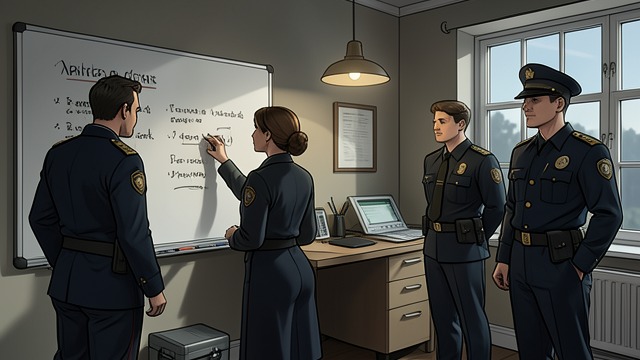
Eve and Bill compare the victims’ ages, hair, birthdays, and places where they were last seen. Some patterns seem suggestive, such as a descending age range, but fail to form a reliable rule.
The officers consider appearance, zodiac signs, and common routes without settling prematurely on any one explanation. The inquiry is defined by how little can yet be known.
Restraint as Method
Keeping possibilities open prevents coincidence from becoming a false conclusion. The team has to convert impressions into checks that can confirm or dismiss them.
A Missing Taxi Trail

The Cab Hypothesis
A Plausible Explanation
The victims may have entered a car willingly because it looked like a taxi. The idea explains why witnesses report no struggle and why CCTV might show ordinary traffic rather than an abduction.
Officers review footage and contact local firms, but the first search yields only partial plates and no clear offender. A good theory is not yet a solved crime.
Testing the Theory
The team continues to seek independent support rather than treating the idea as fact. Jill’s later CCTV appearance confirms the black-cab connection, while Zoe’s abduction shows the killer can also use another method.
Dodds Looks Guilty

A Phone Points to a Man
Strong Suspicion
The twins’ phone and the messages on it point to Jason Dodds. The recovered device links him to the girls’ online conversations and their planned meeting in Newcastle.
Dodds denies the evidence and police find nothing in his home or car. Investigators believe he is involved but still lack the location and physical corroboration needed to prove the full crime.
The Need for Verification
The difference between suspicion and proof forces the team to release him and follow him covertly. Restraint costs time, but it produces the lock-up lead that the interview alone could not provide.
Martin Fits the Story

A Convincing Wrong Lead
Motive Seemingly Aligns
Martin Smith has spoken admiringly about the Phantom and knows Zoe’s address from store paperwork. He is also expected to borrow the delivery van, making Josie Trott’s concern appear credible.
Police search his house and question him, but the captives are not there. Martin’s distressed account of his plans to move his mother’s belongings is not enough by itself to prove innocence, yet it challenges the theory.
Evidence Corrects Intuition
A recording shows another man taking Zoe away. The investigators must abandon a coherent story once evidence contradicts it, even as the false lead consumes urgent time.
The Correct Identification
A Face Becomes a Name
Recognition From the Workplace
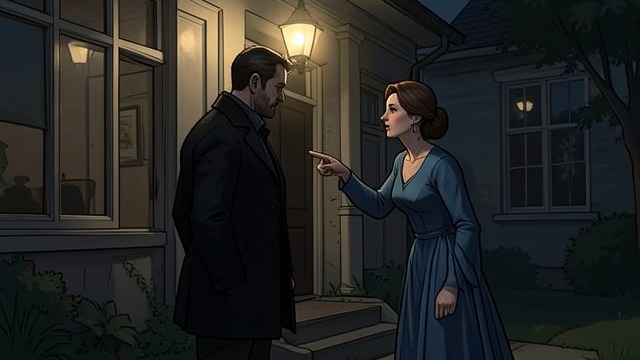
Police enhance footage of the man outside Zoe’s house and ask Josie to identify him. She recognizes Ken Carlton, the furniture delivery driver, and provides his home address.
Eve’s team moves quickly but cautiously, finding the cab and the loft arrangements at his home. The identification is confirmed by physical evidence rather than by behavior that merely seemed strange.
Certainty Earned
The case’s resolution comes through the accumulation of independent details: footage, work records, the vehicle, the tunics, the cage, and trophies. Verification turns suspicion into an arrest and a rescue.
Monday 19 February
Tuesday 20 February
Tuesday 27 February evening
Saturday 3 March afternoon
Saturday 3 March evening
