Becky Allsopp
The CageBecky Allsopp is reconstructed in the investigation through the route she took home and the evidence left on her body. Her murder becomes part of a pattern connecting several victims: each is missing the top joint of the left little finger, while a separate, personally distinctive item has also been taken.
Identity and Place in the Investigation
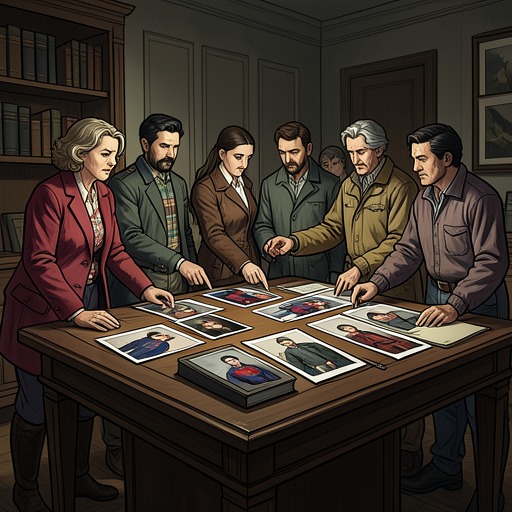
The account supplies little biographical information about Becky beyond a business meeting out of town and the journey that followed. Instead, investigators encounter her through a murder-board comparison: her case is considered alongside those of Catherine Caslaw and Louise Usher, whose bodies also bore signs of trophies being taken. Becky’s case contributes both a recurring clue and an individual detail to that comparison.
The shared injury is the top joint of the left little finger. The second token differs from victim to victim: Catherine Caslaw’s tongue was removed with the stud in it, and Louise Usher’s hair was cut off. In Becky’s case, her left ear was removed, along with her cuff and earrings. The repeated fingertip links the victims; the ear and the associated items distinguish Becky’s loss within the pattern.
Journey and Disappearance
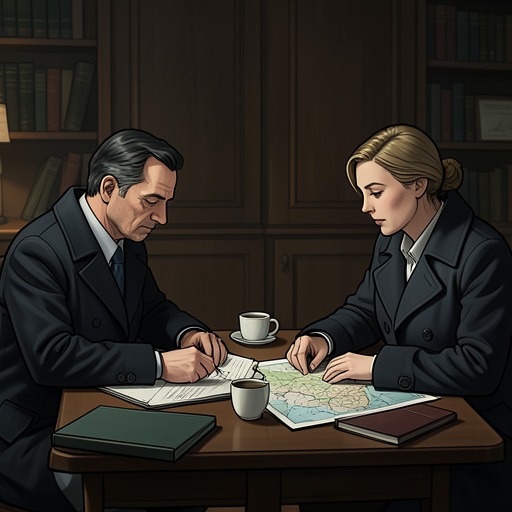
After her business meeting, Becky travelled by train to Newcastle Central Station and continued to Sunderland on the Metro. Investigators traced her as far as the Stadium of Light, where she left the train and walked beyond the range of the available CCTV cameras. That gap leaves the precise point and manner in which she was taken unknown; the account does not identify a witness or recording that captures her disappearance.
The investigators considered whether the victims might have been seized and bundled into a vehicle, but the case offered no reports of shouting, screeching tyres, or comparable disturbance. Becky’s route therefore provides a last known passage through public transport and surveillance coverage, not a documented account of the abduction itself. The uncertainty is important: the investigation can map where her trace ends without establishing exactly what happened next.
Body, Clothing, and Missing Possessions
Becky’s body was dumped in bushes beside Wessington Way, near Castletown. The recovery location differs from those of Catherine Caslaw, found in the underpass near the railway museum, and Louise Usher, found near Mowbray Park. The separate locations sit alongside the more consistent evidence of a shared method and the missing fingertip.
Becky was wearing a beige tunic rather than her own clothes. The investigators described the material as some sort of hessian, but had no lead on where it came from or who had made the tunics. Her belongings were not found, and none of the victims’ phones had been turned on. Those absences left the police without an obvious trail from her possessions or phone activity, while the unfamiliar clothing suggested that what she wore at recovery did not preserve her own ordinary dress.
Significance to the Case
Becky’s murder helps investigators distinguish repeated features from victim-specific trophies. The missing left little-finger joint, the non-personal tunic, and the disappearance of the victims’ belongings recur across the cases; the removed ear, cuff, and earrings make the evidence particular to her. The pattern is assembled from such contrasts rather than from a single clue that explains every killing.
Her journey also exposes a practical limit in the investigation: CCTV follows her only to the edge of its coverage, and the presumed vehicle capture is not directly witnessed. Becky thus occupies two roles in the case’s reconstruction—as a victim whose body reveals a distinctive act of taking, and as the point in a mapped journey where public evidence stops.