Discovery of the Briggs twins’ bodies
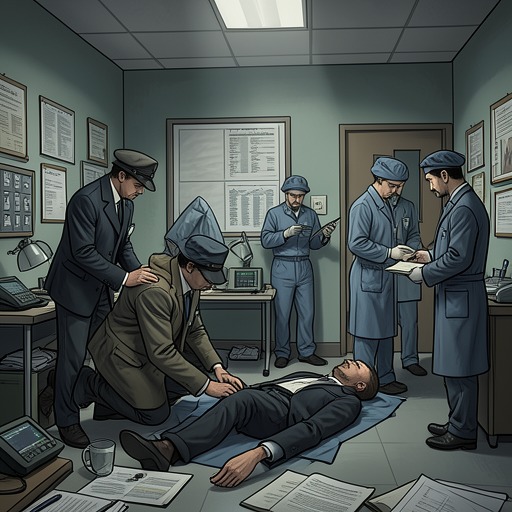
The CageThe discovery of the Briggs twins’ bodies is the decisive turn in their disappearance: a hidden chest freezer at a riverside lock-up reveals that Terri and Berri Briggs are dead, while the route to the site connects the search to Jason Dodds. The discovery changes the case from a missing-person investigation into the recovery of two victims and forces the police to tell their family that they were too late.
From online contact to a missing-person case
The trail began with the twins’ messages to a person they knew as Mario. He pressed them to meet, invoking the phones the girls had received from the young men they had been speaking to; when Berri suggested that he send a new photograph instead, he asked for a picture of the girls. Later, the twins exchanged messages confirming that they would come to meet him. Their replies show a plan taking shape through a conversation that seemed playful to them, but the request for photographs and the insistence on meeting were part of a deception that would become central to the investigation.
The connection was identified through the phone recovered by police. Maddie showed Gary Baxter and Jane Bowman that the number belonged to Jason Dodds, although the twins called its user Mario. She described evidence that he had pretended to be someone else, persistently asked the girls for pictures, and persuaded them to skip school and meet him in Newcastle. They had sent topless photographs; according to Maddie, they had resisted more extreme demands and had stuck together. The phone therefore supplied more than a name: it preserved the movement from online contact and pressure to a planned meeting in person.
Following Dodds to the lock-up
After the twins’ phone connected Dodds to them, he denied everything. Police then followed him rather than accepting the denial. At about ten in the morning, he left home and went to a betting shop, where he spent around half an hour. He left with another man, and the two went to a Wetherspoons on Albion Place to speak with a third man. Dodds and the first companion then got into a car, stopped at the B&Q on Trimdon Street, and drove to a lock-up beside the river. They went inside, where they remained as police watched.
The surveillance gave investigators a location to search, but not yet confirmation of what it contained. Gary obtained a warrant, and, about an hour after the team assembled outside the unit, the emailed permission arrived. Detectives, uniformed officers, and crime-scene technicians had been waiting; Gary had stopped them from entering before the paperwork was in place, insisting that the search proceed lawfully. Nick Hart and Jess Thomas continued to follow Dodds while the team prepared to enter. The careful wait for authority stands in contrast to the urgency of the search: the police had a suspect’s undisclosed destination, but still had to establish what lay behind its door.
A space behind the shelves
At first, the lock-up offered an unpromising mixture of stored possessions. Gary saw old books and tools; elsewhere were car parts, a dismantled motorbike under a tarpaulin, and shelves holding old paint tins. The shelving unit seemed to stand against the back wall, but Jane Bowman looked through it and recognized that there was space behind it. The apparent wall of storage was concealing a separate, inaccessible-looking recess.
Jane removed six old paint tins from the bottom shelf and wriggled through the gap with a torch. In the dim space, she found an oblong shape under a tarpaulin. Pulling the cover away exposed a chest freezer, its lid secured with a padlock. She called Gary over. Rather than search for a key, he took a hammer, passed it through the shelving, and followed her into the recess. He threaded the hammer’s claw through the padlock’s metal loop and levered until the lock snapped. The broken lock fell onto the concrete; Gary lifted the lid.
The bodies in the freezer
Inside were two packages wrapped in heavy-duty plastic, frost formed across their coverings. The bodies had been folded into foetal positions to fit in the confined space. Gary shone his torch on the parcels and saw, in one of them, a pale face framed by dark curls, with ice crystals on the eyelashes. The physical detail makes the discovery unmistakable: the twins had not simply vanished or been held elsewhere. They had been concealed together in the freezer, and the search for them had ended in the confirmation of their deaths.
Gary’s immediate response was grief for the girls. Jane Bowman also thought of Linda Briggs and of what the news would do to her. The discovery consequently carried two linked consequences: it provided the police with the bodies they had been searching for, and it made the family’s worst possibility certain. The lock-up’s hidden space, the padlocked freezer, and the bodies packed inside transformed a routine search of a suspect’s property into the recovery of the missing twins.
Telling the family
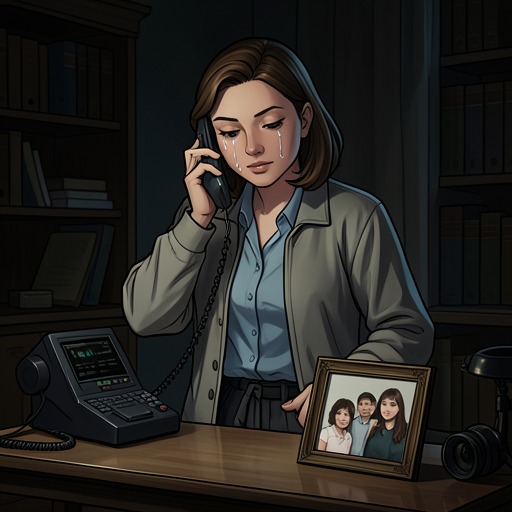
Gary and Jane went to the Briggs house to tell the family. Wendy Sawyer opened the door smiling, but the expressions on the officers’ faces made her smile disappear; she immediately asked what had happened. Gary told her that the girls had been found. Her first question was whether they were alive, a question that gives the discovery its starkest human measure: the word found could still have meant rescue until the officers answered it.
Linda was with Iris, watching television with the sound turned low. The twins’ faces smiled from the T-shirts the women were wearing. Gary explained that police had found the phone and that Dodds, after denying involvement, had led them to a lock-up he had not previously disclosed. Linda was already crying when she asked what had happened. Gary told her that they were too late and that both girls were dead. The confirmation closes the immediate search, but its consequence is not resolution for the family: Linda repeats that both have died, while Gary can only acknowledge the news he has delivered.