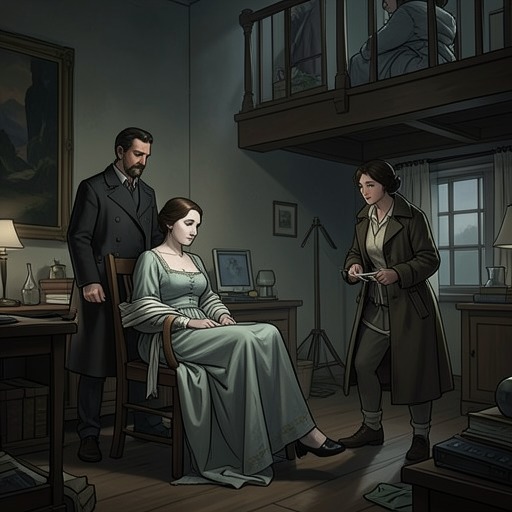
Felicity Wanless's escape attempt
The CageFelicity Wanless’s escape attempt is the brief, violent turning point in her captivity: she uses a moment alone in the bathroom to prepare, knocks her captor down, and reaches the kitchen, but a locked back door and his quick recovery defeat her bid for freedom. Her failure is followed by a more brutal assault and a threat that she will be replaced, making the attempt both an assertion of agency and a cause of intensified danger.
Context and Stakes
The attempt takes place against the investigation’s emerging picture of women disappearing during ordinary journeys. Felicity Wanless had been out with friends, left the pub before they did, and never reached home. Investigators assumed that the women had been forced into a vehicle, although there had been no reports of shouting, screeching tyres, or other obvious signs of an abduction. The circumstances of the disappearance were therefore uncertain; the account does not establish how Felicity was taken.
The case discussion also sets out how varied the women’s routines were. Becky Allsopp had travelled back from a business meeting through Newcastle Central Station and Sunderland, then passed beyond the reach of CCTV after getting off at the Stadium of Light. Louise Usher sometimes walked home from the gym, sometimes took a bus, and only very occasionally a taxi. Later, CCTV showed Jill Richards flagging down a car that looked like a black cab, despite a police warning to hail only white cars displaying a taxi sign. That sighting sharpened investigators’ concern about the danger of an unmarked vehicle, but it concerns Jill’s journey, not evidence of how Felicity was abducted.
Preparation in the Bathroom
During captivity, the bathroom visit follows a controlled routine: Felicity is taken down the ladder, moved through the process with a rope, and left behind a locked door. On this occasion, she recognises the pause as the calm before the next stage of her captor’s routine and decides to act rather than submit to it. She removes her adult nappy, urinates, and washes her hands and face. These practical actions are part of her preparation, not a reprieve from the confinement.
She then stretches to loosen her body. She had attended judo classes for a couple of years when she was younger and hopes she can still perform the moves despite being stiff and weak. The plan has been turning over in her mind all day; once she hears the rope being untied outside the door and the key in the lock, there is no more time to rehearse. Her quick heartbeat and nervousness register the physical risk, while her decision to prepare shows that she has been looking for an opening within the narrow limits of the routine.
The Attempt and Recapture
When her captor says it is time for the bedroom, Felicity kicks at his head. She misses, but strikes his shoulder hard enough to send him back against the opposite wall. He hits his head and falls, dropping the rope; Felicity seizes it and runs along the landing. She reaches the stairs and gets halfway down before hearing him climb to his feet and follow. Her escape depends on the few seconds she has gained, and those seconds are already running out.
She half-falls down the remaining stairs and crosses the hall to the kitchen, the place where she had first been dragged into the house and now the route she hopes will lead out. The back door is locked. She searches frantically for a key, finds none, and grabs a pan from the draining board, intending to smash the window. Before she can do so, she hears her captor approaching. She turns and swings the pan at him instead. He dodges; the movement throws her off balance, and he takes advantage of that disorientation to knock her down with one punch. She lies on the vinyl floor, seeing stars in the darkness behind her eyelids. The brief reversal—her captor on the floor, the rope in her hands—has become recapture before she can get through a door or window.
Punishment and Consequence
Felicity understands the defeat as the loss of her one chance. She expects him to be more careful from then on and believes there will be no further opportunity to escape. He pulls her upright by her hair, threatens that she will pay, and orders her back to the bedroom. His anger is followed by a brutal assault: he beats and claws at her as he violates her, and her pleas make him more violent. When it is over, she is bruised, bleeding, sore, and in tears. Returning to the loft, dark and isolated, feels preferable to remaining with him below.
The attempt does not win her release, but it changes the immediate terms of her captivity. Once Felicity has eaten the packaged sandwich left with a bottle of water on top of the cage, her captor sees that the packet is empty, orders her back inside, and ties her ankles and wrists again. As he knots the rope, he says he is tired of her and considers replacing her with a new doll, one that knows its place. Felicity understands what replacement means and whimpers. Her attempted escape has exposed both her resistance and the danger attached to it: she has acted for freedom, but the captor answers by reasserting physical control and making her continued survival seem conditional.