Keith Warner
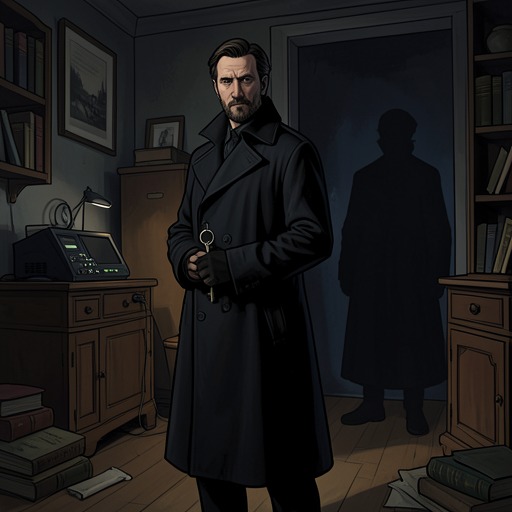
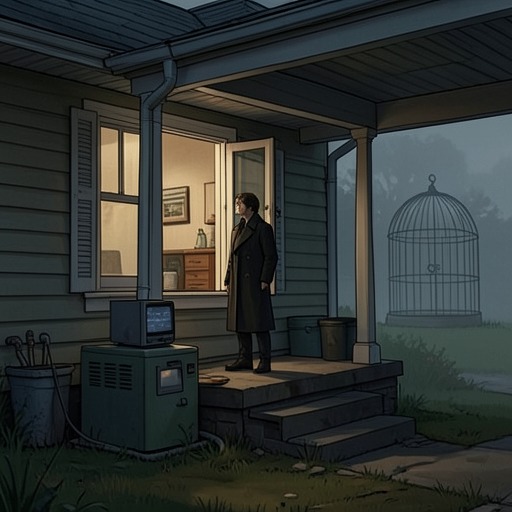
The CageKeith Warner is a locksmith, Rachel Warner’s increasingly estranged husband, and the man the investigation identifies as a suspect in the Phantom case. His ordinary work gives him a credible reason to enter people’s homes and handle their locks; the evidence that breaks through that cover is found in places his work does not explain, especially upstairs in Zoe Hardy’s house and among the belongings at his late mother’s home.
Identity and Household
Keith runs his own locksmith business, with a shop counter where staff can cover for him when he is called out. His trade involves changing locks for householders, including a package that covers doors and downstairs windows. He takes pride in the service and in fitting longer screws for security. This legitimate access becomes central to the investigation: fingerprints around external doors and frames might be expected, but their presence in an upstairs spare bedroom is harder to account for.
At home, he is quiet in manner but capable of intimidating Rachel with a look. When she criticizes the mother of two missing children on television, he tells her to stop; she falls silent because she has seen his expression before and knows not to press him. Their exchanges suggest that his authority in the household rests less on discussion than on Rachel’s awareness of his temper.
Secrecy and Marital Distance
Keith’s absences have become a recurring feature of the marriage. He goes out late, sometimes for hours, and does not explain where he has been. Rachel remembers that he went out on their wedding anniversary, as he had on other occasions, and wonders whether he visits his mother’s house or sleeps at the shop. She does not know what he does on these rambles. When he returns, he slips into the spare room; Rachel hears him come in, but he has not touched her in years.
The distance between them is set against a longer change in both partners. Rachel recognizes that she has become more judgmental, while Keith has become secretive and aggressive; after ten years, she says she hardly recognizes either of them. His mother’s death has made the uncertainty sharper. The house she left behind remains unresolved, and Rachel can only guess that it might be one of the places he goes at night.
A newspaper account of the missing and murdered women turns those private suspicions into a frightening possibility. Rachel studies the printed timeline and notices that one woman was taken on the night of the Warners’ anniversary, when Keith had gone out. Some other dates seem to fit his absences too, although she cannot establish a pattern and tells herself the overlap must be coincidence. The narrative thus gives the reader her suspicion before she acts on it, but keeps the suspicion qualified: at this point, she has dates and unexplained absences, not proof.
Rachel’s Report and the Investigation
Rachel eventually contacts the authorities and tells them she thinks Keith may be The Phantom. Her stated reason is specific but limited: he was out late on some of the nights when women were taken. As the conversation continues, she explains that the couple’s uncertainty extends to his mother’s house. Rachel had once held a key and helped with his mother’s shopping and cleaning; after his mother died, Keith changed the locks and refused to give her another key. Although Rachel says the house was left to both of them, he insists that it is his mother’s house and therefore his, will not let Rachel help clear it, and will not discuss selling it.
Her report makes the house a point of inquiry rather than merely a possible destination for Keith’s walks. Eve Strong thanks Rachel for coming forward and arranges a search warrant while Paul Forrester offers her tea. When Bill Nicol tells Keith that the house is to be searched, Keith reacts with visible alarm, asking what his mother’s home has to do with the matter. The change in his manner gives the concealed house a new significance, though the decisive discoveries have yet to be made.
Evidence Against Keith
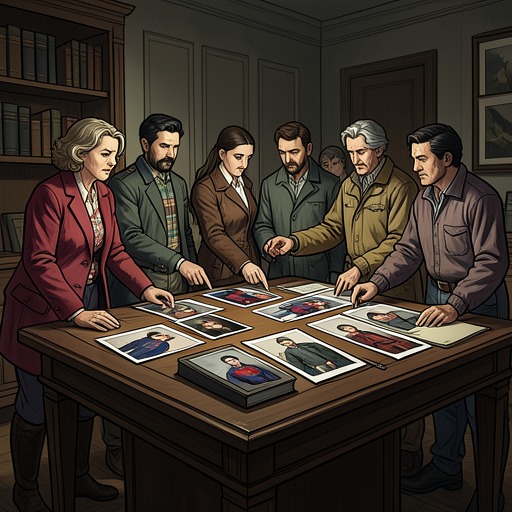
The fingerprint evidence first exposes a gap in Keith’s account of his work. Bill tells Eve that Keith’s prints match those recovered from Zoe’s house, including prints on a dresser in the upstairs spare bedroom. Keith acknowledges that he changed locks there as part of his householder package and explains that his work would naturally leave prints on downstairs doors and window frames. He emphatically denies ever going upstairs, insisting that Zoe was with him while he worked. When Eve raises Zoe’s report that small ornaments and photographs have disappeared and that objects have sometimes been moved, he is confronted with a pattern that his account of the installation does not resolve.
The scene of questioning emphasizes his unease through small, concrete details. After his fingerprints are taken, ink remains on his fingertips; he licks his thumb and rubs at the marks. In the interview room, the tea before him is untouched and cold. Those details do not prove the case by themselves, but they accompany the police’s movement from a general suspicion to a specific contradiction: his legitimate presence downstairs does not explain his prints upstairs.
The search of his mother’s house supplies a more personal link to Zoe. As Eve opens a drawer in the sideboard, Keith follows her movements and objects to her looking through his mother’s private things. The drawer contains small ornaments, jewellery, make-up, and photographs. One photograph, kept face down in a Perspex holder, shows Zoe reclining on a sun lounger. Keith reacts so abruptly when Eve picks it up that Gina Cross has to restrain him from getting up. The concealed image makes the connection more intimate than his acknowledged locksmith visit, without requiring the police to infer that the photograph belongs among ordinary work materials.
Jess Thomas then brings in a black holdall found in a cupboard under the stairs. It contains trainers, a balaclava, and several labelled keys, including one for Zoe’s house. Together, the key, the upstairs fingerprints, the account of missing and displaced belongings, and the hidden photograph undermine Keith’s insistence that he never went upstairs or had any unexplained connection to Zoe. Eve presents the photograph and tells him he has explaining to do. The available scene ends at that confrontation, with the evidence assembled against him rather than with an account of his subsequent response.
Narrative Role
Keith’s characterization is built through the contrast between access and secrecy. As a locksmith, he can explain why his prints might be found at a customer’s home; the same expertise makes the upstairs print and the labelled key more consequential when they surface. The investigation does not rely on one suspicious absence alone. Rachel’s imperfect timeline, the limits of Keith’s explanation, the concealed photograph, and the contents of the holdall accumulate into a chain of clues.
His household behavior also makes Rachel’s report a reversal in the story’s investigation. At first she appears to be a wife who knows little about her husband’s private life and has only circumstantial reasons to worry. The house he has shut off from her becomes the place where investigators find evidence of his connection to Zoe. Keith’s reported secrecy is therefore both a feature of the marriage and a practical barrier that the investigation must overcome. By the end of the supplied scenes, the man whose work is associated with securing homes is exposed through traces of access he cannot plausibly explain away.