Rachel anonymously reports Keith Warner
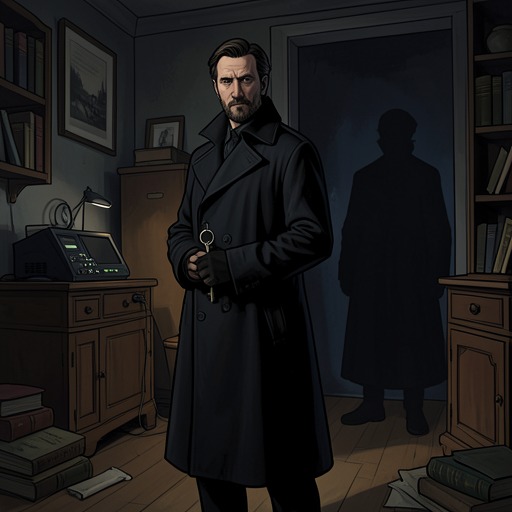
The CageRachel Warner’s anonymous report is the point at which a private domestic dispute becomes a police lead in the investigation of The Phantom. She does not approach the authorities with a witnessed crime or a complete explanation. Instead, she reports what she cannot account for: Keith Warner’s secrecy about his late mother’s house, his refusal to let Rachel enter it, and his presence away from home on some nights when women disappeared. Her call gives investigators a reason to examine Keith more closely, and a later search of the Warners’ home produces objects connecting him to Zoe Hardy.
The dispute that prompted suspicion
Rachel prepares carefully to raise the subject of Keith’s mother’s house. She has made the home spotless, had her hair done, put on a little make-up and scent, and cooked Keith’s favourite dinner. The care she takes contrasts with the subject’s apparent simplicity: she asks whether she can have a key so she can dust and vacuum the empty house. She had previously helped her mother-in-law by shopping and tidying, and frames her request as a continuation of that practical care.
Keith refuses. He says the house is his because it was his mother’s, and insists that he will deal with it when he is ready. When Rachel suggests helping to keep the place clean, he accuses her of spoiling everything, ends the conversation, and leaves. His anger does not prove criminal involvement, but it changes the meaning of an ordinary household disagreement for Rachel. She wonders why he will not let her maintain the house and what he might be hiding there.
The property’s ownership is also a point of conflict. Rachel later tells investigators that it was left to both of them, whereas Keith treated it as solely his and would neither let her have a key nor discuss selling it. Her account describes a practical exclusion from a house she had once entered regularly to help his mother. The unexplained change in access, rather than any direct knowledge of what Keith did there, is the immediate basis for her suspicion.
The confidential call
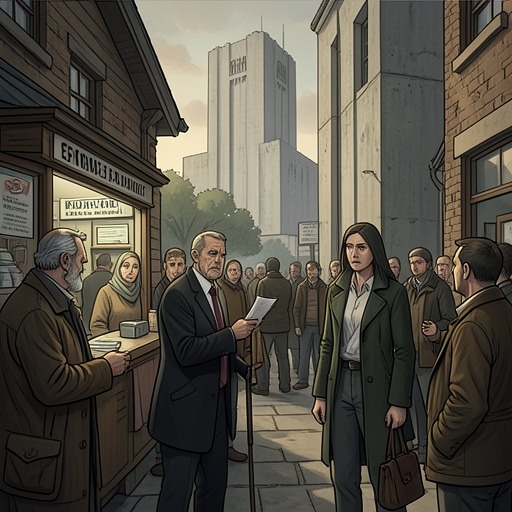
After the argument, Rachel considers calling the missing persons hotline because she understands that reports are confidential. When she finally makes the call, she does so from a phone box, taking care over how she contacts the service. At first she cannot speak. The hotline worker reassures her that what she says will be kept confidential, and Rachel supplies the name Raquel rather than identifying herself as Keith’s wife.
Rachel then says that she thinks she knows who The Phantom is: Keith, a locksmith. Asked why she suspects him, she explains that he had been out late on some of the nights when women were taken. Her statement is deliberately limited. She offers a suspicion and the circumstances behind it, not certainty that she knows his whereabouts or actions on every relevant night. The call thus links two observations—the unexplained absences and Keith’s control of access to his mother’s house—without resolving what either means.
The book later returns to the hotline report during a police visit to the Warners’ home. Eve Strong tells Rachel that investigators received a tip from someone who believed her husband responsible for the recent abductions and murders. When Eve asks whether Rachel called the hotline under the name Raquel, Rachel keeps her eyes on the carpet and does not answer. Asked whether she had been sufficiently suspicious to think Keith might be doing something wrong, she nods. The scene confirms the identity behind the earlier anonymous call and shows the cost of the secrecy: Rachel has to acknowledge her report in her husband’s presence.
From suspicion to physical evidence
During the search, Eve examines a sideboard while Keith watches. Its drawers contain paperwork, writing materials, and personal items. Keith objects when Eve looks through his mother’s things, and tension is visible in his reaction. In the top drawer Eve finds a photograph of Zoe Hardy, reclining on a sun lounger in a bikini and holding up a cocktail glass. The image is not, by itself, an explanation of Keith’s connection to Zoe, but its presence among the contents of the drawer makes Rachel’s concern about hidden activity at the house part of a more specific investigation.
Jess Thomas then enters carrying a black holdall she has found in the cupboard under the stairs. It contains trainers, a balaclava, and several labelled keys, including one for Zoe’s house. The key gives the search a concrete link to a young woman already central to the case; the photograph and the contents of the holdall are discoveries made by the investigators, not facts Rachel had supplied in her call. Eve shows Keith the photograph and tells him that he has explaining to do. The report has not established his guilt on its own, but it has helped bring investigators to a search in which evidence about Zoe comes to light.
Significance in the investigation
The episode distinguishes suspicion from proof. Rachel’s account points to behaviour she finds inexplicable: Keith changed the locks after his mother died, barred Rachel from a house she says was left to both of them, and refused to discuss what he intended to do with it. She also recalls his late absences on some relevant nights. None of these details alone identifies him as The Phantom. Their force lies in the way they direct attention toward a person whose occupation as a locksmith and whose control of the house already raise questions for her.
The narrative also makes confidentiality both a practical safeguard and a temporary shield. Rachel is able to call from a phone box and use a false name, but the report eventually becomes part of a police inquiry that returns to her home. When Eve identifies the hotline call, Rachel’s silence and lowered gaze first register her reluctance to acknowledge it; once asked directly, she confirms her suspicion and explains the history of the house. Her decision to report Keith therefore moves the investigation forward while exposing the personal conflict from which the lead began.
The later discoveries sharpen, rather than erase, that distinction. The photograph of Zoe and the key to Zoe’s house are not details Rachel knew when she called. They emerge through the search prompted by the developing investigation, turning an anonymous tip grounded in uncertainty into a lead accompanied by physical objects investigators can examine. The episode’s decisive change is not that Rachel solves the case, but that she chooses to report what she cannot explain—and that the resulting inquiry uncovers a connection to Zoe that her account alone could not have supplied.