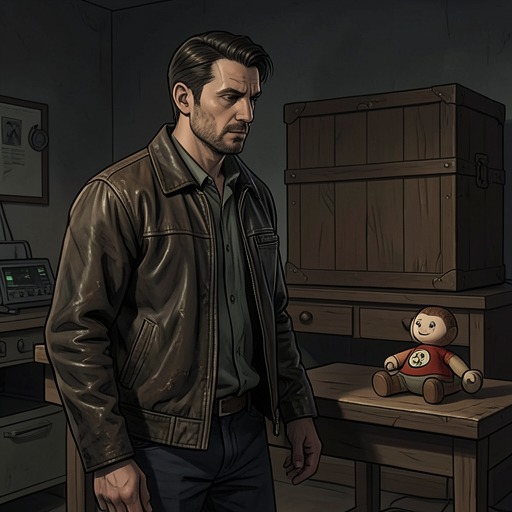
The killer murders his own mother
The CageThe killer murders his own mother while she is ill, then treats her death as the end of a situation he was unwilling to manage. The episode links the violence of his childhood to his later crimes without making his past an excuse: he recognizes his mother as a fellow victim, yet kills her and soon turns to imprisoning women in a cage.
Family history and the decision
As a boy, the killer lived with a violent father whose abuse affected both him and his mother. He remembers hiding when violence began, sometimes escaping to another room and otherwise sheltering beneath the furniture. His recollection also preserves his mother’s failure to protect him. This history shapes the painful comparison he makes later: his father, whom he regards as a monster, died peacefully, while his mother, whom he identifies as a victim like himself, was murdered.
The killer presents his decision as a response to his mother’s illness and need for care. He says she required more attention than he was prepared to give and portrays ending her life as best for everyone. That reasoning is his own justification, not evidence that she consented or that the killing was necessary. His recollection that she did not struggle much does not alter the account’s explicit description of her death as murder.
Method and concealment
The killer recalls using a bag to kill his mother, a method he later preferred for his victims. He contrasts it with the different method he used against Felicity Wanless, which he considered troublesome. The comparison places his mother’s murder within the pattern of violence he develops afterward, while showing that he regards killing as a procedure to refine rather than a boundary he will not cross.
Her death attracts no scrutiny. The killer says that, because she was seriously ill, no one questioned it and her death was expected. The apparent ordinary explanation allows him to move on without an investigation interrupting what follows.
Aftermath and narrative significance
Shortly after his mother’s death, the killer orders a large dog cage, installs it in the loft, and embarks on what he calls a new hobby. The sequence marks a decisive transition: violence within the family precedes the organized captivity of women, and the cage becomes the instrument of that continuing pattern.
The episode also complicates the killer’s account of himself. He remembers the harm his father inflicted and recognizes his mother’s victimhood, but that recognition does not lead him to protect her. Instead, he recasts killing as care and necessity. The gap between his stated rationale and the act itself exposes how he turns violence into a private system of control.