
How Fear Is Assigned
The Caine Mutiny Court-MartialDifferent characters interpret fear as weakness, illness, or practical warning, forcing the novel to question how courage can be judged from the outside.
increasing Bearing strength in each event
 decreasing
Bearing strength in each eventdecreasingWillie’s Early Bravery
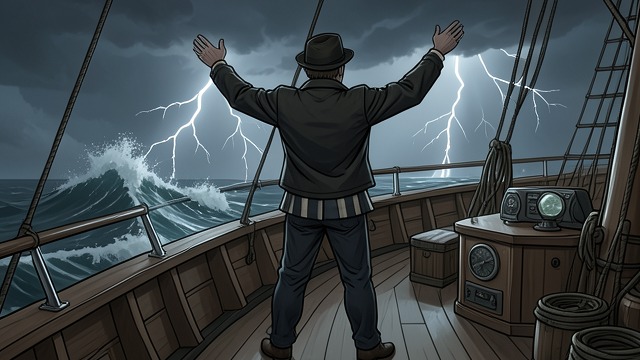
Willie’s Early Bravery
Danger at a Distance
Willie feels brave during the early bombardment because he is removed from direct danger.
His youthful confidence reveals how little he understands of fear or the people being attacked.
A Later Correction
Combat experience gradually replaces the thrill of spectacle with a more sober sense of risk.
The Crew’s Judgment
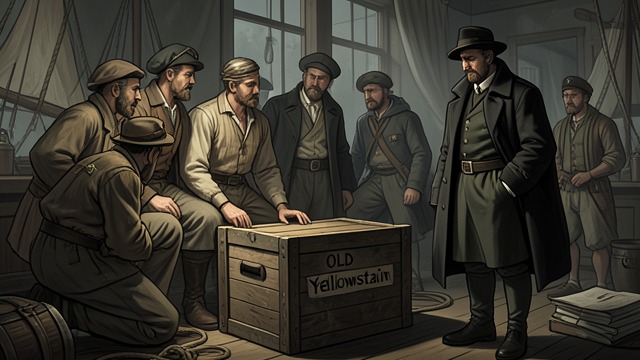
The Crew’s Judgment
A Nickname as Verdict
The name “Old Yellowstain” turns Queeg’s retreat from the landing line into a shared accusation of cowardice.
The crew’s judgment spreads more quickly than formal evidence about what happened at the bridge.
Reputation and Fact
The case shows how collective belief can shape a captain’s reputation before a court examines the details.
The Typhoon’s Terror
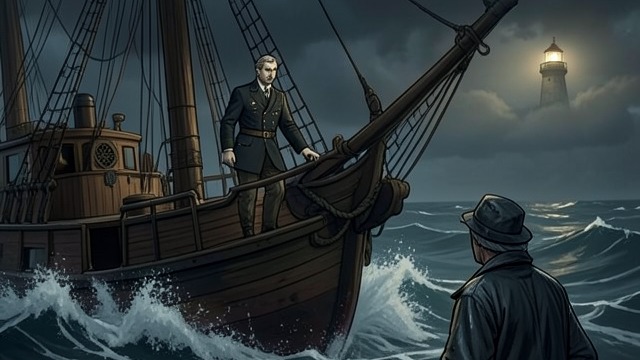
The Typhoon’s Terror
Fear in Every Role
Willie, Queeg, Maryk, and the sailors all experience fear as the Caine loses control.
Their differences emerge in whether they can still observe, decide, and act under pressure.
A Problem of Judgment
The crisis makes inward courage impossible to measure directly, while outward decisions remain open to accusation.
A Lawyer’s Charge
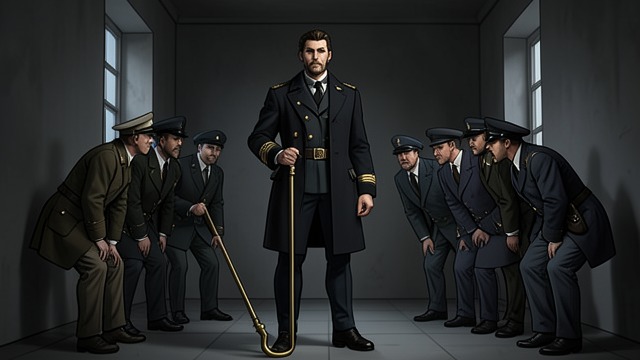
A Lawyer’s Charge
The Hero’s Story Challenged
Greenwald rejects the officers’ easy celebration and reminds them that Queeg also served during the war.
His speech recasts the captain as flawed but still part of the system protecting the country.
A Different Moral Ledger
The speech makes courage larger than personal bravery: it includes duty performed by unpopular and damaged officers.
Jumping from the Caine
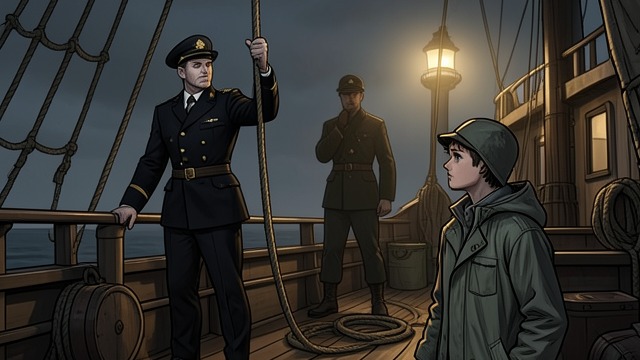
Jumping from the Caine
An Immediate Choice
Keefer orders the crew to abandon ship while Willie believes the fire remains manageable.
Their actions become a personal test that no court or fitness report can fully resolve.
Memory as Judgment
Keefer later recognizes that his choice has changed his sense of himself, even as Willie refuses to call him a coward.
Kwajalein, early 1944
After the Kwajalein landing
December 18, 1944, during the worst rolls
At the final celebration after the verdict
June 1945, during the kamikaze attack
