Mutiny
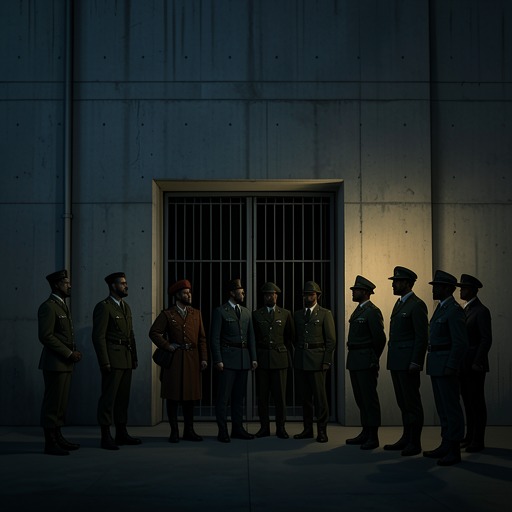
The Caine Mutiny Court-MartialMutiny in the novel is not simply the fact that a subordinate takes command from a superior; it is the contested question of whether that act is an unlawful revolt or a legally grounded emergency intervention. Steve Maryk’s relief of Captain Queeg during the typhoon occupies that boundary: Maryk invoked Article 184, but the Navy still had to determine whether his action was without proper authority and without justifiable cause.
The Act and Its Legal Basis
During the typhoon, Maryk relieved Queeg of command under Article 184 of Navy Regulations. The moment exposed the practical danger of divided authority: Queeg continued to issue a helm order as Maryk gave a conflicting one, leaving the helmsman uncertain which officer to obey. Maryk then directed Willie Keith, the officer of the deck, to record the time and formally announced the relief to Queeg.
Maryk’s invocation of Article 184 distinguished the act from an ordinary seizure of command without explanation. As Greenwald later argued, Maryk had acted without force, violence, or disrespect and had been careful to remain on what he understood as legal ground. Greenwald nevertheless characterized the application of Article 184 as mistaken: the legal provision existed, but Maryk had misapplied it. The dispute therefore turned not only on what Maryk did, but on whether the emergency justified his use of the regulation.
The Charge and Its Definition
The Navy’s catalogue of offenses offered no charge that neatly described Maryk’s conduct. Although the case looked more like mutiny than any other listed offense, Captain Breakstone judged a mutiny conviction unlikely in light of Maryk’s reliance on Article 184 and his subsequent legalistic conduct. He instead selected the broader charge of conduct to the prejudice of good order and discipline.
The specification framed the issue precisely: on or about December 18, 1944, aboard the Caine, Maryk had willfully relieved Queeg, the ship’s duly assigned commanding officer, while Queeg was lawfully exercising command and the United States was at war. It alleged that Maryk acted without proper authority and without justifiable cause. The prosecution did not need to establish that the disputed act had occurred—Maryk’s signed logs described it. The decisive questions were whether Queeg was fit to command and whether Maryk had sufficient cause to intervene.
Competing Interpretations and Stakes
The distinction between mutiny and emergency relief shaped both the legal strategy and the moral stakes of the case. Greenwald regarded the mutiny charge as absurd because there had been no force, violence, or disrespect; he thought the more plausible possible conviction was the broader disciplinary offense. Breakstone likewise recognized that the case fell into a legal twilight: the action resembled mutiny, yet Maryk’s stated statutory basis made that label difficult to sustain.
The prosecution treated the event as a straightforward removal of a lawful commanding officer and sought to prove that Queeg had never been a madman. It relied on Captain Weyland’s deposition and on three Navy psychiatrists who had examined Queeg for weeks and were prepared to testify that he was sane, normal, and intelligent. Against that institutional account stood the question embedded in Article 184: whether the circumstances had made intervention necessary. The concept of mutiny thus marks the point where obedience to the chain of command collides with an officer’s claimed responsibility to act in an emergency.