New York City
The Caine Mutiny Court-MartialNew York City marks the point at which Willie Keith’s wartime identity begins to loosen and his private life comes back into view. He arrives at the harbor as the captain of the USS Caine, searches the city for May Wynn, and ends his passage through it watching a Navy parade from the crowd rather than marching with the service he is about to leave.
Arrival and the End of the Wartime World
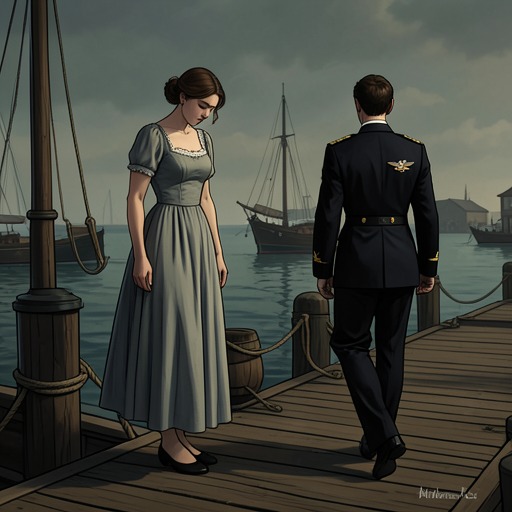
After leaving Pearl Harbor, Willie conned the USS Caine through the Panama Canal, sailed past Florida, and brought the ship through the Narrows into New York Harbor. From his own bridge he saw the skyline and the Statue of Liberty, threading among hooting ferryboats and liners. The familiar landmarks made the voyage feel unreal: he had once spent childhood winters near Palm Beach, but now encountered the East Coast as a naval officer returning at the head of a warship.
The city’s significance lies in the change its familiar sights expose. As Willie neared home, his military personality seemed to dissolve into the sea air, leaving him unsure whether he was still a naval officer or yet again simply himself. He underlined Pascal’s sentence, “Life is a dream, a little more coherent than most.” New York is not just another port of call in this passage: it is where the reality of his former life presses against the identity he acquired at sea.
Searching for May Wynn
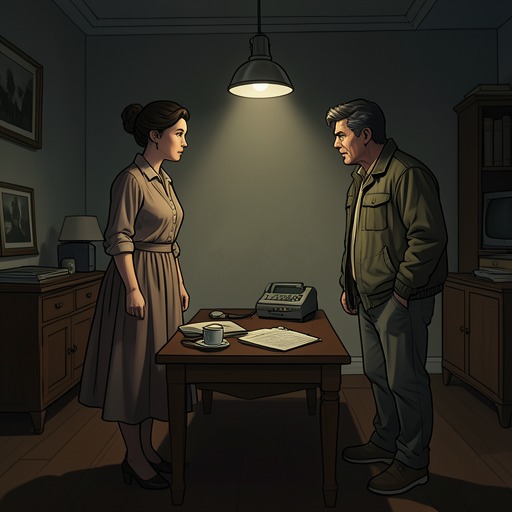
Once the ship tied up at Pearl Harbor, Willie’s first act was to go to the Navy Yard telephone exchange and call the candy store in the Bronx. He waited two hours on a battered couch, leafing through tattered picture magazines; one forecast that the invasion of Japan would carry the war into the spring of 1948. When the operator finally called him over, she said May was no longer at that number, and the person who answered could not tell him where she could be reached. The uncertainty turns his return into a search rather than an uncomplicated reunion.
In New York, Marty Rubin takes Willie from his office in the Brill Building along Forty-seventh Street and up Seventh Avenue. Only after they enter a crowded, ornate hotel lobby does Rubin explain that May is staying there. Willie recognizes the hotel even after three years, including its distinctive perfume. The delayed disclosure makes the city’s streets part of the encounter: Rubin lets Willie’s questions about May build before pointing him to her name on the lobby signboard.
Fifth Avenue and the Final Choice
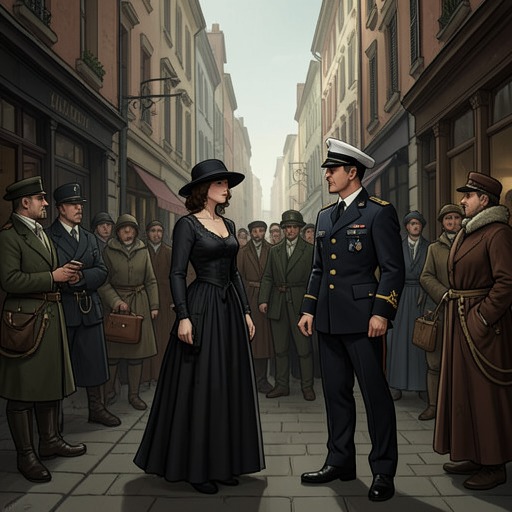
Later, Willie leaves after speaking with May and Walter Feather. On Fifth Avenue, brass-band music echoes through the side streets as the Navy’s blue ranks march past. Willie straightens in his heavy bridge coat, but feels no regret at watching from the sidelines. The scene gives physical form to the transition already underway: the uniform and the music still affect him, yet he no longer measures his future by remaining in formation.
His thoughts turn to marriage. He does not know what life with May would be like or whether they would be happy, but he has decided to make her his wife. The commitment is firm even while its outcome remains unknown. Torn paper drifts above the victorious marchers and brushes the face of the last captain of the Caine: the city’s closing image places Willie at once beside the Navy’s public triumph and outside its ranks.