Willie Keith refuses an Army commission
The Caine Mutiny Court-MartialWillie Keith refuses an Army commission not because he admires the Navy, but because he decides that leaving it would be the wrong way to meet the war. When Dr. Keith tells him that Mrs. Keith and Uncle Lloyd may be able to secure his transfer, Willie asks his father to call off the effort. The choice is an early act of self-direction: he declines a more comfortable alternative without pretending to feel at home in the institution he chooses to remain in.
The proposed transfer
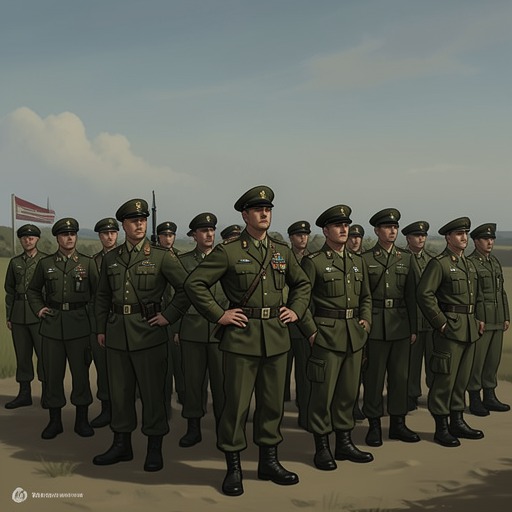
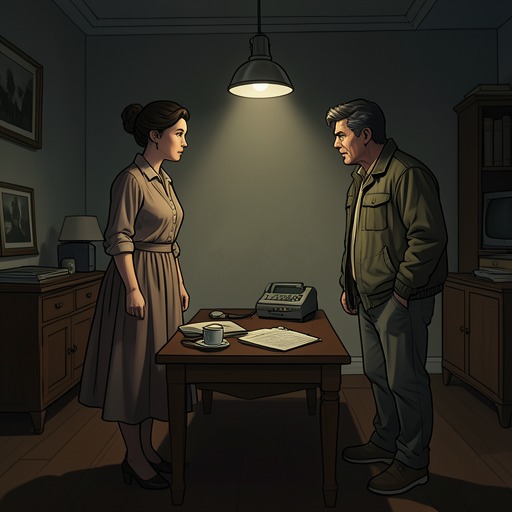
During a visit from Dr. Keith, Willie learns that Mrs. Keith has been looking for a way to move him out of the Navy and obtain an Army commission through Uncle Lloyd’s connections. The possibility comes as news to Willie. His mother, Dr. Keith explains, wants to work everything out for him and present him with a completed solution. The arrangement is not yet a commission in hand: Uncle Lloyd is almost certain that the transfer can be managed, and the possibility remains conditional.
Willie asks whether he could still receive an Army commission if he bilged. Dr. Keith says that this might make little difference and could even speed matters along. A single smudged collar, he observes, might be enough to bring Willie’s naval training to an end. The exchange makes clear that Willie is not choosing between an established Army appointment and a secure naval future; he is being offered a possible escape route, even if his place in the Navy becomes precarious.
Willie’s refusal
Willie asks Dr. Keith to tell Mrs. Keith, as gently as possible, to call off Uncle Lloyd. His father urges him not to be hasty, but Willie insists that this is what he wants. He even says that if he bilges, he will enlist as a sailor. The narration qualifies the declaration: Willie has formed no such resolve beforehand, and the words simply come to him. His response is therefore less a settled career plan than a spontaneous assertion that he will not let his mother’s connections decide how he leaves the Navy.
The refusal is not an expression of patriotic or professional devotion. Willie admits that what he has studied seems like rubbish, that naval rules and jargon strike him as comical, and that the prospect of men spending their lives in this make-believe appalls him. He once preferred the Navy to the Army, but now sees both as foolish. Even so, he draws a distinction between disliking the institution and abandoning his chosen course: he will see the war through in the Navy. His decision rests on persistence and ownership of the choice, not on belief that naval life is admirable.
Father and son at a crossroads
The conversation also changes the terms of Willie’s relationship with Dr. Keith. Willie notices his father’s awkward movements and asks whether he is in good shape. Dr. Keith’s concern about Willie’s future is joined by a personal wish: despite acknowledging that much of Willie’s criticism of the Navy is probably true, he says he wishes he were one of his son’s roommates. The moment places the decision within a relationship marked by affection and by the father’s awareness of his own limitations, rather than presenting it as a simple disagreement between generations.
In a later letter, Dr. Keith asks Willie to think of him at the crossroads of his life and to take the right turns for the sake of a father who took the wrong ones. That appeal gives the refusal an additional resonance. The Army transfer would have been an easy solution supplied by family intervention; Willie’s request that it be stopped makes the decision his own. The letter does not declare that remaining in the Navy is itself the right turn, but it frames Willie’s independence as part of the moral choice his father hopes he will learn to make.
The cost and significance of staying
Willie’s words do not make the Navy less absurd or the war less dangerous. At Kwajalein, he watches the bombardment with the detachment of an entertained spectator, smoking and whistling as the islands burn; the narration marks that distance from the human cost of the battle. Later, in the typhoon, his confidence and bearings collapse. He clings to a telephone jackbox as water sloshes around him, looking to Steve Maryk for rescue. When Maryk temporarily relieves Captain Queeg under Article 184, Willie supports the change and refuses Queeg’s attempt to put him under arrest. These episodes show the naval service he chose as a world of both grotesque routine and mortal emergency, in which staying entails more than simply enduring training.
The refusal is thus an early commitment, not a final proof of maturity. Willie’s reasons are mixed: he disdains much of naval culture, has no grand ambition to become a new John Paul Jones, and yet resists being removed from the service by a family arrangement. His subsequent wartime experience tests that decision against realities he could not yet understand during the visit. Read beside his father’s plea to choose well at life’s crossroads, the episode establishes a pattern for Willie’s development: he must learn to make decisions under pressure and accept their consequences, rather than rely on either inherited rescue or an idealized picture of duty.