Willie proposes to May
The Caine Mutiny Court-MartialWillie Keith’s proposal to May Wynn is a turning point made deliberately unlike the romantic certainty he had imagined. It begins in remorse, surfaces as a halting marriage question, and meets May’s refusal to accept an answer on terms she distrusts. Though she ultimately agrees to a future with him, the proposal does not settle their plans: after Willie speaks with his mother, the two leave matters informal and defer definite arrangements until after the war.
The proposal begins in remorse
Willie’s first words are an apology for the previous night, though he has not intended to apologize. May answers that there is nothing to be sorry for. That reassurance does not calm him. Instead, Willie experiences vertigo, as if he were at the edge of a deck above a turbulent sea, with the impulse to jump overboard. His mouth dries; he swallows, then asks what May would think of spending the rest of her life with a “monster like me.” The proposal takes shape less as a composed declaration than as a leap made under emotional pressure.
When May asks what he means, Willie says that perhaps they ought to start talking about getting married. She lays a hand on his and smiles quietly, but her response does not resolve the question. He insists that he does not know what else they will do with their lives and invites her to say if she thinks he is crazy. He laughs, looks into her face, and asks what she says. May turns her attention to the room rather than answering directly: most of the tables are empty, while nearby honeymooners in bright ski suits lean toward each other over coffee cake. The scene supplies an image of settled couplehood, but not a script Willie can simply follow.
Words are not yet a decision
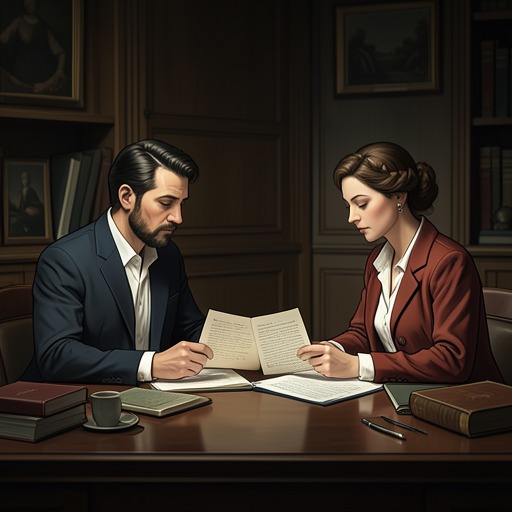
May points out that Willie has not actually proposed. He then states the act plainly and with conspicuous precision: “I propose to you that we get married.” Her answer, “I’ll think about it,” catches him by surprise. She takes her lip brush and rouge from her purse, and his pained expression makes her laugh. The cosmetics and her composed attention to her appearance contrast with the gravity Willie has attached to the words: he experiences them as momentous, while she refuses to let their utterance itself make the decision for her.
May explains that everything is wrong that morning. She will not seize on his words and hold him to them merely because he feels sheepish and sorry for her. If marriage is to happen, she says, it may happen sometime; for now, they should talk about other things. Willie watches her paint her mouth in bewilderment. He had pictured proposing to May, but not this inconclusive exchange in which he has spoken the decisive words and remains free to reconsider. The proposal produces no immediate agreement, and its uncertainty unsettles both of them: May, despite her outward calm, is as confused and dizzied as Willie and had not expected either his proposal or her own hesitation. She changes the subject by saying she would like to ride a gentle horse.
May's conditions for accepting
The conversation returns to marriage when Willie asks whether May has thought about them. She says she has, then sits up and lights a cigarette. When he again asks what she says, she makes him specify the answer he wants: that she will marry him. Her shrug reflects dissatisfaction with this matter-of-fact courtship, which does not resemble her vague conception of love and marriage. Yet she also knows that she wants Willie and thinks she may have to take what is being offered. Blushing, she calls herself hard to get and asks when and where he wants to marry.
Willie clasps her hand and sighs, saying those are the things they must think about next. May immediately draws a boundary around the meaning of his offer. She does not want to be the beneficiary of a “little home for fallen women,” and she insists that Willie must not marry her out of pity, remorse, or a desire to do the manly thing. Her questions make acceptance conditional on the motive behind it: practical willingness to take what is offered is not the same as consenting to be rescued. The exchange therefore turns on more than whether the couple will marry. May wants to know whether Willie is choosing her, rather than trying to repair his own sense of guilt.
An engagement deferred
The proposal’s uncertainty continues into Willie’s conversation with his mother. Afterward, he goes to a window and presses his forehead to the pane, feeling empty and sick. Without thinking, he bites the wooden frame hard enough to leave two rows of teeth marks, then wipes his mouth and stares ruefully at the damage. His private joke—that some people carve hearts on trees—gives the moment a physical trace of the distress he cannot readily put into words.
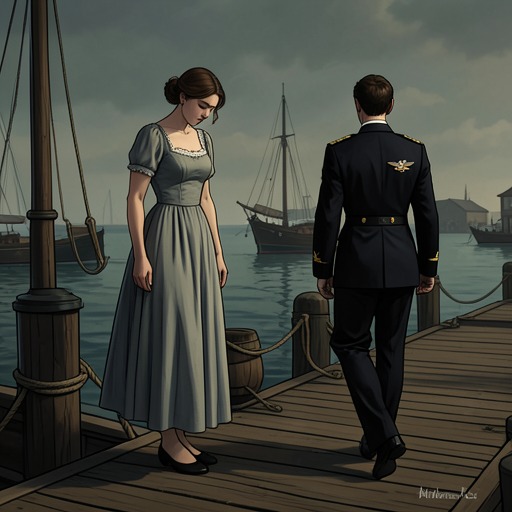
The next day, Willie sees May off at the airport. Their parting kiss is passionate, but nothing has been settled in the sense of a ring or definite wedding plans. Willie has lied to May about his conversation with his mother. They are vaguely and informally engaged, with both the ring and concrete arrangements postponed until after the war; May seems satisfied, or at least does not argue. The ending preserves the proposal’s double character: it has created a commitment between them, but has not transformed that commitment into a timetable or removed its uncertainty.
Significance
The scene’s emotional movement runs from Willie’s bodily panic to an explicit proposal, then from May’s hesitation toward a qualified acceptance. Speech does not instantly make marriage a settled fact: May first declines to be bound by words spoken in a moment of remorse, then asks for practical details, and finally makes clear that pity would invalidate the choice. Willie’s proposal consequently exposes a mismatch between the declaration he can force himself to make and the certainty neither of them possesses. The later informal engagement advances their relationship without resolving its future. Its passionate farewell and postponed plans leave love and uncertainty together, rather than granting the proposal the clean closure Willie initially seems to seek.