Outlander
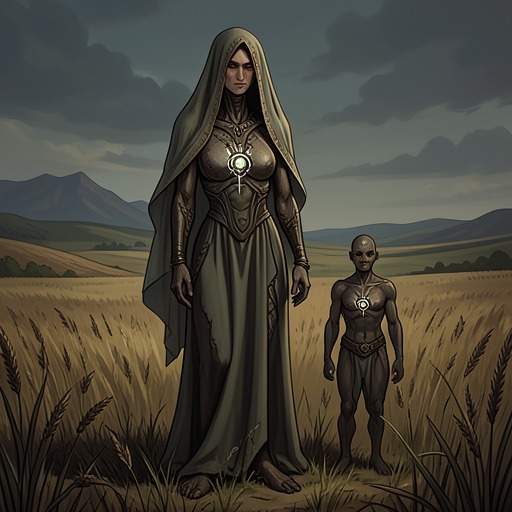
The Calamitous BobThe Outlander is the defining status given to Viviane Saint-Lys when she is transported to Nyil, a designation that separates her from the realm’s native inhabitants while also creating a possible avenue of influence. It names her foreignness, but it does not reduce her to helplessness: the story turns the condition into a social, political, and practical complication that she must learn to exploit.
Definition and First Recognition
The term first appears in the interface’s announcement welcoming Viviane Saint-Lys to Nyil and declaring that she has been transported to a new world. The wording makes the status part of her formal introduction to Nyil: before she knows the geography, institutions, or dangers around her, the system has already classified her according to origin. “Outlander” therefore functions less as a personal name than as a world-level category, one that tells Viviane Saint-Lys and the reader that ordinary assumptions about belonging no longer apply.
The designation also establishes an immediate contrast between Viviane Saint-Lys and the people of Nyil. The interface explains that every sapient being in the realm benefits from Magic under the guidance of Nous, through the interface now granted to her. Viviane Saint-Lys is thus not merely an outsider arriving in a fantasy setting; she is an outsider being inserted into a pre-existing magical order. Her unfamiliarity with that order is part of the condition, while the interface gives her an entry point into it.
The Outlander and Transportation
Viviane Saint-Lys initially interprets the situation through the possibilities available to her former reality. She considers whether she might have been struck by a mortar shell, had her brain frozen by her wealthy family, and been connected to an augmented-reality system in the year 2326. Against those explanations, transportation to another world appears to her as the better news. The Outlander status consequently carries a double movement: it confirms the rupture of her former life, but it also makes that rupture intelligible as a passage rather than merely a catastrophe.
Her reaction is not uncomplicated wonder. The repeated appearance of Magic briefly evokes the stories she read when young, before reality had become too burdensome and she had grown jaded. Yet the possibility of Magic does not immediately solve her predicament. When the interface reports that all sapient beings benefit from it, Viviane Saint-Lys remains unimpressed because she cannot yet see a direct survival advantage; unless she can produce fireballs, the information seems of limited use. The Outlander therefore begins as a label attached to someone who has entered a marvelous world without possessing the cultural fluency to understand what its marvels are worth.
Privileges and Limits
The interface grants Viviane Saint-Lys the blessing of Maradoc, god of travels and mysteries, and tells her that additional features will unlock as her body adjusts to Magic. It also records the Old Imperial Language at native level as a benefit. These provisions give the Outlander a limited form of accommodation: although she arrives without local experience, the system supplies tools that can help her move through Nyil and communicate within it. The status is therefore associated with access as well as exclusion.
At the same time, the interface’s figures show that access is not the same as mastery. Viviane Saint-Lys has a black-mana proportion of seven percent and a current attunement of only 0.14 percent. Those measurements place her within the magical system without making her immediately effective inside it. Her body must adjust, her understanding must catch up, and the promised features remain conditional. The Outlander is consequently neither a purely disadvantaged foreigner nor an automatically empowered chosen figure; it is a starting position whose benefits have to be converted into usable capacity.
A Social Resource
Later, Viviane Saint-Lys directly considers whether being an Outlander can be leveraged to obtain help. The possibility is acknowledged as viable: she may ask for assistance on that basis, and it could work. The qualification matters. Outlander status creates an opening, not a universal entitlement. Its usefulness depends on the people she approaches, the influence she has accumulated, and the circumstances in which she makes the appeal.
The same exchange places a larger political condition around the label. The relevant tasks are said to require considerable influence, and Viviane Saint-Lys must become a significant player. Her foreign origin may attract attention or sympathy, but it cannot substitute indefinitely for power, reputation, or participation in the structures of Nyil. The category thus develops from an existential marker into a negotiable resource: it can help her enter conversations, yet the story refuses to treat foreignness alone as sufficient authority.
Narrative Significance
As a concept, the Outlander condenses the novel’s central estrangement. Viviane Saint-Lys is displaced from a reality shaped by modern technology and military danger into one governed by Magic, gods, language, and interface-mediated rules. The label makes that difference visible from the moment of arrival, while the benefits attached to it—Maradoc’s blessing, native-level Old Imperial Language, and the possibility of further magical features—show that displacement can also create unusual forms of access.
The status also keeps wonder tied to practical pressure. Viviane Saint-Lys may recognize the appeal of a world like the stories of her youth, but she remains cold, confused, and focused on immediate survival. Her low attunement and skepticism prevent the term from becoming a simple heroic credential. Later, her attempt to treat it as leverage reveals the category’s lasting ambiguity: the Outlander is at once an outsider to be explained, a possible recipient of aid, and a person who must still build enough influence to matter. Its decisive significance lies in that tension between being marked as foreign and learning how to turn foreignness into agency.