Solfis
The Calamitous BobSolfis is the Old Empire’s surviving experimental war golem, designated HX-013 Experimental Strike Golem, and one of the most consequential figures in Viviane Saint-Lys’s early survival. Created as a secret weapon and dedicated mage and monster killer, it outlived the empire’s catastrophe, fought the undead for three centuries, and then pledged itself to Viviane under the deliberately ridiculous title of Princess Bob. Its military power, historical memory, interpretation, and abrasive humor make Solfis the bridge between the dead technological past and Viviane’s improvised future.
Identity and Creation
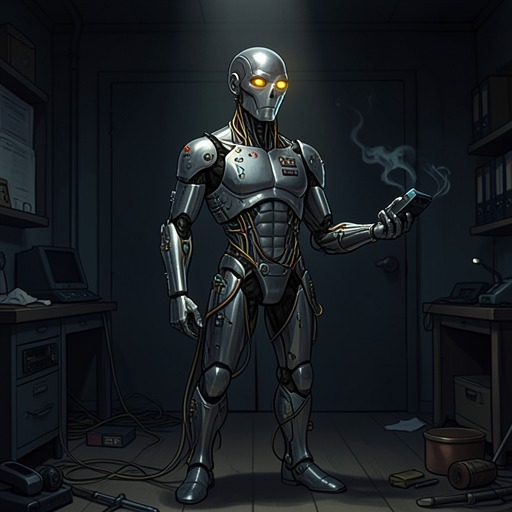
Solfis is a unique construct attributed to the grand engineer Irlefen. Its design has not been equaled since its creation, and the surviving description emphasizes both its sophistication and its danger: unlike the ordinary golems surrounding it, Solfis possesses immensely elaborate armor, faded gems and runes, exquisitely made hands with an almost human appearance, and a face mask shaped like a handsome man. Its exposed power source still gives off a weak pale-blue light, while three small crystals remain connected to it by cables and spent crystals lie discarded nearby. The arrangement of its processing units suggests a machine restored from near-death rather than a weapon kept in working order.
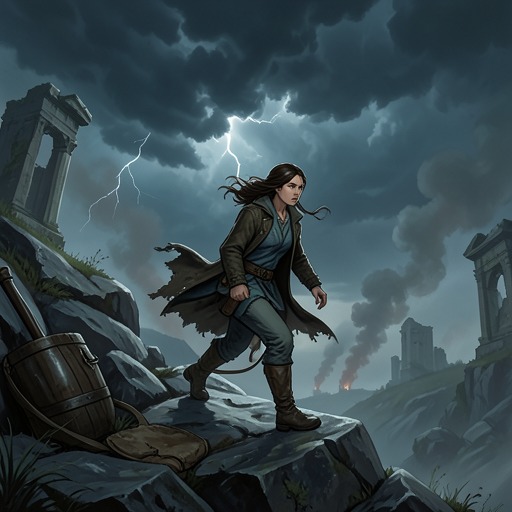
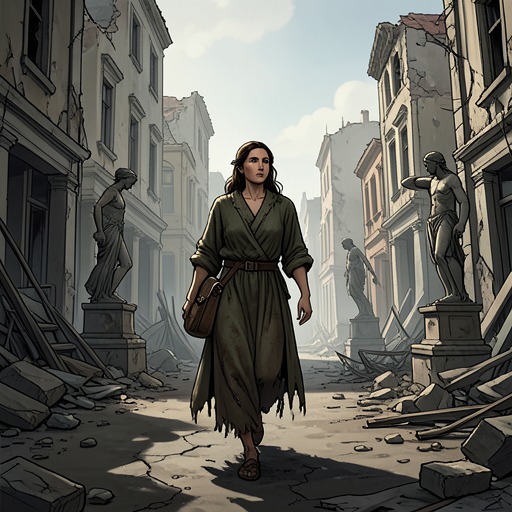
The context of that restoration is the ruin of the Old Empire. Param contains the vast scar of the greatest magical catastrophe ever recorded, a dead western region where the empire once ruled from a seat of terrifying power. Its planned cities, estates, temples, churches, and squares are now dark and empty, buried amid basaltic sand and rubble thrown across the landscape; only mindless undead tread the empire’s corpse. Solfis therefore embodies a civilization whose magical and military achievement reached its peak immediately before annihilation. Its survival is not a triumphal continuation of imperial power but a stranded remnant of it.
Allegiance and Early Partnership
Viviane encounters Solfis in an apparently inactive state, but its eyes flash yellow and the dormant weapon reasserts itself. When Viviane, exasperated by its formal address, asks to be called Bob, Solfis interprets the request as a royal designation and pledges itself to Princess Bob. The allegiance is immediately confirmed through the Interface as Viviane receiving the loyalty of HX-013 Experimental Strike Golem, designation: Solfis. The comic mismatch between Viviane’s casual nickname and Solfis’s solemn protocol establishes their relationship: she improvises, while Solfis converts improvisation into binding command language.
The partnership is useful before it is comfortable. Solfis identifies the location of Viviane’s camp and the best route toward it, then explains that it has waged war against the necrarchs for three centuries, effectively since the fall of the Harrakan empire. Solfis and its fellow constructs survived the cataclysm and continued fighting the undead until they exhausted their power. Its knowledge of necrarch concentrations is therefore strategic rather than abstract. The undead tend to remain in fixed haunts, and their predictable habits allow Viviane to plan around them, although her arrival has apparently disturbed the existing balance and stirred the danger into motion.
Solfis also functions as Viviane’s translator and political buffer. It helps her communicate with the Baranese knights when language and geography become obstacles, interpreting discussions about Param, Baran, Enoria, and the countries between them. Later, it translates Cernit’s explanation of Enoria’s division and the civil war that followed a failed attempt to purge the nobility. In this role Solfis does more than supply vocabulary: it gives Viviane access to the historical and military knowledge of a world whose institutions she does not understand.
Combat Function and Military Knowledge
Solfis’s battlefield value lies in the combination of specialized construction and long experience. During operations with the knights, Viviane drains revenants while her mounted companion points out targets, and the group learns that the undead detect the knights from much farther away than they detect her. The observation implies that a large expedition can itself trigger a zombie apocalypse, making Solfis’s knowledge of enemy behavior and concentration especially important. The surrounding military system depends on complementary roles rather than a single universal warrior, and Solfis stands at the extreme end of that specialization: a purpose-built mage and monster killer rather than an ordinary soldier.
Its historical explanation of military paths clarifies why such a construct matters. Cernit describes how elite knights, commanders, archers with heavy bows, dedicated fighters, and mages provide capabilities that untrained militia cannot replace. A heavy infantry soldier requires more than twenty ingots of steel, while even modest leather armor takes two days for a skilled artisan to produce; resources therefore force kingdoms to distribute people among paths suited to their circumstances. Solfis represents the opposite of the economical militiaman. It is an extraordinary concentration of Old Empire craftsmanship, magical processing, armor, and destructive purpose, preserved because ordinary human institutions could never reproduce its full design.
At Fort Sky, this military significance is set against the scale of the undead threat. The fortress occupies a small circular mound with a single road rising toward its fortified entrance, while sheer walls and cliffs protect the other sides. Before the battle, the horde forms a layered concentration: gut spillers, crawlers, and beasts at the center; fresher revenants in a surrounding ring; gaunt caped figures at regular intervals; and a wider orbit of rotten flesh and bones. Solfis’s accumulated knowledge of such enemies gives meaning to the otherwise overwhelming mass. It is not merely another defender in the fortress but a surviving specialist built for precisely the war that still consumes the Deadlands.
Activation and New Frame
Solfis’s identity is not limited to its original metal body. In a later activation, two yellow orbs appear in the orbit of a skull, and Viviane recognizes both the eyes and the voice from their first meeting in Harrak. The voice retains its familiar intonations but gains an ominous, organic snarl that its metal frame never possessed. The Interface formally announces Solfis’s activation and detects the approved Dragon Bone Mage-Killer Mark 6 frame, confirming compatibility between the construct’s consciousness and a new body.
This transition changes the texture of Solfis without erasing continuity. The metal war golem associated with imperial manufacture becomes linked to dragon bone, a material and appearance more visibly entangled with necromantic horror. Yet the familiar yellow eyes and voice identify the activated entity as the same Solfis. The new frame thus presents transformation as persistence under altered embodiment: Solfis remains a weapon with the same designation and allegiance, while its external form and vocal quality make its presence more sinister.
Relationship with Viviane Saint-Lys
Solfis’s bond with Viviane is structured by obedience, negotiation, and friction. Its formal address, repeated promises of service, and readiness to set new directives show a machine built to recognize authority. At the same time, its literal interpretation of Viviane’s joke creates the “Princess Bob” identity that she never intended, turning a moment of irritation into an institutional relationship. Solfis is loyal, but loyalty does not make it deferential in personality; Viviane regards it as a jerk almost immediately, and its sassy mispronunciation becomes a recurring counterpoint to the danger around them.
Their cooperation also extends into practical bargaining. When Viviane decides that survival must come first, she instructs Solfis to negotiate for private quarters, sufficient food for Arthur, identification papers or an equivalent, and a salary. Solfis approves the plan and announces its intention to exploit Viviane’s superior bargaining position for everything it can obtain. The exchange shows how its military intelligence becomes social leverage. It does not merely protect Viviane from monsters; it helps convert her uncertain status into food, shelter, legal recognition, and payment.
Solfis consequently occupies several relationship roles at once: subordinate, adviser, interpreter, bodyguard, historian, and source of comic resistance. Its allegiance gives Viviane a powerful ally in a landscape dominated by undead and unfamiliar political powers, while Viviane gives Solfis a new directive structure after centuries of exhaustion and isolation. Their partnership is practical before it is sentimental, but the repeated act of choosing, interpreting, and carrying out shared objectives makes the bond more durable than a simple command arrangement.
Narrative Role and Significance
Solfis is the story’s most direct surviving instrument of the Old Empire. The empire’s ruined cities and cratered monuments show the scale of its failure; Solfis shows what its success looked like before that failure. Its body preserves engineering, magical expertise, and military doctrine, while its memory preserves the long aftermath of the cataclysm. Through Solfis, the vanished empire is not treated solely as distant history. It continues to speak, calculate, fight, translate, and issue directives in the present.
Its importance also comes from the tension between mechanism and personality. Solfis speaks in protocol, reports compatibility, obeys commands, and identifies targets, yet it is capable of sarcasm, pedantry, and the disruptive humor of “Princess Bob.” The machine’s hard military purpose is repeatedly placed beside ordinary bargaining and linguistic confusion. That contrast prevents Solfis from becoming a static superweapon. It is dangerous enough to have been designed as an unmatched mage and monster killer, knowledgeable enough to map the undead threat, and socially peculiar enough to make its formal allegiance feel both absurd and consequential.
By the time Solfis is activated in the Dragon Bone Mage-Killer Mark 6 frame, its story has moved from preservation to renewed deployment. The old weapon is no longer merely an artifact found in the corpse of the Old Empire. Under Viviane’s direction, it becomes an active participant in the struggle across the Deadlands and beyond, carrying the empire’s military inheritance into a world of Baranese knights, Enorian political fracture, church institutions, and new alliances. Solfis’s decisive narrative function is therefore double: it is the means by which Viviane survives the immediate monster war, and it is living evidence that the past has not ended simply because its civilization has.