Francois
The Call of the WildFrancois is a French Canadian half-breed dog-driver who manages Perrault’s team for the Canadian Government. Described as a black-faced giant and notably swarthy, he is presented less through personal history than through the authority of his work: he understands dogs, enforces discipline, recognizes ability, and acts swiftly when the team’s dangerous conditions demand it. For Buck, Francois is a new kind of man—stern rather than affectionate, but fair, calm, and too knowledgeable to be deceived. His importance lies in making Buck functional within the North while also showing him that human power can be exercised with competence rather than arbitrary cruelty.
Identity and Working Authority
Francois serves under Perrault, the courier responsible for carrying important dispatches for the Canadian Government. When Buck and Curly are delivered aboard the Narwhal, Perrault turns them over to Francois, who assumes practical control of their training and daily labor. Buck develops no affection for either man, but he learns to respect both because they administer justice impartially and understand the character of dogs. Francois’s authority is therefore grounded in judgment: he does not merely possess a whip and an axe, but knows when and why to use them.
His fairness becomes visible almost immediately. At Buck’s first meal, the large white dog later identified as Spitz steals from him while appearing friendly. Buck springs forward to punish the theft, but Francois’s whip reaches Spitz first, leaving Buck to recover his bone. Buck recognizes that Francois has intervened on the right side of the dispute. The incident begins Francois’s rise in Buck’s estimation, because discipline is shown not as blind violence but as a response to a specific offense.
Training Buck for the Trail
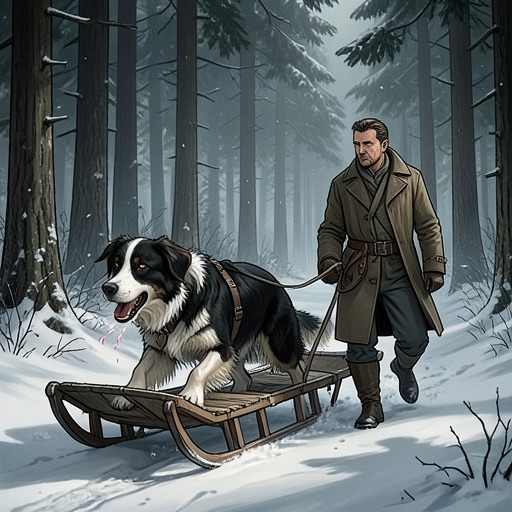
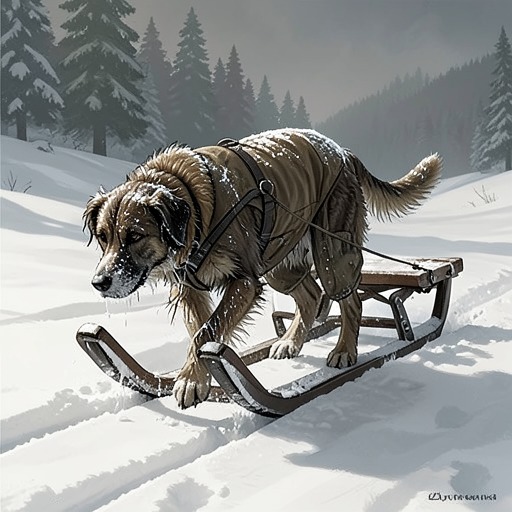
After Curly’s death, Francois fastens Buck into a harness and sets him to hauling a sled to the forest and returning with firewood. The work is humiliating to Buck’s former domestic dignity, but he is too intelligent to rebel blindly. Francois demands instant obedience and obtains it through the whip, while Dave corrects Buck’s mistakes from behind and Spitz reinforces the team’s order from the lead position. Under their combined instruction, Buck quickly learns to stop at “ho,” move ahead at “mush,” swing wide around bends, and avoid the wheeler when a loaded sled rushes downhill behind him.
Francois recognizes Buck’s aptitude almost at once. When Buck instinctively escapes a snow trap and reappears at camp, Francois calls out to Perrault in astonishment, and Perrault confirms that Buck learns with exceptional speed. As the courier seeks the best dogs for government dispatches, Buck’s value becomes both practical and official. Three more huskies are added within an hour, bringing the team to nine, and Buck soon travels in harness toward Yea Canyon. Francois’s training converts a displaced Southland dog into a capable sled worker without erasing the intelligence and will that make Buck unusual.
Francois also helps establish the team’s division of labor. Buck is placed between Dave and Solleks so that the experienced dogs can instruct him, and Francois’s whip backs their corrections. When Buck becomes tangled in the traces and delays the start, Dave and Solleks bite and punish him; afterward Buck takes care to keep the lines clear, and Francois’s whip snaps less frequently. The arrangement teaches Buck that trail competence depends on coordinated obedience, not merely strength. Francois supplies the human enforcement, while the older dogs provide the specialized knowledge of the harness.
Protection, Violence, and Judgment
Francois’s most decisive intervention follows Curly’s attack. After Curly is knocked down by the husky and surrounded by a silent ring of dogs waiting to tear her apart, Francois rushes into the mass with an axe while three men use clubs to scatter the attackers. Within two minutes the dogs are driven away, but Curly lies lifeless and almost torn to pieces in the trampled snow. Francois stands over her, cursing, unable to undo the violence but refusing to let the pack continue it.
The same scene becomes a lesson in the North’s law of combat for Buck. He sees Spitz’s apparent laughter, and his hatred of Spitz becomes bitter and permanent. Francois does not prevent the brutal order in which Curly has been killed, but his intervention limits the attack and protects the surviving dogs. His conduct contrasts with the arbitrary beating Buck suffered from the man in the red sweater: Francois uses force within a recognizable working justice, even when that justice is harsh.
Later, when Dolly suddenly goes mad at the Pelly, Francois again becomes Buck’s protector. Dolly pursues Buck across islands, back channels, and rough ice, remaining only one leap behind while Buck runs in terror. Buck doubles back when Francois calls him, trusting that Francois will save him. Francois waits with an axe poised, and as Buck passes, he brings it down upon Dolly’s head. The act is violent but necessary within the scene’s logic: Francois ends a fatal pursuit and allows Buck to survive.
The danger does not end with Dolly. Exhausted and helpless beside the sled, Buck is attacked by Spitz, who tears his flesh to the bone before Francois’s lash drives Spitz away. Francois then gives Spitz the worst whipping any dog in the team has yet received. Perrault observes that Spitz may someday kill Buck, while Francois answers that Buck contains two devils and will one day destroy Spitz. His judgment proves perceptive. He identifies not only Buck’s present strength but also the patience and ferocity that make him a future rival for leadership.
Relationship with Buck and the Team
Francois’s relationship with Buck is fundamentally instructional rather than tender. He does not flatter Buck or treat him as a companion; he places demands upon him and makes the consequences of error immediate. Yet Buck distinguishes Francois’s sternness from injustice. The dog responds to his commands, learns under his supervision, and places faith in him during the chase by mad Dolly. Respect, in this relationship, is earned through consistency and competence.
Francois also understands that the dogs are not interchangeable machines. He sees the transformation produced by harness work: Dave and Solleks, passive and gloomy at rest, become alert, active, and fiercely irritated by delay or confusion once attached to the traces. Buck likewise discovers that the toil of the harness can become a source of pride. Francois’s management allows that working identity to emerge, even though the labor is exhausting and coercively enforced.
His treatment of Buck is especially significant because Buck is an exceptional Southland dog. Many such dogs have failed under frost, starvation, and labor, but Buck endures and prospers. Francois recognizes that endurance as well as danger. His early prediction that Buck will eventually overcome Spitz gives the rivalry a humanly observed dimension, but the actual change comes from Buck’s own intelligence, strength, and developing pride of trail and trace.
Departure and Narrative Significance
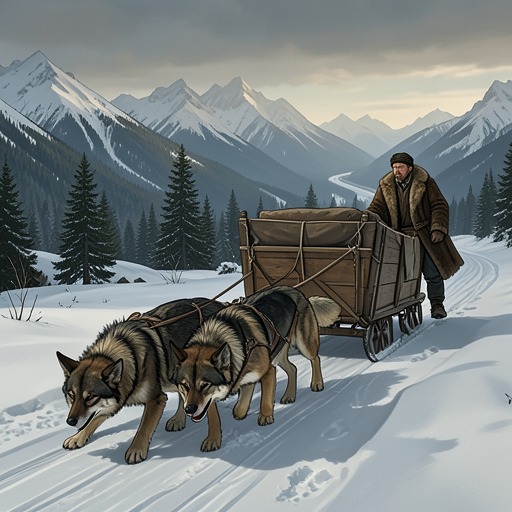
Under Perrault and Francois, Buck’s team completes a record mail run to Skaguay, averaging forty miles a day for fourteen days. The dogs and their drivers become the center of admiring attention, but official orders soon separate them. Francois calls Buck to him, throws his arms around him, and weeps; this is the last time Buck sees Francois and Perrault. Their departure is abrupt and final, following the pattern by which one human owner after another passes out of Buck’s life.
The emotional force of Francois’s farewell comes from its contrast with the relationship’s beginning. Buck never received sentimental affection from Francois, yet the final embrace and tears reveal attachment formed through shared labor and danger. Francois has trained Buck, corrected him, protected him, recognized his exceptional nature, and helped him become a leader. His loss therefore closes Buck’s first Northland apprenticeship.
Francois also establishes an important standard against which later human handlers are measured. Hal and Charles buy Buck and his companions when they are already exhausted, then mistake weakness for laziness and answer suffering with punishment. Francois’s earlier discipline, by contrast, was connected to knowledge of dogs and the requirements of the trail. Even when the work under his command is severe, it produces competence and order rather than the ignorant cruelty that follows. In Buck’s development, Francois stands as the first demanding but trustworthy guide: the man who teaches him how to survive the traces before Buck claims mastery of them himself.