John Thornton
The Call of the WildJohn Thornton is the decisive human presence in Buck’s later life: a prospector who rescues him from brutal exploitation, treats him with an intimacy beyond duty or business, and becomes the one human bond strong enough to hold Buck temporarily between civilization and the wild. Thornton’s compassion restores Buck’s body and awakens his capacity for passionate love, while his courage, trust, and appetite for danger make him an equal partner in Buck’s most celebrated exploits. His death finally releases Buck from the last claim of mankind and turns their relationship into the emotional hinge of Buck’s return to the forest.
Identity and Introduction
John Thornton first appears at his camp at the mouth of the White River, where Charles, Mercedes, Hal, and their exhausted dogs stagger in during a season of dangerous thaw. He is whittling the last touches on an axe-handle made from birch and responds to Hal’s account with monosyllables and terse advice. Having recognized the breed and understood the danger of rotten ice, he warns them not to continue. His knowledge is practical rather than theatrical: he knows what the trail is doing and also knows that his warning will be ignored.
Thornton’s defining quality becomes visible when Hal beats Buck for refusing to pull. Buck is nearly dead, numb beneath the blows, and convinced by instinct that the thin ice ahead promises disaster. Without warning, Thornton springs upon Hal, hurling him backward and standing over Buck, too convulsed with rage to speak. The intervention is not a formal act of ownership or an attempt to preserve a useful animal. It is an immediate defense of a suffering creature, and it changes Buck’s life. When Thornton examines him, he finds terrible starvation and many bruises; moments later, the sled carrying the remaining travelers breaks through the rotten trail and disappears into the river. Thornton’s judgment is therefore vindicated, but the more important consequence is that Buck survives because Thornton refuses to let violence finish what hunger and the trail have begun.
Rescue and Relationship with Buck
Thornton’s own body bears the marks of frontier hardship. He had frozen his feet in the previous December, and when he rescued Buck he still limped slightly; continued warm weather eventually removed even that limp. While his partners were away getting out a raft of saw-logs for Dawson, he recovered beside the river. Buck, after traveling three thousand miles, also lies by the bank through the long spring days, watching running water and listening to birds while his wounds heal. Their relationship begins in a shared interval of convalescence, rest, and renewed physical strength rather than in labor or command.
Skeet and Nig help create this new domestic world. Skeet, a little Irish setter, cleans Buck’s wounds each morning after breakfast, while Nig, a huge black dog with a boundless good nature, befriends him less demonstratively. Neither dog shows jealousy. They share the kindness associated with Thornton, draw Buck into ridiculous games, and even draw Thornton himself into the play. In this company Buck enters what the narrative identifies as a new existence. His earlier relationship with Judge Miller had been a working partnership, a form of guardianship, or a dignified friendship; Thornton awakens something more feverish and absolute, a love that is described as adoration.
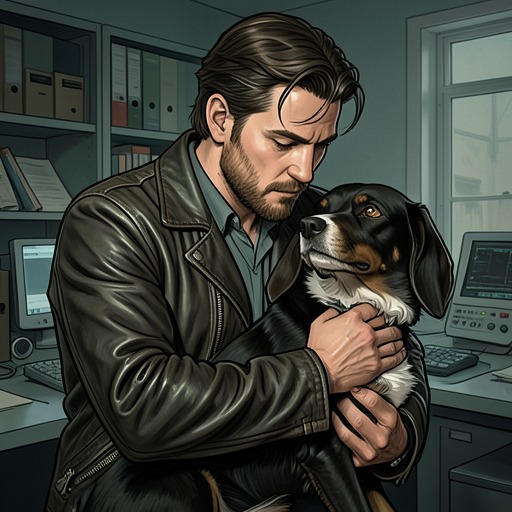
Thornton cares for his dogs not merely from duty or business expediency but because he cannot help treating them as his own children. He remembers a kind greeting and a cheering word, and he takes pleasure in long conversations with them, which he calls “gas.” His characteristic gesture is to take Buck’s head roughly between his hands, rest his own head upon it, shake him back and forth, and call him ill names that Buck understands as love names. Buck answers with an intense bite on Thornton’s hand, leaving the impress of his teeth, and Thornton understands this apparent injury as a caress. Their communication crosses the ordinary boundary between command and obedience: human curses become affection, and a dog’s bite becomes tenderness.
Buck usually expresses his devotion through watchful adoration rather than demands for attention. He lies alert at Thornton’s feet, studies every change in the man’s face, and follows his movements with absolute concentration. Sometimes Buck’s gaze draws Thornton’s head around, and the two regard one another without speech, their mutual feeling communicated through their eyes. For a long time after the rescue, Buck refuses to let Thornton out of sight. Previous masters—Perrault, Francois, and the Scotch half-breed—had vanished from his life, so Buck fears that no master can remain permanent. Even at night he wakes from dreams, creeps to the tent flap, and listens for Thornton’s breathing.
Trust, Authority, and Exploits
Thornton alone can place a pack on Buck’s back during summer travel, and Buck will attempt anything Thornton commands. Their trust is tested on a cliff three hundred feet above naked bedrock, when Thornton impulsively orders Buck to jump. Buck obeys so completely that Thornton must grapple with him at the extreme edge while Hans and Pete drag them both back to safety. The incident astonishes the partners. Thornton calls the obedience splendid but terrible and admits that it sometimes frightens him; Pete declares that he would not want to be the man who laid hands on Thornton while Buck was nearby, and Hans agrees.
At Circle City, this protective power becomes violence. Black Burton strikes Thornton without warning after Thornton steps between him and a tenderfoot. Buck, who has been lying in a corner watching every movement of his master, launches himself at Burton’s throat. Burton’s arm partly saves him, but Buck tears open his throat before the crowd drives the dog away with clubs. A miners’ meeting decides that Buck had sufficient provocation and discharges him. The episode establishes both sides of Thornton’s authority: he is good-natured enough to intervene for another man, but Buck’s devotion makes an attack upon him perilous. Buck’s reputation spreads through every camp in Alaska, not because Thornton seeks fame, but because their bond has become publicly legible as a force.
Thornton later risks his own life in the Forty Mile Creek rapids. He and his partners are guiding a narrow poling boat through dangerous water, with Hans and Pete snubbing it from the bank while Thornton remains aboard. When a rope checks the boat too suddenly, it overturns and throws Thornton toward the worst part of the rapids, where no swimmer could live. Buck follows anxiously along the bank, never taking his eyes from his master. He plunges into the current with a rope tied around his neck, is hauled back by Hans and Pete, and attempts the rescue again after recovering. On the second effort he reaches Thornton, but the force of the water carries both of them down to a drift log, where they are finally brought around. Thornton has three broken ribs and immediately declares that they will camp there until Buck’s ribs knit. His decision makes the relationship reciprocal: Buck risks his life for Thornton, and Thornton stops the journey so Buck can recover.
Thornton also recognizes Buck’s strength as more than a private emotional possession. At the Eldorado Saloon, men boast that their dogs can start sleds carrying five hundred, six hundred, or seven hundred pounds. Thornton defends Buck and states that Buck can start a thousand pounds. The challenge earns Buck sixteen hundred dollars in five minutes, enough for Thornton to pay debts and finance a journey with Hans and Pete toward a legendary lost mine. The money converts Buck’s physical power into freedom for the group, but Thornton’s refusal to sell him shows that Buck’s value cannot be reduced to a price. When the Skookum Bench king offers a thousand dollars and then twelve hundred, Thornton rejects the offer in tears. Buck seizes his hand in his teeth, and Thornton shakes him back and forth; the onlookers withdraw, recognizing a bond they cannot interrupt.
Wilderness Journey and Final Separation
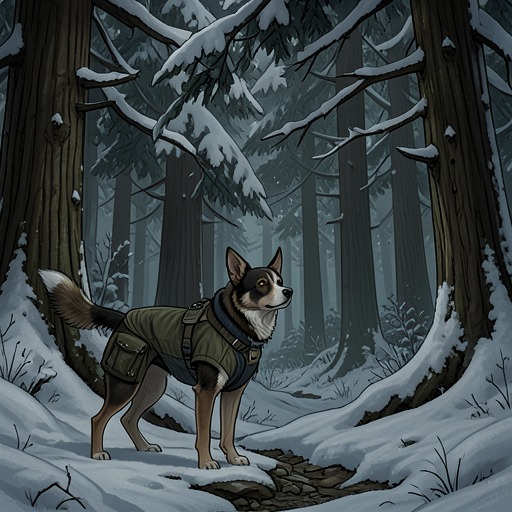
With debts paid, Thornton, Hans, Pete, Buck, and several other dogs travel east in search of the lost mine. They sled seventy miles up the Yukon, turn into the Stewart River, pass the Mayo and the McQuestion, and continue until the Stewart becomes a streamlet among the peaks forming the backbone of the continent. Thornton is unafraid of the wilderness and asks little of either people or nature. Carrying salt and a rifle, he can enter the forest and remain as long as necessary; he hunts during the day’s travel and treats the journey as open-ended. For Buck, the hunting, fishing, and wandering through strange country are a boundless delight, and Thornton’s trust allows him to live more fully in the wild without surrendering their attachment.
Yet Thornton is the last human limit on Buck’s transformation. The call from the forest repeatedly draws Buck away from the fire and beaten earth, while love for Thornton draws him back. Buck may tolerate Hans and Pete, but only after learning that they are close to Thornton; toward other people he remains cold, and he rejects excessive demonstrations from strangers. His attachment is therefore not a general return to domesticity. It is singular and absolute: Thornton alone matters enough to compete with the wild.
The final separation occurs after Buck has spent increasing periods away from camp hunting. He returns from killing a great moose, having traveled back through unfamiliar country with a certainty of direction beyond man and compass, but he senses calamity in the changing land and approaches camp cautiously. The Yeehats have attacked. Buck drives them away in a murderous frenzy, then finds Pete dead in his blankets and Skeet lying faithful beside the pool. Thornton’s struggle is written into the earth, and Buck follows the trace into the water, where no trace leads away. The pool conceals Thornton’s body, but Buck understands that he is dead.
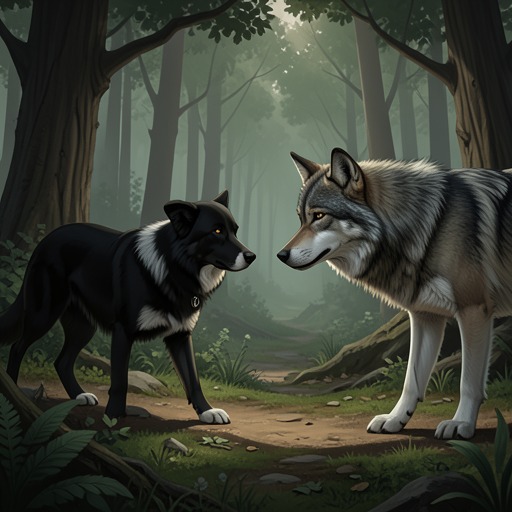
Thornton’s death leaves Buck with a void like hunger, an ache that food cannot fill. For a time, contemplating the dead Yeehats turns pain into pride: Buck has killed men, whom he regards as the greatest game, and has learned that they are no match for a dog unless armed with arrows, spears, and clubs. But the emotional fact remains that the last human tie has been severed. When the wolf pack enters the clearing under the moon, Buck is ready to answer its call. Without Thornton, mankind no longer binds him. He fights the pack, reaches a defensible angle in the gravel bank, and withstands its assault until the wolves withdraw. Then the wild brother approaches, and Buck touches noses with him.
Narrative Significance
Thornton is not simply a benevolent master who temporarily rescues Buck from cruelty. He provides the novel’s fullest image of a human-animal relationship founded on mutual recognition rather than utility. He values Buck’s welfare as an end in itself, accepts the dog’s unusual forms of affection, trusts his intelligence and strength, and answers his loyalty with bodily care. Buck’s devotion, in turn, does not erase his wild nature. He can steal from other camps, fight with greater cunning, and disappear into the forest, yet he cannot steal from Thornton and cannot remain indifferent to his absence.
The relationship also joins civilization’s law of love and fellowship to the Northland’s law of club and fang without dissolving either. Thornton embodies tenderness, but he is not helpless or insulated from violence; Buck embodies the primitive force of the wild, but his greatest ferocity is repeatedly mobilized by love. Their bond makes Buck’s heroic actions possible, including the rescue in the Forty Mile Creek rapids and the thousand-pound sled pull, while Buck’s loss makes his final departure morally and emotionally intelligible. Thornton’s death is therefore both a personal catastrophe and a structural release. He is the last reason Buck remains near human fire, and when that reason disappears, Buck can enter the wolf world without betraying the love that made him fully alive.