Northland
The Call of the WildNorthland is the harsh northern world that replaces Buck’s former life in the Santa Clara Valley and becomes the decisive setting for his physical adaptation and spiritual transformation. Created in the novel by the rush of men toward newly discovered gold, it is at once a transport corridor, a zone of lethal environmental risk, a hunting ground, and the ancestral wilderness that finally claims Buck.
Definition and Historical Setting
Northland emerges because men searching through Arctic darkness have found yellow metal, while steamship and transportation companies publicize the discovery and draw thousands of people northward. Their demand is specifically for heavy dogs with powerful muscles and warm, furry coats, making dogs essential instruments of labor in the new economy. The region is therefore introduced not as an empty wilderness but as a frontier reorganized by gold, transportation, and the urgent movement of people and animals.
The northern world sharply contrasts with Judge Miller’s spacious estate in the sun-kissed Santa Clara Valley. Buck’s old surroundings contain lawns, poplars, stables, cottages, orchards, pastures, grape arbors, and a cement swimming tank; Northland offers snow, darkness, packed trails, frozen waterways, and the constant possibility of death. The geographical movement from one place to the other is also a movement from protected abundance into an environment where survival depends on strength, alertness, and rapid learning.
Trails, Ice, and Human Transport
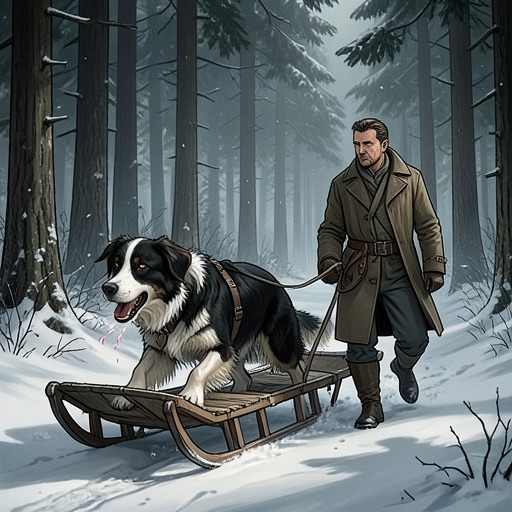
Northland is structured by routes that connect remote settlements and government communication. Buck’s first arduous journey takes the team through the Canyon and Sheep Camp, past the Scales and timber line, across deep glaciers and snowdrifts, and over the Chilkoot Divide between salt water and the northern interior. They then descend toward Lake Bennett, where thousands of gold-seekers are building boats for the spring breakup. The landscape is thus both physically formidable and heavily occupied by the logistical machinery of the Gold Rush.
The Thirty Mile River reveals the region’s most dangerous combination of route and terrain. Its wild water remains open despite the frost, with ice holding only in eddies and quiet places. The team requires six exhausting days to cross the thirty miles. Perrault repeatedly breaks through ice bridges and must use his long pole to keep himself from disappearing completely; with the thermometer at fifty below zero, each immersion forces him to build a fire and dry his clothes. The sled also breaks through with Dave and Buck, leaving both half-frozen and nearly drowned before the men drag them out and run them around a fire until the ice melts and their bodies thaw.
The same environment demands relentless labor from the dogs. Camps are broken in darkness, the first gray of dawn finds the team already on the trail, and camp is made again only after nightfall. Buck receives a pound and a half of dried salmon each day yet remains perpetually hungry. Routes can be packed and relatively fast, or they can require the team to break its own trail through deep snow while Perrault advances ahead in webbed shoes to make passage possible. Later, the police establish food deposits along parts of the route, allowing Perrault to travel light and attempt a record journey from Dawson toward the coast.
Camps, Violence, and Survival
Northland’s camps are temporary settlements exposed to both scarcity and violence. On Buck’s arrival, every hour brings shock, confusion, and danger. The dogs and men obey no stable civic order in the ordinary sense; the governing principle is the law of club and fang. Curly’s death makes that principle visible. After a husky tears open her face, the surrounding dogs wait for her to fall, then swarm over her while Francois and several men use clubs and an axe to drive them away. The scene teaches Buck that a fallen dog receives no fair recovery and that remaining upright is a condition of survival.
Food scarcity intensifies the camp’s violence. Starving huskies from an Indian village invade while Buck and Spitz are already fighting, rush the food stores, and continue struggling under the men’s clubs until every crumb is gone. Their attack shows that Northland’s danger is not limited to weather or distance: hunger can turn a camp into a battlefield and can make food more compelling than fear of punishment.
The same pressure changes Buck’s conduct. He secretly steals bacon after watching Pike steal food, while Dub is punished because his clumsiness makes him an easier suspect. The theft marks Buck’s adaptation to a society in which private property and personal feeling no longer protect an animal from starvation. Northland rewards concealment, speed, and practical intelligence; it punishes hesitation and moral scruple when those qualities interfere with survival.
Seasonal and Animal Geography
Northland is governed by powerful seasonal rhythms. After the brutal winter, spring arrives with earlier dawns, later sunsets, flowing water, budding willows and aspens, rising sap, insects, birds, and wildfowl returning from the south. Yet the recovering landscape does not bring relief to the exhausted travelers. While the land awakens, the weakened men and dogs stagger toward death, and the Yukon begins to break apart beneath and above as water eats into the ice.
Animal movement gives the region another temporal order. Near the Tahkeena, a snowshoe hare draws Buck, the sled team, and fifty Northwest Police huskies into a sixty-dog chase under the moon. Buck’s pursuit is not merely a response to hunger; it releases a bodily bloodlust and an intense desire to kill living prey with his own teeth. Later, as autumn advances, moose descend toward lower valleys. Buck encounters a herd of twenty and selects a great bull more than six feet tall, armed with fourteen-point antlers spanning seven feet. The bull’s wounded fury and the hunting contest place Buck within an older predator-and-prey order that precedes human transport.
From Frontier Route to Wilderness
Northland also contains routes beyond ordinary commerce. After John Thornton earns enough money to settle debts, he, Pete, Hans, Buck, and other dogs travel east in search of a legendary lost mine. They sled seventy miles up the Yukon, turn into the Stewart River, pass the Mayo and McQuestion, and continue until the Stewart dwindles into a streamlet among the continental peaks. This journey removes them from the hurried time of mail and government dispatches. Hunting and fishing determine the day’s movement, while the future becomes effectively limitless.
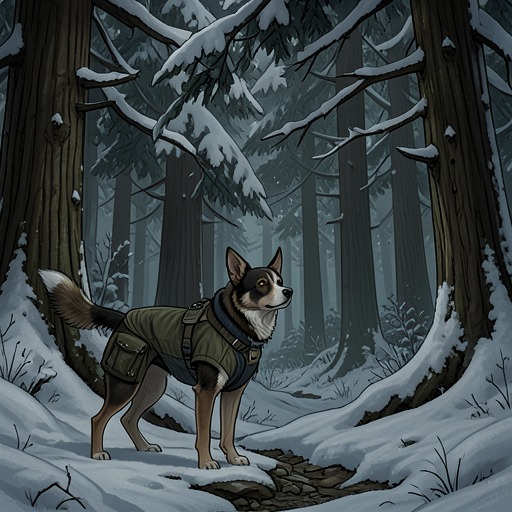
For Buck, this deeper Northland is a source of freedom rather than deprivation. He hunts, fishes, and wanders through unfamiliar places, and in the forest his behavior changes instantly from the visible march of a camp dog into the stealth of a wild predator. He can take ptarmigan, kill sleeping rabbits, catch fish, and surprise beaver. He kills for food and prefers prey he has taken himself, revealing that the northern landscape has become not only a place where he survives but a place in which he recognizes his own capacities.
Final Transformation and Significance
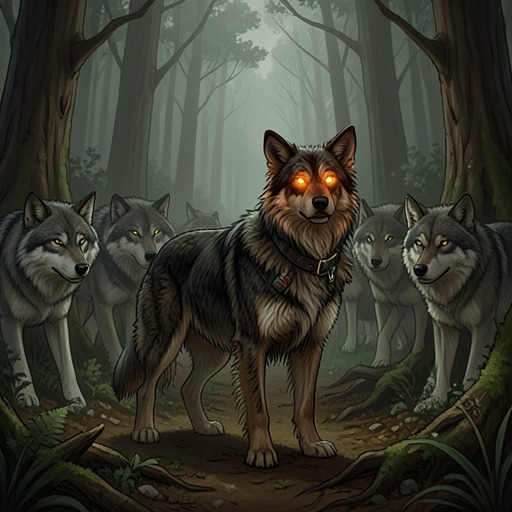
The ultimate Northland is the valley invaded by wolves after John Thornton’s death. The wolf pack arrives while following migrating moose, and Buck stands alone in the moonlit clearing. He defeats the first attackers, holds the pack at bay from a gravel-bank angle, and finally recognizes the wild brother with whom he once ran. Nose-touching, howling, and the pack’s acceptance turn the valley from a human mining site into the center of Buck’s animal belonging.
The later stories told by the Yeehats transform this wilderness into legend. Timber wolves with brown markings and a white chest appear, and a Ghost Dog is said to lead the pack, rob camps and traps, kill dogs, and evade the bravest hunters. The Yeehats avoid the valley, associating it with an Evil Spirit, while Buck alone returns there in summer, crossing from the timberland to the place where gold-colored liquid runs from rotted moose-hide sacks into the ground. He pauses, howls once in mourning, and departs. Northland therefore retains the traces of human ambition, but its final meaning lies in Buck’s departure from human claims and his incorporation into the living wilderness.