Perrault
The Call of the WildPerrault is the Canadian Government courier who takes charge of Buck after Buck’s sale in Seattle, and his decisive importance lies in the disciplined working world he introduces. Unlike the men who kidnap and beat Buck, Perrault understands dogs as skilled working animals, judges Buck’s unusual capacity immediately, and places him within a team whose labor carries urgent dispatches across the North. His competence gives Buck a demanding but intelligible order in which strength, endurance, obedience, and judgment have practical value.
Identity and Introduction
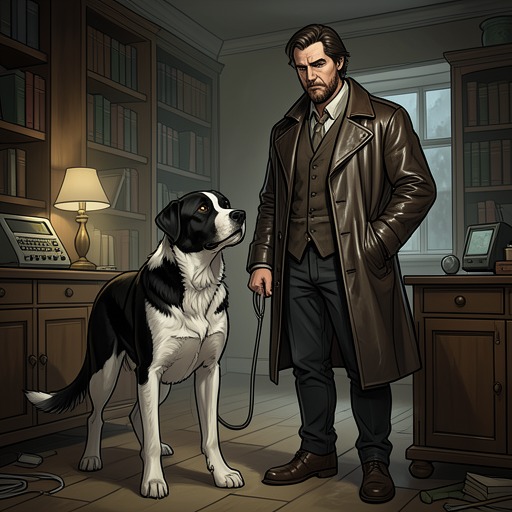
Perrault first appears as a small, weathered French Canadian who buys Buck and Curly from the man in the red sweater for three hundred dollars and a present, using Canadian Government money. The price reflects the extraordinary demand for dogs created by the Klondike Gold Rush, but Perrault does not regard Buck as merely interchangeable property. He knows dogs, sees that Buck is an exceptional animal, and privately judges him to be one in a thousand, even revising that estimate upward to one in ten thousand. The language of purchase places Buck within a market governed by money and government necessity, while Perrault’s recognition gives the transaction another dimension: he identifies a rare working capacity before Buck has learned what the northern trail requires.
Perrault and Francois take Buck and Curly below deck on the Narwhal and turn them over to the new team. Buck does not love either man, but he soon respects them because they are fair, calm, impartial, and too knowledgeable about dogs to be deceived by them. Perrault’s authority therefore differs sharply from the arbitrary violence associated with the man in the red sweater. He administers discipline as part of a working system, not as a spectacle of domination, and his judgment is repeatedly confirmed by the results of the team’s labor.
Training Buck for the Trail
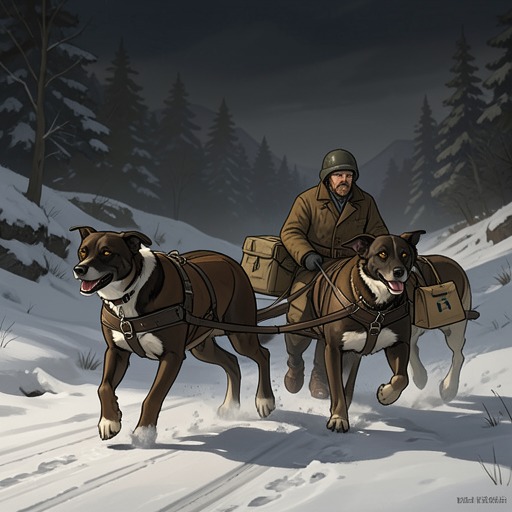
Perrault is especially pleased by how quickly Buck learns. When Buck emerges from the hole he has dug in the snow, Perrault acknowledges that he learns as quickly as anything. Within an hour, three more Huskies have joined the team; before another quarter-hour has passed, the nine dogs are in harness and moving toward the Yea Canyon. Perrault places Buck between Dave and Solleks so that the experienced dogs can teach him, while Francois’s whip reinforces the lessons. The arrangement makes training collective and practical: Buck learns not through abstract commands but through the immediate consequences of tangled traces, delayed starts, and mistakes that endanger the whole sled.
Perrault’s method is severe but observant. When Buck becomes tangled during a halt and delays the team, Dave and Solleks bite him until he understands that the traces must remain clear. Buck adapts quickly; by the end of the day his companions have largely stopped nagging him, Francois uses the whip less often, and Perrault honors his progress by lifting and carefully examining his feet. That inspection matters because the trail tests the dogs through continuous bodily strain. Perrault evaluates not only Buck’s obedience but also the physical condition that will determine whether he can continue to work.
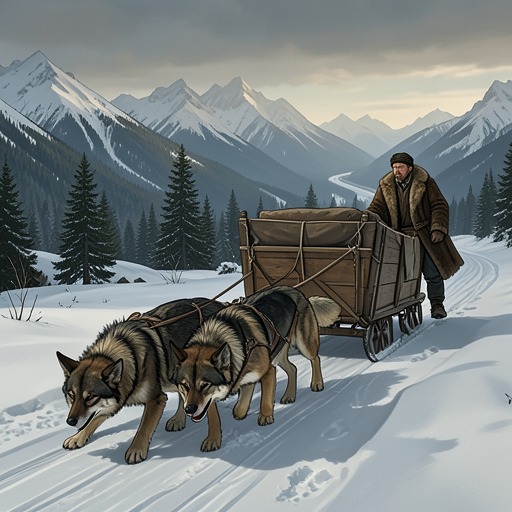
The team’s labor soon reveals a special relation between Perrault and the terrain. The first hard run carries the dogs up the canyon, through Sheep Camp, past the Scales and the timber line, across deep glaciers and snowdrifts, and over the Chilkoot Divide between salt water and the North’s interior. They then descend through the chain of lakes to Lake Bennett, where thousands of gold-seekers are building boats for the spring breakup. Perrault is in haste, yet his haste is joined to practical knowledge: he travels ahead in webbed shoes to pack the snow, takes the gee-pole when necessary, and understands the danger of thin fall ice and open swift water.
Courier, Risk, and Government Service
Perrault’s work is defined by the urgency of the dispatches he carries for the Canadian Government. Four hundred miles still separate him from Dawson when the team is attacked by starving marauders and loses half its food supply. The dogs have chewed through sled lashings and canvas, eaten Perrault’s moose-hide moccasins, leather traces, and part of Francois’s whip. Their wounds and possible exposure to madness worry him because a sick team could halt the government mail. Even so, after two hours of curses and exertion, he repairs the harnesses and continues toward the Thirty Mile River, the hardest section of the route.
The river is largely open, its wild water resisting the frost. Six exhausting days are required to cover its thirty miles, and every step risks death for both dogs and men. Perrault repeatedly breaks through ice bridges, surviving because the long pole he carries falls across the hole made by his body. With the thermometer at fifty below zero, each immersion forces him to build a fire and dry his clothes before proceeding. He also faces the same danger with the team: once the sled breaks through with Dave and Buck, both dogs are nearly drowned and half-frozen before being dragged out and warmed. Perrault’s courage is not presented as reckless display alone; it is the practical steadiness that makes him valuable as a courier. Nothing daunts him, and he continues from dim dawn to dark because the dispatches and the route demand it.
After the dogs rest for a week in Dawson, Perrault attempts a record journey back toward Yea and Salt Water. He has more urgent dispatches, a packed trail, food deposits arranged by the police, and a light load in his favor. The team covers Sixty Mile, actually a fifty-mile run, on the first day and drives up the Yukon toward Pelly. Buck’s revolt against Spitz has weakened the old leadership, allowing Pike, Dub, Joe, and even Billee to challenge Spitz’s authority, but Perrault still keeps the disrupted team moving at remarkable speed. The conflict inside the team becomes part of the courier’s burden: he must transport the mail while managing a social order that Buck is steadily transforming.
The outward journey becomes a record run. The Thirty Mile River, now comparatively frozen, takes one day rather than the ten days required on the inbound trip. The team makes a sixty-mile dash from Lake Le Barge to White Horse Rapids, then crosses seventy miles of lakes—Marsh, Tagish, and Bennett—so rapidly that the running driver is towed behind the sled. After fourteen days averaging forty miles each day, Perrault and Francois reach Skaguay. The achievement brings them public attention: they throw chests up and down the main street and receive repeated invitations to drink, while the team becomes the center of a worshipful crowd of dog drivers and mushers.
Relations with Buck and the Team
Perrault’s relationship with Buck is founded on recognition and work. He sees Buck’s potential before Buck has fully entered the northern order, then gives him a place where that potential can be tested. Buck learns to respect Perrault because the courier is fair and because his commands correspond to the realities of the trail. Perrault’s conduct also contrasts with the romanticized idea that affection is the only meaningful bond between human and dog. Buck develops no initial affection for Perrault or Francois, yet honest respect grows from consistent treatment and demonstrated competence.
Perrault also understands that the dogs possess their own working pride. Under harness, Dave and Solleks become alert, active, and fiercely irritated by delay or confusion; the labor of the traces seems to express their very being. Perrault’s system depends on this canine intelligence and ambition rather than erasing it. He expects each dog to pull, but he also observes how the team functions and responds to changing conditions. In this respect, he is a manager of animal labor whose authority succeeds because it recognizes the capacities it commands.
That recognition has limits imposed by the larger economy of the trail. The dogs are purchased with government funds, transferred when official orders arrive, and later valued according to whether they remain useful for the mail. After the team reaches Skaguay exhausted, having traveled twenty-five hundred miles in less than five months and eighteen hundred of those miles with only five days of rest, the Canadian Government orders fresh Hudson Bay dogs to replace those judged worthless. The worn animals are sold because dogs count for little against dollars. Perrault’s fairness cannot protect Buck from this system, and it cannot prevent the abrupt ending of their association.
Departure and Narrative Significance
When official orders finally arrive in Skaguay, Francois embraces Buck and weeps over him; Perrault and Francois then pass out of Buck’s life. The departure is sudden and impersonal, caused not by betrayal between them but by administrative reassignment and the continuing demands of the mail. A Scotch half-breed takes charge of Buck and the other dogs, and the animals begin the return journey under a heavy mail load rather than the record conditions of Perrault’s run. Buck dislikes the new work but continues to take pride in it, a habit formed during the disciplined period under Perrault.
Perrault’s place in the novel is therefore brief but structurally important. He stands between Buck’s civilized life and the more brutal economies of the northern trail: a purchaser within a market for dogs, yet also a knowledgeable handler who treats labor as a craft and the animals as capable partners in survival. His journeys connect individual canine endurance to government communications, gold-seeker expansion, dangerous ice, and the material infrastructure of the Klondike Gold Rush. Even after he disappears, the work ethic and trail pride cultivated under his command continue in Buck, making Perrault a formative agent in Buck’s transformation from a respected estate dog into a powerful sled dog shaped by the Law of Club and Fang and the pride of trace and trail.