
Responsibility And The Scapegoat
The CallerThis flow traces the tension between establishing individual responsibility and satisfying a community’s desire to assign blame after devastating events.
increasing Bearing strength in each event
 decreasing
Bearing strength in each eventdecreasingA Crime Without A Known Motive
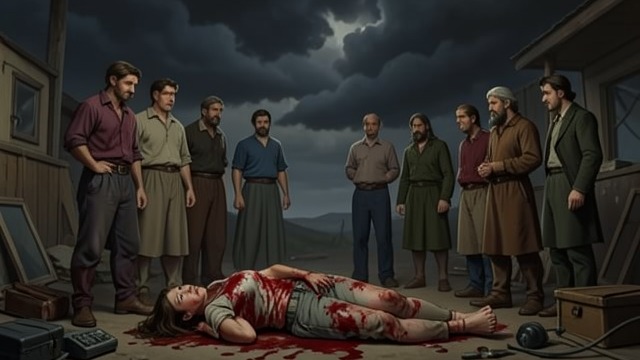
A Crime Without A Known Motive
The search for a target
After Margrete is found covered in blood, police consider neighbors, past disputes, and a person who may have planned the approach. The family cannot identify a reason they would have been chosen.
Hypotheses are not conclusions
Sejer and Skarre discuss possible perpetrators but keep their explanations provisional. The attack’s cruelty makes it tempting to supply a motive, yet evidence is still limited.
The first case establishes the difference between seeking an explanation and possessing one. A victim’s need to know why cannot itself identify the responsible person.
Johnny Becomes A Suspect
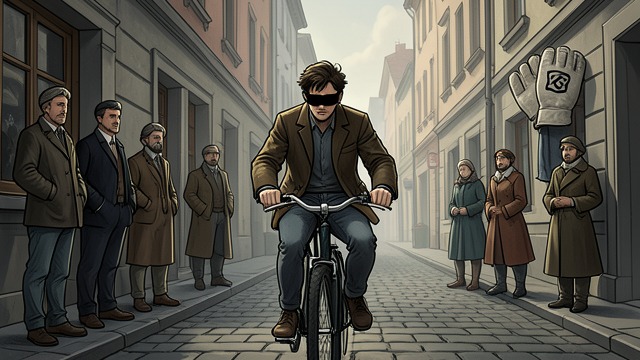
Johnny Becomes A Suspect
Clues converge
Witnesses describe a young rider, and supermarket staff connect a customer to the distinctive skull-marked gloves. Sejer recognizes that the clues may point toward Johnny.
A pattern invites overreach
Johnny later admits to the hoaxes, making him an obvious suspect whenever another strange event occurs. His established behavior increases suspicion but does not prove every accusation.
The investigation benefits from finding a pattern, yet the pattern creates a risk: once identified, Johnny can become the explanation for events that remain unconnected by evidence.
Schillinger Names Sabotage
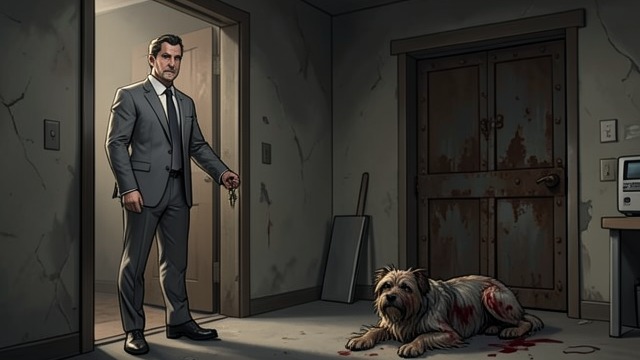
Schillinger Names Sabotage
An owner defends his routine
Schillinger insists that he always locks the kennel. After learning that a child is dead, he proposes that someone deliberately opened the gate.
Responsibility remains regardless
The claim may explain how the animals escaped, but it does not answer the legal question of the owner’s duty to secure them. Sejer explains that the dogs will be investigated and that Schillinger may face consequences.
The scene separates possible criminal sabotage from the responsibility attached to ownership. Both could matter, and neither can simply erase the other.
A Community Chooses Sides
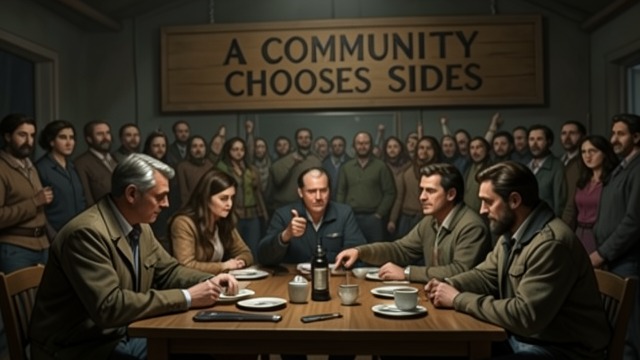
A Community Chooses Sides
Public judgments form quickly
Residents debate whether Schillinger is a responsible owner, whether the prankster opened the gate, and whether the dogs should be killed. Some treat suspicion as enough to demand punishment.
Personal anger guides belief
Karsten finds comfort in Schillinger’s account because both men distrust the authorities. Other residents rely on their prior impressions of Schillinger rather than new evidence.
Community judgment becomes a form of pressure, but it cannot substitute for investigation. The more terrible the event, the stronger the desire for a simple explanation.
No Proven Culprit
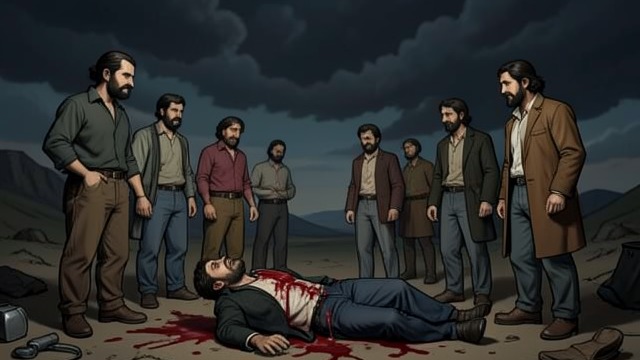
No Proven Culprit
The crucial account disappears
Johnny dies without confessing to the kennel release, and investigators cannot establish how he reached the dam. The dog case remains vulnerable to competing explanations.
The need for certainty persists
Schillinger’s trial is still ahead, and the community continues to debate who deserves blame. Theo’s death cannot be resolved by public consensus or by the fact that another person was guilty of other crimes.
The ending exposes the cost of confusing plausibility with proof. Responsibility matters most when it is difficult to establish, not when the community is already certain it knows the answer.
the beginning of the baby investigation
after witnesses recall the gloves and moped
during the first police interview at Sagatoppen
the days after Theo’s death
after Johnny’s death and before Schillinger’s trial
