Bleeding Heart
The CallerBleeding Heart, Johnny Beskow’s guinea pig, is his small, intimate companion and the most precious thing he owns. The animal’s death—Johnny’s mother kills it and puts its body in a milk carton—breaks that fragile bond and gives shape to Johnny’s anger, which he carries away from the house with a promise of revenge.
Identity and Place in Johnny’s Life
Bleeding Heart lives in a cage beneath Johnny’s bedroom window, among woodchips, cotton rags, and colourful plastic toys. Johnny’s grandfather gave him the money for the cage, just as he had given Johnny the money for his Suzuki Estilete. The pet belongs to a narrow set of possessions in a life where Johnny says his mother gives him nothing; unlike his clothes and moped, however, Bleeding Heart is a living presence he can hold close.
Johnny takes the guinea pig out of its cage and lies on his bed with it against his chest and belly. After scurrying over him, Bleeding Heart settles in the hollow of his neck. Johnny presses it to his cheek, strokes its head with a finger, and notices its furry smell and eyes shining like black pearls. The animal nips his ear with its sharp teeth, a small physical interruption in a scene otherwise shaped by Johnny’s quiet attention and affection.
Companion to Fantasy and Anger
Johnny speaks to Bleeding Heart as he lies with it, asking whether it would be nice to torment the woman in the kitchen. He imagines taking a pike from Lake Skarve and forcing it into his mother’s mouth. The fantasy is explicitly violent, but the scene places it beside careful, gentle contact with the guinea pig: he strokes its head and holds it against his cheek while imagining harm to someone else. Bleeding Heart is thus present not as a participant in the plan, but as the creature to whom Johnny directs thoughts he does not share with his mother.
Later, Johnny finds his mother on the sofa beneath a blanket and returns to his room with Bleeding Heart. Holding the guinea pig at his neck, he thinks about how easily people believe what he tells them and how a phone call or letter could let him disrupt a community. The animal remains physically close as his sense of imagined power grows. That contrast makes the pet’s companionship consequential: in these scenes, Johnny’s grand plans and resentment coexist with the ordinary act of holding a small animal.
Death and Burial
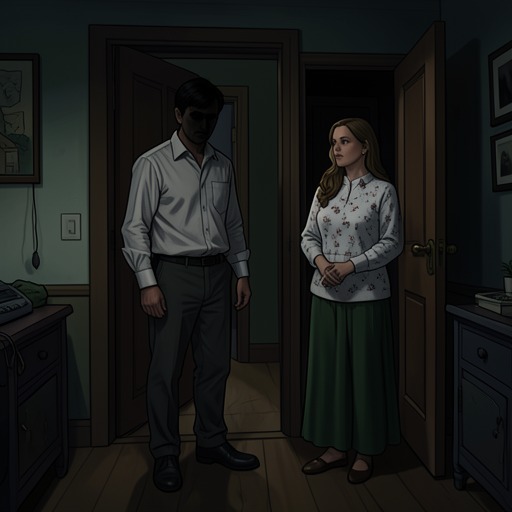
When Johnny enters his room and sees the empty cage, he searches beneath the bed, behind the curtains, under the desk and pillows, and in the rubbish bin. He rejects the idea that Bleeding Heart escaped, insisting that the cage door has a latch. His mother says she put the dead animal in an empty milk carton, explaining that she will not have rats in the house and that the cage smells of urine.
Johnny goes to the rubbish bins by the gate and finds the folded carton. Inside, Bleeding Heart is wet and curled into a ball. Johnny understands that his mother drowned the guinea pig, though he can only guess that she may have done so in the bathroom sink. He holds the wet fur for a long time. His grief and fury gather into a promise that the day for revenge is close, and that he will no longer care about the consequences.
He then takes an old, rusty spade from behind the house and digs a deep grave in the grass. He lays Bleeding Heart in it, covers the body with earth, and places a stone on top like a heavy lid, hoping the grave is deep enough to keep badgers away. After wiping sweat from his forehead, he goes to his moped, puts on his helmet, and drives onto the road. The burial gives his loss a deliberate final act, while his departure leaves the revenge he has imagined unresolved.
Narrative Significance
Bleeding Heart’s role is conveyed through concrete acts of closeness and care: the animal settles against Johnny’s neck, nips his ear, is held against his cheek, and is finally buried beneath a stone. The change from warm, moving companion to a wet body in a discarded milk carton makes the loss starkly material. Johnny’s mother calls the pet a rat, but Johnny’s careful search and grave-making establish what it means to him: not an interchangeable nuisance, but the possession he names as most precious.
The death also marks a sharp turn in Johnny’s response to his mother. Earlier, he directs violent fantasies toward her while keeping Bleeding Heart beside him; after discovering the body, he turns from imagined retaliation to a stated resolve to act. The animal does not cause that conflict, nor does the narrative suggest it can understand Johnny’s words. Its significance lies in the bond Johnny forms with it and in the precise sequence of loss, burial, and departure that makes his revenge vow feel newly immediate.