Dog-owner duty to secure dogs
The CallerThe dog-owner duty to secure dogs is presented as a concrete responsibility: owners must keep their animals locked up, while the justice system determines any punishment. In the aftermath of Theo Bosch’s fatal attack, that principle becomes inseparable from a narrower question of fact—whether Bjørn Schillinger’s kennel was secured and how the dogs got out.
The Duty and Its Limits
Konrad Sejer states the responsibility directly to Schillinger: punishment belongs to the justice system, but a dog owner is naturally responsible for keeping the dogs locked up. The distinction matters. Sejer identifies a duty of care without announcing a legal verdict or treating the accusation itself as proof of guilt.
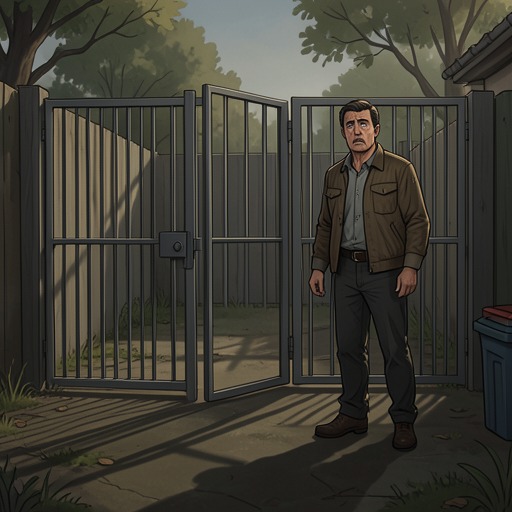
The scene does not settle every question about the rule’s legal scope. Rather, it gives the duty an ordinary, practical form: the dogs must be contained. When the discussion turns to whether Schillinger’s kennel is adequate, the answer is that it would be impossible for the dogs to get out on their own if the door were shut. The condition of the door therefore becomes central to assessing whether the animals were secured.
The Fatal Test Case
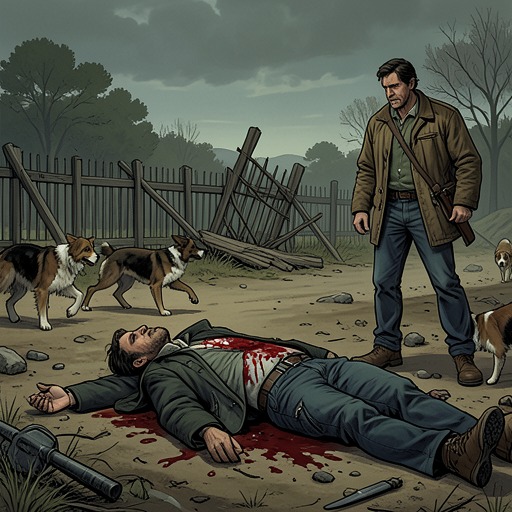
The duty is raised after Schillinger’s dogs kill Theo Bosch. Schillinger is shaken by the news and names the dogs—Attila, Marathon, Yazzi, Goodwill, Bonnie, Lazy, and Ajax—as animals that had been his companions. He says he was at his six-year-old daughter’s birthday party when they got out, insists he has always kept them locked up, and argues that someone must have opened the gate.
Sejer does not accept or dismiss that explanation in the exchange. He asks why anyone would release the dogs and tells Schillinger to explain what he means. The inquiry thus separates the disastrous outcome from the unresolved question of responsibility: Theo has been killed, but whether the breach resulted from an owner’s failure or interference by another person remains contested in this evidence.
Containment, Risk, and Responsibility
The conversation also distinguishes the dogs’ containment from their characteristics. Sejer describes them as powerful, energetic, independent, and strongly pack-oriented; he says they require regular, strict discipline. He adds that they may treat other animals as food and can reach seventy centimetres in height and weigh fifty kilos. His conclusion that Theo had no chance conveys the scale of the danger, but does not by itself determine how the dogs escaped.
Schillinger’s claim that the kennel was up to standard is compatible with the crucial qualification that the door had to be shut. The rule therefore has a physical hinge in the scene: a secure enclosure only protects others when it is actually closed. Schillinger’s insistence that sabotage occurred, and the community’s sharply differing judgments of his care and character, do not replace evidence about that condition.
Narrative Significance
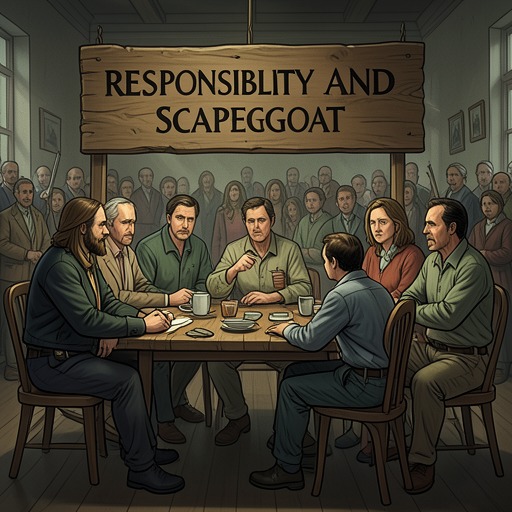
The duty gives the investigation a clear standard of care while leaving its application dependent on evidence. Sejer’s formulation resists both premature exoneration and instant condemnation: the owner’s responsibility is real, but the justice system must determine punishment, and the circumstances of the open gate still require explanation. Through that distinction, the novel places the legal question between a preventable danger and an unresolved allegation, rather than allowing grief or public suspicion alone to decide it.