Dogs
The CallerDogs is the seven-animal pack identified by Konrad Sejer as responsible for the fatal attack on Theo Bosch near Glenna. The novel introduces them through its aftermath rather than showing the attack: a green tarpaulin covers a small body in the road, and the officers gathered at the scene face the loss of a child before they understand what happened.
Identity and First Appearance
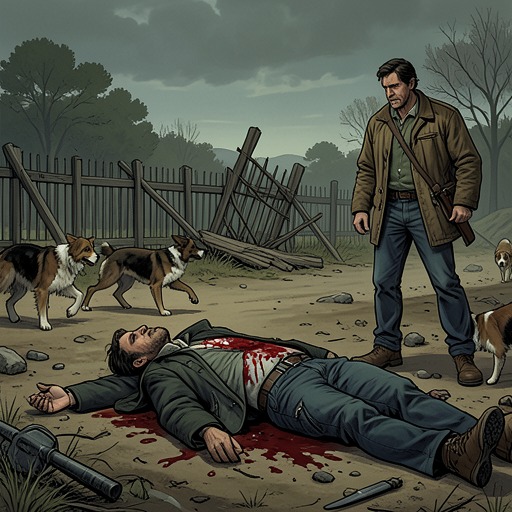
When Sejer arrives at Glenna, the crime-scene officers part to let him approach the covered remains. The small mound beneath the tarpaulin makes the scale of the body painfully clear; after seeing what lies beneath it, Sejer names the cause as a pack of dogs. That identification turns an initially uncertain death into a specific danger: the boy has not simply died on the trail but has been attacked by animals powerful enough to overwhelm him. The narrative gives the dogs no direct scene of pursuit or attack here. Their presence is established through the body they leave behind and Sejer’s conclusion, so the pack enters the investigation first as a force inferred from evidence and only later as animals whose escape and behavior must be explained.
The Escape from the Kennel
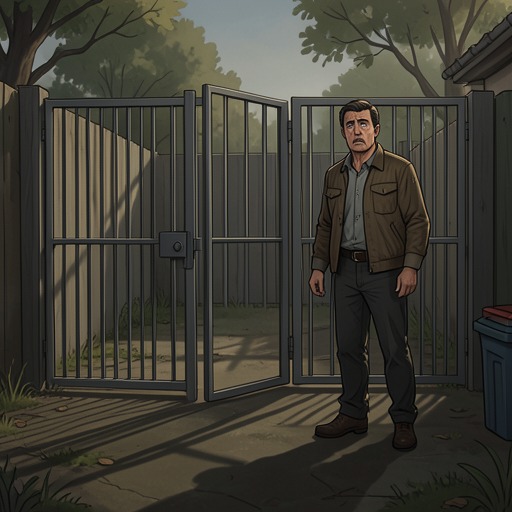
At home, Bjørn Schillinger finds the kennel empty, its doors standing wide open. All seven dogs are gone. The discovery is shocking precisely because the enclosure is supposed to be secure: Schillinger knows the doors and keeps a close eye on them, and he believes the dogs could not have escaped on their own. His first response is to search for an explanation, while the open doors turn a familiar responsibility into an urgent uncertainty about where the pack has gone and what it may have encountered.
Lazy, the large husky, is sitting near the house and licking its paws. Blood and grime mark its mouth. Schillinger approaches carefully, but when Lazy raises its head, growls, and bares its teeth, the encounter shows that the dogs’ return has not restored ordinary control: Lazy no longer behaves as though Schillinger leads the pack. He rushes forward, pins the dog down, and forces its jaws open. Blood and patches of skin cling to its teeth, physical traces of prey but not yet a clear answer to what the pack has killed.
Schillinger tries to account for the remains by imagining a sheep, and thinks he could placate Sverre Skarning and pay for the loss. His first concern is thus framed as a familiar form of damage that money might repair; the blood on Lazy’s mouth and the missing dogs, however, point beyond that manageable possibility. The episode links the fatal attack to a breach in the kennel’s security while preserving the crucial distinction between what Schillinger can see and what he does not yet know.
The Pack’s Danger and Its Fate
When Sejer tells Schillinger that a little boy has been found near Glenna, close to Skillet, and was probably attacked by dogs, Schillinger’s first questions are whether the child is badly hurt and whether he will lose the animals. Sejer makes the two outcomes brutally clear: the dogs will be taken from him, and the boy is dead. The exchange shifts the pack from a frightening possibility suggested by blood and an open kennel into the confirmed cause of a child’s death, while exposing the gap between Schillinger’s immediate fear of losing his dogs and the irreversible human loss at the center of the investigation.
Sejer later explains the danger in terms of the dogs’ physical power and behavior. He describes a fierce breed with tremendous energy and an independent nature, requiring regular, strict discipline. Their strong pack instinct can draw them into struggles for dominance; they will also eat whatever is edible and regard other animals as food. At roughly seventy centimetres tall and fifty kilos in weight, each is a formidable animal, and together they present a threat Theo could not withstand. Sejer’s account makes the attack intelligible without presenting it as a deliberate, human-like choice by the pack: instinct, size, and the circumstances of a group encounter are enough to explain the fatal imbalance.
The dogs’ legal status is left uncertain. Asked whether the breed is permitted in Norway, Sejer says the law is unclear, but that uncertainty does not change what must happen after Theo’s death. He tells Holthemann that the dogs should be taken to a veterinarian; Holthemann agrees, observing that even inserting the syringes will probably be a strain for them. The novel thus ends their role in the immediate crisis not with a courtroom resolution or a detailed account of their fate, but with their removal for veterinary handling. Their story has moved from unseen agents inferred from a child’s remains, to escaped animals bearing traces of prey, and finally to a pack whose strength and instincts make its continued danger impossible to ignore.
Evidence, Instinct, and Animal Agency
The pack’s role is reconstructed rather than witnessed. The narrative moves from the remains of the child to Sejer’s identification of dogs, then to signs on Lazy and the account of the breed’s strength, appetite, and pack behavior. Each step narrows uncertainty, but none turns the animals’ actions into a human intention: the evidence establishes a fatal attack, not malice or a plan. By withholding the attack itself, the novel keeps the distinction between what the investigation can establish and what it cannot know about the animals’ experience.
That distinction also complicates the human effort to make the pack legible and controllable. Schillinger’s responsibility rests on the security of the kennel and the discipline required by such powerful, independent animals, while Sejer’s explanation treats their behavior as instinctive and their legal status as unresolved. The dogs are neither merely symbols nor human-like villains: they act as animals with force and appetites of their own, while the consequences of their escape are measured in human loss and questions of human responsibility.