Frozen ox blood sold at Spar
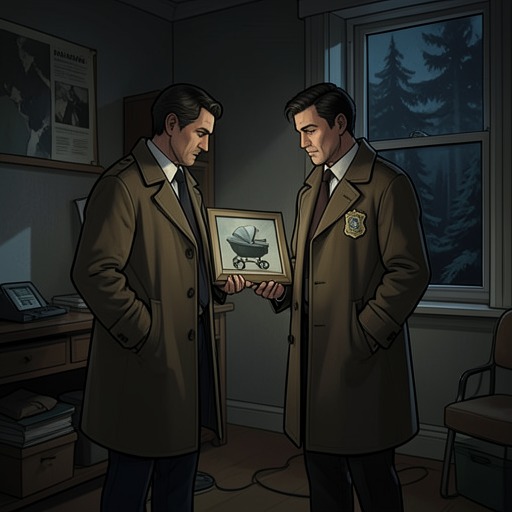
The CallerFrozen ox blood sold at Spar is an ordinary, commercially available product that acquires sinister significance when Konrad Sejer and Jacob Skarre investigate the blood placed on a sleeping baby in Bjerketun. The package offers a plausible answer to one practical question—where someone might obtain blood for the staged spectacle—while remaining only a lead: the investigation produces no confirmed buyer or proof that this particular product was used.
A commodity enters the investigation
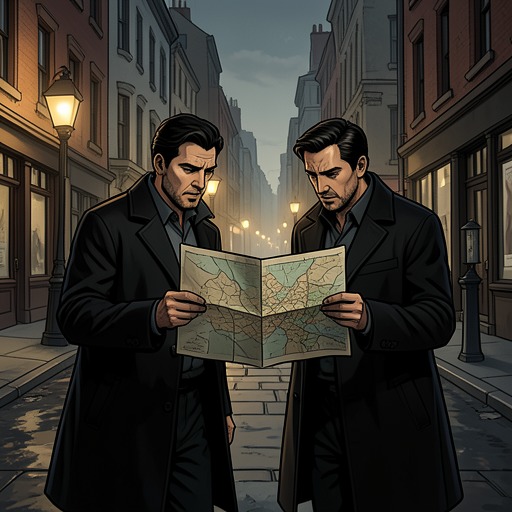
At the outset, Sejer considers how the perpetrator might have carried blood to the Sundelins’ home. Looking at a map of Bjerketun and neighboring Askeland, he imagines someone approaching through the grove between the housing estates with a bottle or bag concealed under a jacket, then retreating the same way. He does not yet know what kind of blood was involved or where it came from. He hopes the laboratory can identify it, and speculates that blood might be available from an abattoir. The object’s possible source is therefore part of a broader reconstruction of access, transport, and escape, not an identification of a culprit.
That hypothesis becomes more specific when Skarre finds a heavy, almost black square in Spar’s freezer, wrapped in plastic. Its label identifies the contents as frozen blood; the package weighs 1.2 kilograms, costs 32 kroner, and has a best-before date in October 2009. Sejer examines it and recognizes the importance of the mundane detail: blood is not merely something the perpetrator would have to obtain somewhere; it is a product that can be bought in a local shop.
What the shop can establish
Sejer carries the package to the fresh-meat counter and asks an employee whether the shop sells much of it. The employee says demand is very low. He ordered ten litres in the spring and estimates that perhaps two have been sold, though frozen blood remains part of the store’s selection. He defends it as healthy and good-tasting, suggesting that people’s reluctance to try it reflects preconceived notions. The exchange establishes both availability and scarcity: a person could buy ox blood at Spar, but it was unusual enough that a purchase might stand out.
The label confirms the kind of blood Sejer had been trying to account for. He and Skarre then take the package to the checkout, where they find Britt, a cashier whose name tag and small eyebrow piercing Sejer recognizes. He asks her not to scan it and instead shows her the product to see whether she remembers a recent sale. Britt reads the label and shakes her head. Her response does not rule out a purchase on another shift, so Skarre asks who else works at the shop. Britt names Gunn and Ella Marit as the other two employees and explains that they work different shifts.
Skarre gives Britt his card and asks her to speak with the others about anyone who bought ox blood and call him immediately with any details. She takes the card and agrees. The investigators thus turn the package into a possible route toward a transaction witness: a distinctive, infrequently sold item may be easier to trace than an unspecified container of blood. But the inquiry shown here yields a request for further checking, not a confirmed sale or a named purchaser.
From material clue to public spectacle
The package’s importance rests on the contrast between its commonplace form and the disturbing use the investigation is trying to understand. It is plastic-wrapped stock in a freezer, priced and labeled like food; in Sejer’s reconstruction, blood carried from such a source could become the material for a carefully staged intrusion into a family’s home. The object makes the mechanics of the prank tangible without explaining its motive or proving how the perpetrator acted.
The distinction matters in a case already enlarged by public attention. Newspapers describe the incident in sensational headlines, while Sejer worries that publicity may give the perpetrator the attention sought. Against that spectacle, the package is a quiet, testable detail: a weight, a price, a date, a shop, and a small number of possible witnesses. The product helps move the inquiry from conjecture about an abattoir or an unknown container toward a local source that can be checked.
Evidentiary limits and significance
The investigation’s spatial reasoning and the store inquiry complement one another. Sejer’s map places Askeland across the grove from Bjerketun and supports a possible approach through the trees; Spar supplies a plausible source for the blood that might have been carried along such a route. Neither fact by itself establishes that the perpetrator came from Askeland, followed that path, or bought the package. The source remains an investigative possibility rather than a demonstrated chain of evidence.
That unresolved status is central to the object’s role. Frozen ox blood gives the detectives a concrete question to pursue, and the shop’s limited sales make the question potentially answerable through staff recollection. Yet Britt remembers no recent sale, and the other workers still need to be asked. The package therefore marks a shift from broad speculation to a specific inquiry while preserving the gap between a plausible means and proof of its use. Its narrative force lies in that gap: an everyday commodity can illuminate the practical construction of a grotesque prank without, on the evidence presented, identifying the person responsible.