Johnny Attacks Else and Cuts Off Her Braid
The CallerJohnny Beskow’s attack on Else Meiner on the Love Trail turns a stated threat into an assault: he waits with a knife, ambushes her, and cuts off her braid. He calls the act a warning, but the preparation and threats surrounding it make the warning itself an instrument of intimidation, with the possibility of further violence left deliberately open.
Threat and Preparation
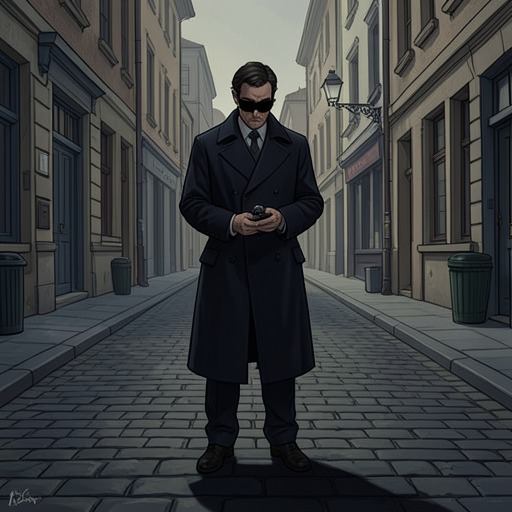
Earlier, furious with Else, Johnny shouted that she would “get it” that night. He remembered it was Thursday, when the band practised at Hauger School and Else played her trumpet. His thoughts moved from silencing the instrument to harming her, and he decided to use Johnny’s army knife. The episode thus begins before the encounter on the path: the threat, the chosen time, and the weapon connect his anger to a plan.
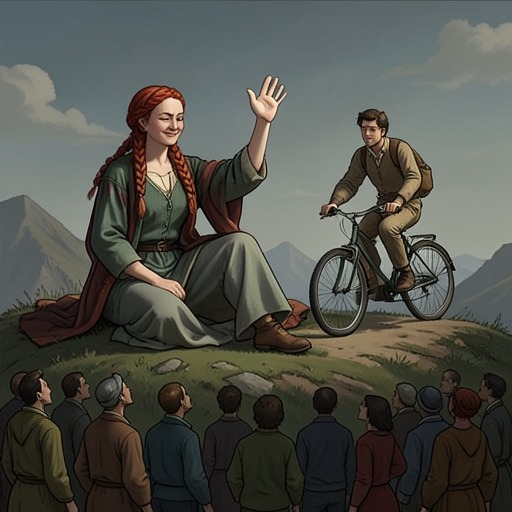
Johnny later waits along a route where he expects Else to pass. He has hidden his moped in the undergrowth and holds the knife as he watches for her. When she takes the Love Trail alone, the opportunity he has been waiting for arrives. The ordinary details of her journey—her bicycle and trumpet case—become part of his calculation, while the trail’s isolation leaves no immediate companion beside her.
His resentment is expressed through the way he interprets Else’s life. Seeing her bicycle, he imagines that her father bought it and provided new tyres; he contrasts this with the security he associates with having a father to turn to when things go wrong. This does not justify his assault, but it helps explain why his hostility is bound up with what he perceives Else to possess. He casts her as a personal enemy and treats that perception as permission to punish her.
The Assault on the Trail
Johnny approaches while concealed and plans to surprise Else. He wears the Gorilla mask, intending to make the sudden attack frightening as well as physically overpowering. When he rushes her, she resists rather than freezing as he had expected. The struggle disrupts his plan and forces him to maintain control before he can carry out the act he has chosen.
He then pins Else down, cuts off her braid with the knife, and puts it in his pocket. He uses his hold over her to communicate that he could do worse if she does not comply. The distinction between cutting the braid and threatening further harm is central to the assault: the removal is the immediate act, while the threat makes its meaning extend beyond that moment. It is not a harmless prank or an impulsive insult, but a deliberate attempt to humiliate and frighten her.
Afterward, Johnny retreats into the woods and watches from cover. Else gets herself upright, retrieves her bicycle and trumpet, and feels the back of her head where the braid had been. He interprets the incident as a warning and, even as he leaves, imagines a more severe next attack. His self-description of the assault as limited therefore does not signal restraint; it reveals that he is already considering escalation.
Aftermath and Significance
Else’s later account establishes that the assailant used a knife, not scissors. She describes it as a small pocketknife with a short blade and a red handle. Her account provides a concrete detail about the weapon, while the scene itself shows how the theft of her braid and the threat accompanying it were used to assert control. The available evidence does not establish that her description alone identifies the knife beyond doubt.
The episode also shows how Johnny’s fixation turns a familiar routine into an opening for violence. The Thursday practice gives him a reason to expect Else on the route; he waits where she will be alone, conceals his moped, and carries the weapon he had already chosen. The attack’s sequence—from threat, to ambush, to the removal of the braid, to watching her recover—makes preparation and intimidation inseparable.
Else’s resistance unsettles Johnny’s expectation that fear would make her helpless, but it does not stop him from completing the assault. His retreat leaves her to collect herself and recover her belongings, while he remains concealed to observe her response. The cut braid becomes both the tangible result of the attack and the message he intends her to carry: he can reach her again. In that reversal, his claim that this was only a warning exposes the danger rather than diminishing it.