Johnny Beskow’s Hoax Campaign of Intimidation
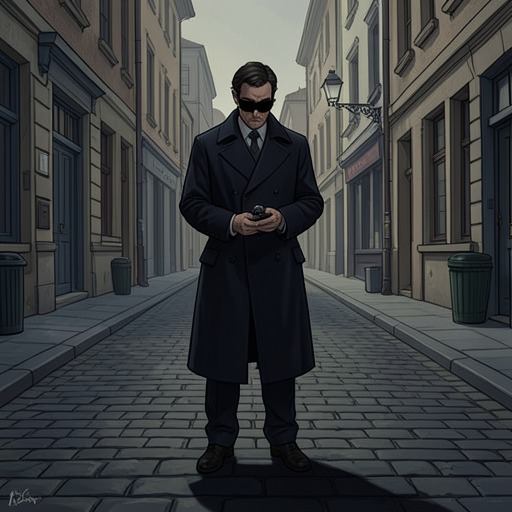
The CallerJohnny Beskow’s Hoax Campaign of Intimidation is a sustained series of deceptions in which Johnny studies other people’s routines, stages alarming messages and announcements, and leaves a community struggling to tell a prank from a genuine emergency. Its force lies in the gap between the apparent smallness of a telephone call or printed notice and the fear it unleashes: recipients are made to imagine death, injury, or danger inside the most ordinary arrangements of family life. The campaign also turns attention into part of the harm. The police worry that publicity may reward the perpetrator, while residents, deprived of evidence, begin to assign blame on their own.
Method and Opportunity
The first attack on the Sundelin family is understood by the investigators as planned rather than impulsive. Jacob Skarre reasons that the perpetrator must have watched the house and learned the family’s routines, including when Margrete Sundelin slept and perhaps how long she remained asleep. That knowledge lets him choose a moment when Lily Sundelin is outside and stage the discovery so that her reaction becomes part of the drama. The investigators imagine that he may have hidden nearby to watch what followed, an inference that captures the calculated cruelty of making a parent’s fear part of the performance.
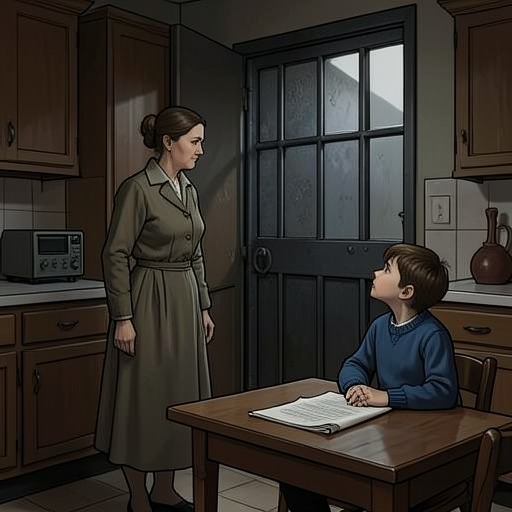
The family’s ordinary domestic scene sharpens the violation. In warm summer weather, Lily prepares a chicken pie while Margrete sleeps. Lily feels certain she would know immediately if the baby sneezed, coughed, hiccupped, or began to cry; she describes their bond as a line that would transmit even the slightest tug. The prank’s power depends on turning that trust into vulnerability: the child is sleeping, the mother is briefly occupied, and the attacker has apparently learned enough about the household to act at a chosen moment. Newspaper headlines then recast the incident as a grotesque public spectacle, including the stark announcement that a blood-soaked baby had been found in a garden.
Later police work suggests a recurring pattern of access gained through observation and ordinary social trust. When Evelyn Mold is frightened by a false hospital alert concerning her daughter, Frances Mold, Sejer notes that Frances’s name and address appeared in a newspaper profile. The prankster would also have needed to watch the house and call when Frances was out on her scooter; Sejer considers a kiosk a likely place from which the call was made. Accounts gathered from residents describe a young, slender man or boy with longish hair and dark eyes, a friendly manner, and a red moped or small motorcycle. The details matter because the same qualities that made him difficult to identify—an unremarkable appearance and a voice people found pleasant—also helped strangers trust him.
Publicity and the Spread of Fear
The campaign rapidly becomes a public story. Journalists gather outside the police department, and Jacob Skarre recognizes that the case offers drama and originality that the press will eagerly amplify. Sejer considers whether silence might deprive a criminal of the attention he wants, but Skarre raises the opposite risk: ignoring the perpetrator might make him angrier or more dangerous. Their exchange exposes an unresolved problem at the heart of the investigation. Publicity can magnify the prankster’s spectacle, yet the police cannot assume that withholding a response will keep the community safe.
The reports give separate incidents a common name in public conversation: people talk about the person making false obituary calls and messages, and Evelyn understands the hospital alert through that growing reputation. The campaign does not need to put the perpetrator physically beside each target. A call or announcement travels into a home, a hospital, or a newspaper, while the recipient supplies the frightening possibilities. The deception works because people rely on familiar systems and relationships: a message about a family member seems urgent precisely because family members matter, and a purported death notice carries weight because it resembles an accepted public record.
The prank also continues to shape how people interpret later events. Gunilla Mørk rejects Bjørn Schillinger’s claims of sabotage and regards the unknown tormentor as creative and sophisticated. She has cut out her own forged obituary and placed it in a small silver frame in her kitchen; each morning she reads it and takes satisfaction in the reminder that she is still alive. Her response does not erase the original shock. Instead, the false notice remains physically present in her home, transformed into a ritual by which she answers the threat on her own terms.
Cessation and Competing Explanations
The false announcements and devilish telephone calls eventually stop. Residents disagree about what the silence means: some take it as an admission of guilt or a withdrawal prompted by horror and shame, while others think the tormentor has simply tired of the game and does not care what happened to Theo Bosch. The cessation therefore supplies no reliable explanation and no immediate proof. The police are left asking how to catch someone who has operated at a distance, leaving no fingerprints or other traces, only fear and shock.
The stopping point also becomes entangled with suspicion surrounding Bjørn Schillinger. Nihmet Skarning calls the unknown tormentor a terrorist and says that, after all the strange incidents, he is being blamed for one thing after another. Sverre Skarning defends Schillinger as a lifelong dog owner who is considerate on Glenna and meticulous in his care of the dogs; he insists that Schillinger would not simply forget to close a gate. Gunilla likewise suspects that Schillinger is exploiting the situation and sees no humility in his response to the terrible event. These conflicting judgments show how the campaign’s uncertainty outlasts its calls: the community’s accumulated fear makes new accusations easier to believe, even when the available accounts contradict one another.
Confession and Consequences
Johnny Beskow is eventually appointed a defence lawyer. Because he is a minor, he cannot be held in custody, but he must report to the police station three times a week. He arrives on time and goes to Sejer’s office, where they talk over mineral water. In those conversations Johnny admits that frightening people had been fun and describes the campaign as a game intended to stir things up, not to cause harm. Sejer answers that the victims were badly hurt and may carry that harm for life, whether or not Johnny can understand it yet.
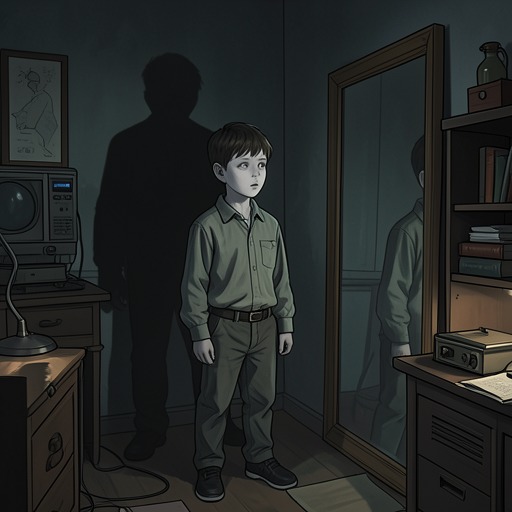
The interviews place that admission beside Johnny’s home life without making it an excuse. He tells Sejer that his mother is never sober and takes her anger out on him. Earlier, the narrative presents a seventeen-year-old who wants to ride his Suzuki and remain his own master, while the prospect of employment repels him because it would mean taking orders. He also describes intense disgust toward his mother, and his distress when she says his pet rat, Bleeding Heart, is dead makes clear how deeply he has been affected by neglect and loss. These circumstances illuminate the bitterness and isolation around him, but the novel keeps the distinction between explanation and responsibility: Johnny chose to turn other people’s vulnerability into entertainment, and his victims’ fear was real even when, in his account, the intended harm was not.
The campaign’s decisive consequence is therefore larger than the temporary shock of any single hoax. It unsettles trust in notices, calls, and ordinary procedures; exposes how publicity can turn intimidation into spectacle; and leaves residents interpreting later misfortune through the suspicions it has cultivated. Johnny’s confession clarifies his stated intention, but it does not restore the security the pranks took away or settle every public accusation that gathered around them.