Johnny Puts Rat Poison in the Stew
The CallerJohnny Puts Rat Poison in the Stew is Johnny Beskow’s deliberate attempt to poison his mother, carried out while she prepares dinner at home. The act turns a domestic meal into a concealed weapon: Johnny hides the poison, waits for an opening, and imagines not merely her death but a drawn-out spectacle of suffering. When he returns, she is alive, and the stew has been put away. The immediate failure frustrates him, but he does not abandon the possibility that the poison will take effect later.
Preparation and opportunity
Johnny retreats to his room when his mother tells him to go there. He takes Butch, his hamster, from its cage and lies on the bed, letting it move across the duvet while he listens to the kitchen. The household sounds give the scene its ordinary surface: drawers and cupboards opening, footsteps between kitchen and lounge, taps running, cupboard doors slamming, and cutlery clattering. Against this routine, Johnny concludes that the police are close behind him and that he must use the time he has left. He watches and listens for a chance to act rather than confronting his mother openly.
After roughly twenty minutes, he hears her go into the bathroom. He gets up, opens a drawer in his chest of drawers, and retrieves the rat poison from behind an old T-shirt. The pink grains look deceptively edible to him, though he knows they are deadly. The hiding place and his attention to his mother’s movements make the poisoning a planned act, not an impulsive accident. In his own thoughts, he resolves to act while he feels vicious and indifferent to what may happen that night or the next day.
The poisoning
Johnny tiptoes into the kitchen. A saucepan is simmering on the hob, with a wooden spoon beside it; meat and vegetables are mixed in a dark sauce. He empties the entire box of rat poison into the pan and stirs until the tiny grains cannot be seen. Concealment is integral to the method: the stew’s appearance gives no visible indication of what has been added. He hides the empty box under his pullover and slips back to his room. The operation takes only seconds.
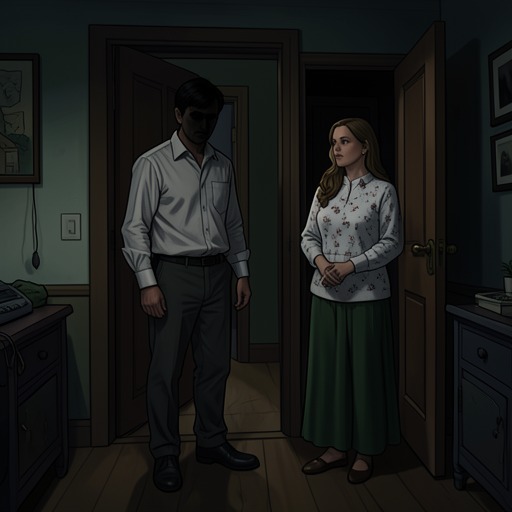
When his mother leaves the bathroom, Johnny moves into the hallway and opens the front door. She immediately notices that he is going out just as she has made dinner for them. He tells her he will eat later and says she should not wait. She returns to the stove and continues stirring the poisoned food. Johnny’s departure leaves her in the kitchen with the meal and no knowledge, in this scene, of what he has done.
An imagined death
Johnny stays away from the house for several hours. Out of breath and excited, he imagines the poisoning as a dramatic death scene. His fantasies dwell on his mother eating from a spoon, emptying the pot, and then suffering convulsions, collapse, impaired sight, and a failed attempt to call for help. He pictures her moving through the rooms, unable to open a window or make herself heard, before dying in pain. These are Johnny’s imagined events, not a report of what actually happens to her.
The fantasy exposes what he wants from the act: not only to be rid of his mother, as he thinks of it, but to deny her a peaceful death. His imagined violence grows from the knowledge that the food is poisoned, yet it remains a private spectacle in his mind. The distinction between his vivid anticipation and the sparse facts of the actual outcome is central to the scene: the horror he pictures does not establish that she has eaten the stew or been harmed.
The meal put away
When Johnny returns, his mother is alive, talking and pouring vodka, with colour in her cheeks. He goes into the kitchen and finds the saucepan empty. She has transferred the stew into a large blue Tupperware container with a lid and offers him some, explaining that she will put the rest in the freezer for another time. The ordinary act of storing leftovers interrupts the death scene he had constructed in his absence.
Johnny escapes to his room, gloomy and disappointed that he has neither created a spectacle nor got rid of her. He can only guess that she ate too little of the stew—or none at all. That uncertainty prevents him from knowing whether the poisoning has failed. At night, hearing her moving about in her room, he considers another possibility: she may have eaten a substantial portion, but the poison may act slowly. Recalling the package’s warning that rats need several doses, he imagines the effects unfolding over days and finds the prospect exciting. He wraps himself in the duvet and begins planning something creative for the next day while waiting to see whether the poison will take effect.
Significance in the action
The episode’s decisive reversal is practical rather than conclusive: Johnny has successfully concealed poison in the dinner, but he cannot tell whether his mother has consumed it. His confidence in the imagined outcome gives way to uncertainty, not remorse or reassurance. The food’s transfer into the Tupperware container makes that uncertainty concrete, while his attention shifts from a single spectacular death to the possibility of delayed suffering. The scene therefore establishes both the method of his attack and the persistence of his intent, without confirming that the poisoning kills or injures his mother.