Lies and Deception
The CallerLies and Deception is not confined to the prankster’s fabrications: across the novel, falsehood becomes a public spectacle, a threat to private security, a test of institutional procedure, and sometimes a proposed way to comfort someone in distress. The opening epigraph, an old adage that calls it a good thing there are lies, sets up this uneasy range. A lie can injure precisely because it resembles truth; yet the story also asks whether blunt truth is always the kinder choice, and how anyone can distinguish a protective fiction from a cruel one.
A falsehood made public
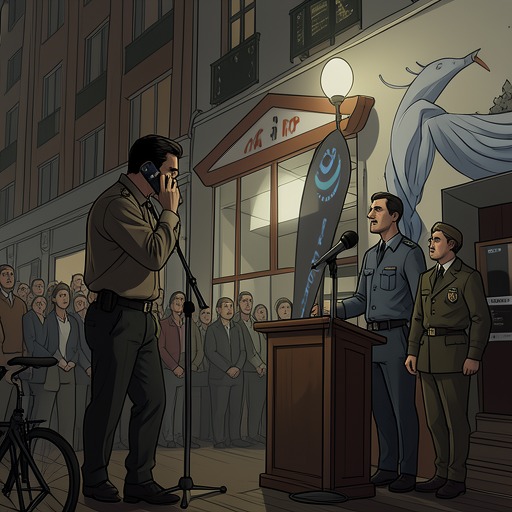
The campaign’s force depends on giving invented events the appearance of ordinary, verifiable news. After a child is found asleep in a pram behind a house, newspaper headlines turn the blood prank into a lurid public story: the baby is described as blood-soaked and bathed in blood. Those headlines do more than relay an incident. They magnify it, making a private violation available for broad attention and giving the unknown perpetrator the drama that Konrad Sejer recognizes as carefully staged. The case draws journalists to the police station, where Jacob Skarre sees their appetite for a story and Sejer weighs how little the police should say. Their concern is not only whether a report is accurate, but whether publicity will reward the person seeking a reaction or make that person more dangerous.
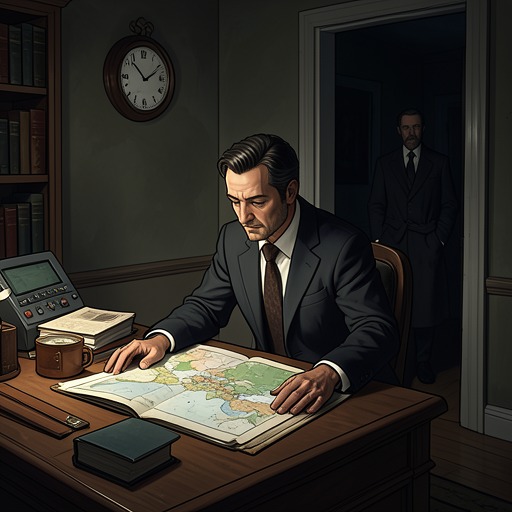
The forged obituary for Gunilla Mørk brings the same strategy into the intimate space of a kitchen. At seventy, after celebrating her birthday with family, friends, and neighbours, Gunilla has begun to dwell on death even as she consciously tells herself to value the beautiful day and her continued health. Reading the obituaries, she finds her own name and a notice that gives her birth date, declares that she died in her sleep, and names her children. Its specificity makes an error seem difficult to dismiss. She checks the notice again, knocks over her coffee, and imagines the people who know her reading it. The false report does not merely announce a death; it forces a living woman to confront her public disappearance and to wonder who selected her.
Death given a false procedure
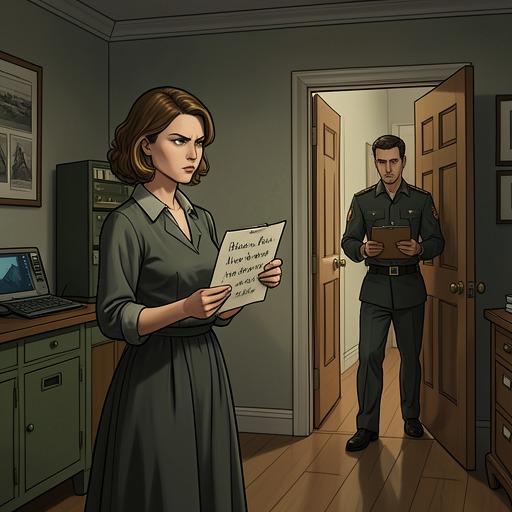
The false funeral pickup at the Landmark home shows deception borrowing authority from professional routines. A caller posing as Helge Landmark’s doctor reports a death and gives the funeral home the family’s address. When questioned, funeral-home worker Arnesen recalls a caller who sounded young, said Helge had been ill for a long time, and promised to send the death certificate by post. That required document matters: the funeral home cannot begin its work without it. Procedure therefore acts as a check on the lie, even though the false call has already brought a funeral car to the family’s driveway.
For Astrid Landmark, the arrival is especially cruel because her husband is genuinely dying of amyotrophic lateral sclerosis. His paralysis is advancing, and the couple already knows that he will lose the ability to swallow, speak, and breathe. Astrid has been keeping busy with household tasks rather than facing the difficult conversations about death and burial. Now the false report places death literally at the house, while the car waits outside. She tells Helge that it was a prank and connects it to the forged newspaper notices and the earlier incident involving the baby, but her suggestion that boys may be responsible is speculation, not a confirmed identification. Helge looks at the car and asks whether a reservation is possible. His question meets the staged scene with a wryness that does not cancel its painful proximity to the truth: the deception is false, but the death it invokes is not an abstraction for this household.
Comfort, fear, and the boundary of belief
The police response to Gunilla’s ordeal complicates any simple opposition between truth and lies. When her children describe the notice and the bewilderment it has caused, Sejer advises them to tell their mother that she was chosen at random for a purposeless practical joke and that it is a game. Asked if that is what he believes, he says it is not necessarily so; it is what he thinks they should tell her. His recommendation is a deliberate, limited reassurance, offered to calm a frightened person rather than to solve the case. The episode distinguishes that proposed comfort from the campaign itself: both rely on words that may not establish the whole truth, but their aims and consequences differ.
Gunilla’s later response shows how a lie can persist after its immediate terror has passed. She cuts the obituary from the newspaper and places it in a small silver frame on the kitchen wall. Each morning she reads it and thinks that she is still alive, finding a measure of satisfaction in the reversal. The notice remains a fabricated death announcement, yet its daily presence changes function: what first made her doubt her surroundings becomes a reminder of survival. That altered meaning does not erase the original violation; it shows how the person targeted can take possession of an object designed to unsettle her.
Accusation and the manufacture of certainty
The novel also links deception to the rush from suspicion to public blame. By the time Bjørn Schillinger claims sabotage, Gunilla does not believe him. She judges his bitterness and aggression harshly, while still crediting the prankster with sophistication, imagination, and style. Her assessment does not establish who committed every act. It instead records how suspicion has become entangled with competing accounts and how the campaign’s mystery invites people to interpret character as evidence.
That process appears in the discussion between Sverre Skarning and his wife, Nihmet. Nihmet says that the person she calls their terrorist has been involved in many strange incidents and should turn himself in; otherwise, she says, people will form their own theories. Sverre counters that Schillinger grew up locally, has kept dogs for thirty years, and is considerate and meticulous with them. His confidence that Schillinger would never forget to close a gate is a defense based on character and habit, not proof of what happened. Set beside the newspaper’s vivid headlines and Sejer’s caution about publicity, these conflicting judgments show how quickly a community can turn incomplete knowledge into certainty. Lies in the novel do not only invent events: they also expose how fear, reputation, and the hunger for an explanation can make an unverified account feel true.