Revenge
The CallerRevenge is a recurring response to injury in the novel, but not a single, settled idea of justice. For Karsten Sundelin it becomes an argument against a legal system he sees as slow and ineffective; for Johnny Beskow it grows from neglect, anger, and the loss of something precious into a plan to retaliate. The novel places these impulses beside the consequences of fear and violence, while showing that grievance alone does not determine what a person will do.
An answer to perceived injustice
Karsten treats revenge as a way of restoring a balance he believes ordinary justice cannot reliably restore. He wonders why authorities should be responsible for avenging victims and resents the protections afforded to people accused of crimes. His questions collapse the distinction between justice administered by institutions and punishment imposed by an injured person: if the system fails, he asks, who will make things right?
His distrust has a practical shape. Karsten objects to the delays between arrest, trial, sentencing, and appeal, and to the possibility that a convicted person might serve a sentence outside a cell. He argues for immediate consequences that would make the connection between an offense and its punishment unmistakable. The example he uses is theft of meatballs, a small offense that lets him frame his broader demand as common sense. Yet his impatience with procedure also leaves little room for safeguards or measured judgment.
When Karsten asks what should happen if the authorities do not catch the person responsible, revenge shifts from an abstract criticism of the system to a personal possibility. He has threatened severe retaliation against the offender, reducing that person to something beneath human regard. The threat shows how quickly his language of accountability can become a wish to punish directly. Lily Sundelin’s sudden remark that revenge is sweet offers a brief affirmation, but the scene does not establish that she shares Karsten’s full argument or intends to act on it.
Johnny Beskow: grievance made into a plan
Johnny Beskow’s understanding of revenge is rooted in a different history. He is slight in build and has lived with bullying and neglect; his mother, whom he regards with intense disgust, is also an alcoholic. When she tells him he should find work rather than expect her to provide for him indefinitely, the exchange underlines the strain and lack of support in their home. The narrative also links strong feeling to a rare sense of aliveness for Johnny: resentment gives emotional force to a life otherwise marked by neglect.
A sharper grievance follows when Johnny believes Else Meiner has killed the most precious thing he owns. Trembling and holding a wet fur ball, he interprets the loss as an injury that demands a response. His thoughts turn to revenge against Else, and he dwells on the possibility of causing her lasting harm. The passage presents this as an angry fantasy, not as an action already carried out; what matters for the concept is the movement from perceived loss to a deliberate intention to retaliate.
That intention becomes a plan. Johnny studies the playground and identifies the Love Trail, a narrow paved path behind a red-and-white barrier, as a place where Else is likely to pass on her way home to Rolandsgata. He expects her to be riding her blue Nakamura bicycle and considers the thick bushes suitable places to hide. The careful attention to route, timing, and concealment marks a change from inward anger to preparation. His revenge is no longer only an imagined answer to a wrong: he is arranging the circumstances for an encounter.
Shared bitterness, different circumstances
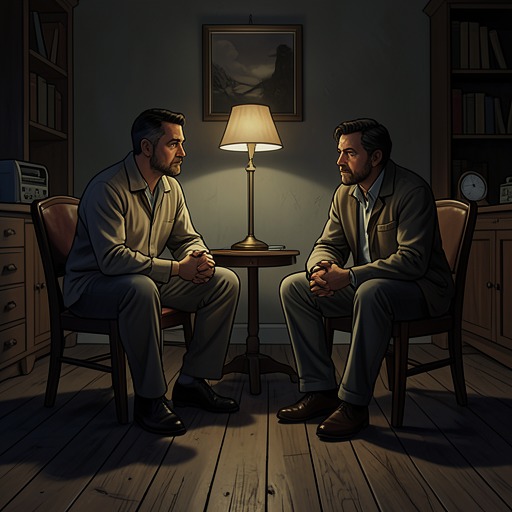
A chance meeting at a petrol station near Bjerkås brings Karsten into conversation with Bjørn Schillinger. The two men recognize a common bitterness and a shared craving for revenge. Their pause and unspoken understanding suggest an alignment built around that feeling, though the encounter, as presented here, supplies no specific plan or target. Revenge thus serves as a bond between people who see themselves as wronged, even before their intentions are fully stated.
The parallel between the men is not an equivalence. Karsten argues from anger at what he considers institutional failure, while Johnny’s plans emerge from a history of neglect and a particular loss he attributes to Else. Their grievances differ, as do the evidence and circumstances surrounding them. The novel’s juxtaposition makes the distinction important: a person’s sense of injury can explain the appeal of retaliation without proving that the proposed punishment is just.
Retaliation and responsibility
Johnny’s later account to Konrad Sejer complicates any simple reading of revenge as either a fully formed campaign or harmless mischief. Because Johnny is a minor, he cannot be held in custody, but he must report to the police station three times a week; he arrives on time and goes to Sejer’s office to talk over mineral water. There, Johnny admits that frightening people had been fun and describes his actions as a game, saying he had wanted to stir things up and had not meant to hurt anyone. His account is not the same as the revenge fantasy he formed around Else, but it reveals the gap between how he characterizes his behavior and the fear it causes.
Across these episodes, revenge is shown as an attempted substitute for repair: it promises a direct answer when a person feels ignored, wronged, or failed by institutions. But the promise is unstable. Karsten’s demand for immediate punishment risks erasing the protections and deliberation that make legal justice different from private retaliation; Johnny’s planning shows how an injury can become an intention that exposes others to fear. The novel keeps grievance and responsibility in view at once, resisting the idea that suffering automatically makes revenge right.