Stew laced with rat poison
The CallerThe stew laced with rat poison is an ordinary family meal transformed into a concealed weapon, and then into a crucial clue in Henry Beskow’s death. Johnny Beskow secretly pours an entire box of poison into a saucepan of stew intended for him and his mother. She saves the food instead of eating it, and the blue plastic container in which she stores it later appears beside Henry’s body. The stew’s passage from one kitchen to another carries the poison beyond Johnny’s original plan and turns a hidden act into evidence that draws the police toward his family.
Preparation and Intended Target
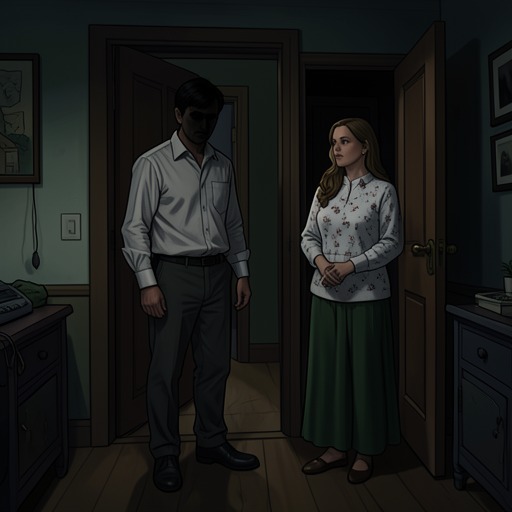
Johnny acts while his mother is in the bathroom. He has been sent to his room after she complains about his staring, and he listens to the sounds of her moving around the house. When she leaves the kitchen, he retrieves a box of rat poison hidden behind an old T-shirt in a drawer. The pink grains look harmless to him, but he knows they are deadly.
In the kitchen, a saucepan is simmering on the hob. Johnny empties the entire box into the meat and vegetables, which are already coated in a dark sauce, and stirs until the tiny grains can no longer be seen. The stealth and speed of the act matter: the poison disappears into food that appears ordinary, and the whole operation takes only seconds. He hides the empty box under his pullover and returns to his room before his mother comes out of the bathroom.
His mother notices that he is leaving just as she has made dinner for them. Johnny tells her not to wait and says he will eat later. She goes back to the stove and stirs the poisoned food. At this point the intended victim is his mother, whom Johnny privately regards with hostility; the stew is not prepared for Henry, and Johnny’s first plan depends on his mother eating it.
The Meal Is Put Aside
Johnny stays away from the house for several hours, excited by what he has done and imagining a dramatic death. The scenes he pictures are fantasies, not events: he imagines his mother collapsing and struggling to get help, but returns to find her alive and apparently well. When he checks the kitchen, the saucepan is empty. His mother has transferred the stew into a large blue Tupperware container with a lid and says she will freeze the remainder for another meal.
The container quietly changes the course of the poisoning. Johnny is disappointed that his mother has not died and cannot tell whether she ate any of the stew. That night he considers another possibility: perhaps the poison works slowly. He remembers the package’s claim that rats require several doses before dying and imagines his mother suffering over several days. This is Johnny’s inference and anticipation, not confirmation that she has consumed a dangerous amount. The saved food remains an unresolved threat: its poison is still mixed into the stew, but its intended target has not been established as having eaten it.
The Container at Henry’s House
Later, Sejer and Skarre find Henry dead in his chair, with blood on the floor and on his clothes. On the table is the blue plastic Tupperware container, with food remaining at the bottom, its lid set aside and a spoon beside it. Skarre observes that Henry appears to have died while eating. The container makes the meal part of the immediate scene, although at first the investigators do not know what caused the extensive bleeding.
Johnny arrives and recognizes the container. He tells Sejer that it belongs to his mother, identifies the food as her stew, and says Henry ate most of it. He also alleges that his mother wanted Henry’s money and suggests that the food’s presence is suspicious. His statement supplies a connection between the poisoned meal at home and the food beside Henry, but the scene does not show him witnessing how it reached Henry or establish his accusation about his mother’s intention as fact. The container is both a recognizable household object and a material link that redirects the investigation toward the Beskow family.
Forensic Confirmation and Consequences
A call from the Institute of Forensic Medicine establishes what the food contains: large amounts of bromadiolone. Snorrason explains that it is the active ingredient in rat poison. It prevents blood from coagulating, causing bleeding throughout the body; it is also readily available at supermarkets and inexpensive. The forensic finding turns the suspicious remains in the container into evidence of poisoning and explains Henry’s otherwise puzzling bleeding.
Trude Beskow is arrested at her house in Askeland on suspicion of poisoning her father, Henry. The stew’s role therefore exceeds Johnny’s original intention. He introduced the poison to target his mother; she set the food aside; Henry later ate most of the stew from the same blue container. The evidence confirms the poison and Henry’s exposure, while the arrest records suspicion against Trude rather than a disclosed explanation of who brought the food or why Henry received it.
The object’s changing function gives it its significance: first a familiar dinner, then a concealed delivery system, and finally a clue identified at a death scene. Its dark sauce hides the grains from sight, while the blue container makes the food recognizable after it has left the kitchen where Johnny poisoned it. What Johnny treats as a private act becomes legible through that ordinary container, the remaining food, and the laboratory identification of bromadiolone.