The Sundelins’ post-attack trauma
The CallerThe Sundelins’ post-attack trauma turns an assault on Margrete into a lasting crisis of safety, care, and intimacy. The danger does not end when the child is confirmed unharmed: Lily cannot return to the former trust that allowed Margrete to sleep outside in her pram, while Karsten’s urge to protect his family hardens into anger. Their different responses gradually become a second injury, loosening the marriage from within.
The home after the attack
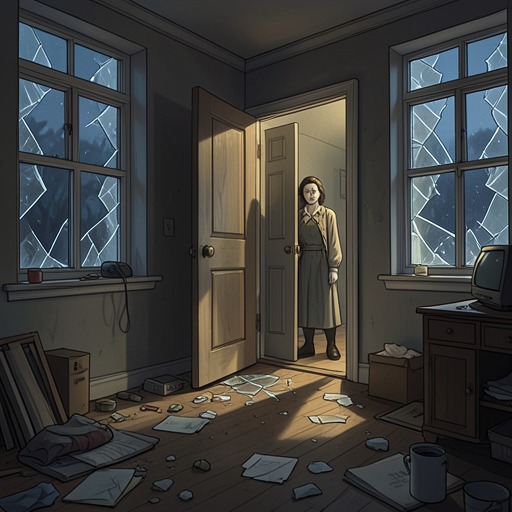
When a nurse confirms that Margrete is completely unharmed and that the blood was not hers, Lily and Karsten are still left waiting for the police. Lily wants to go home, retreat to her bedroom, and remain in bed with her husband and child. Her imagined refuge is not simply a place to rest; it is a return to the enclosed family world that the attack has made feel uncertain. She resolves never again to leave Margrete sleeping in the pram beneath the maple tree, never again to let her sleep unsupervised, and never again to shut the child out of her mind.
That resolve marks a change in the meaning of routine care. Before the attack, leaving Margrete outside could belong to the ordinary rhythm of family life. Afterwards, the same act becomes unthinkable. The threat is not described only as a memory of what happened, but as a new rule governing what Lily can permit herself to do. Her anxious question about what the couple will say while they wait also reveals how exposed she feels even in the presence of authorities: she is nervous, wants no conversation, and longs to withdraw.
Vigilance, fear, and withdrawal
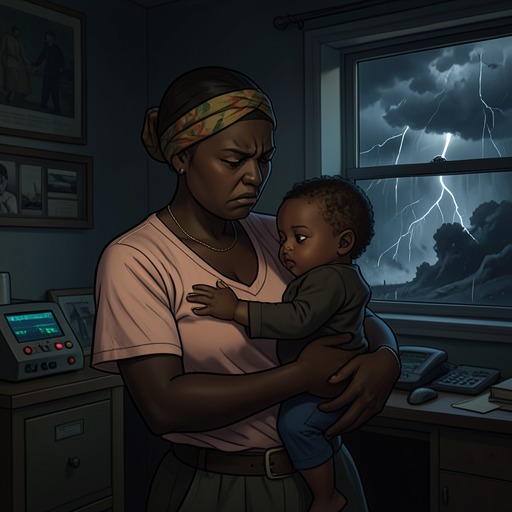
The trauma returns most starkly at night. A few weeks after the attack, Karsten wakes at three-thirty and discovers that Lily is not beside him and Margrete is no longer in her cot, which has been moved into the bedroom. He finds them in the unlit lounge: Lily sitting on the sofa with the sleeping child in her lap. In the faint grey light, Karsten watches them and recognizes that fear has taken root in Lily and stolen the peace of mind the family once took for granted. He senses the damage as something almost like an unseen presence between them, though he cannot give it a definite shape.
When he tries to reassure Lily that the attacker will eventually be caught and that justice will restore normality, reassurance does not reach her. She looks hurt, then reluctant, as if the corner of the sofa, the blanket over her knees, and Margrete in her arms have become a place she cannot leave. Karsten feels that she has moved somewhere he cannot follow and has pushed him away. Her fear has therefore changed not just where she sleeps or how closely she watches the child, but also the couple’s capacity to comfort one another.
Lily describes the danger as ongoing rather than finished. Rocking Margrete, she insists that anything can happen. Karsten thinks that they must sleep, put the child to bed, and move on, but his appeal to ordinary needs cannot cancel her sense of exposure. Later, her care appears alongside a changed attentiveness: she reads the newspaper while keeping Margrete in sight in a baby bouncer, occasionally nudging it gently with her foot until the child smiles. Karsten observes that Lily has changed, with another voice and another look in her eyes, and senses a new sensitivity. The tenderness of the small gesture persists, but so does the watchfulness that surrounds it.
Different responses, shared damage
Karsten’s reaction combines protection with alarm at what protection is doing to him. The theft of Margrete’s pink smock becomes one more reason to wonder whether the attacker is watching the family. Lily sees that the incident has changed her husband: his voice has grown coarse, he is continually on guard, and he meets possible danger on the offensive. She is frightened by his sudden rage, yet also touched that he has risen to defend them. Her mixed response captures the strain between wanting his protection and wanting their lives to stop revolving around the threat.
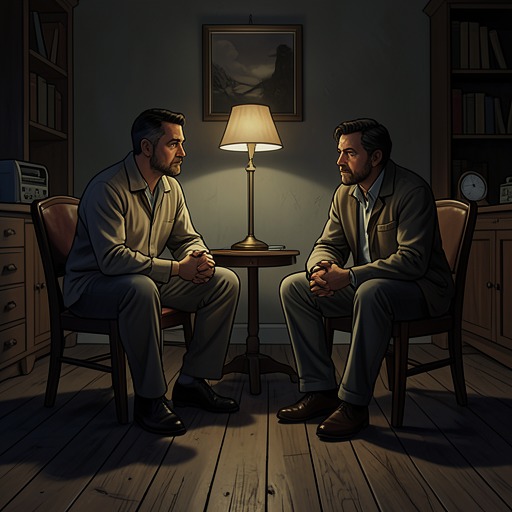
The couple’s disagreement sharpens when Karsten urges Lily to be angry. She cannot summon anger in the way he expects. She explains her own response as helplessness: distress festers, then surfaces as tears; instead of fighting, she curls inward and sees herself as a victim. She believes the authorities should handle the matter, partly because she wants them to remain better than the person who harmed them. Karsten doubts that official justice will go far enough and asks what they should do if the attacker is not caught. The exchange exposes a divide between Lily’s insistence on restraint and Karsten’s fear that restraint may leave the family unprotected.
The fracture inside the marriage
Karsten’s vigil at the sofa is followed by a deeper reckoning with the damage. He understands that Lily has lost the security she once took for granted, but he also resents the distance he cannot cross. In his private reflections, the attack has cracked the foundation of his life with her; his temper becomes more fiery, his gestures testier, and he slams doors harder. He admits to himself that he is no longer in love with Lily and has begun to dislike her vulnerability and fear. That admission brings despair rather than relief, because he suspects that he may have failed his family by being unable to protect them.
Physical closeness confirms the change. At night, with Margrete between them, Karsten reaches carefully for Lily’s shoulder or hair, repeating a gesture that used to be habitual. Lily responds with an involuntary shudder, as though his touch irritates her. The tenderness he offers cannot simply resume its former meaning; even a familiar touch now meets the bodily recoil of a relationship reorganized by fear. The attack has not only made Lily wary of the outside world. It has altered the terms on which the couple can approach one another.
Trauma and the novel’s wider pattern of harm
The novel places the Sundelins’ fear beside other forms of injury without making them equivalent. Johnny Beskow is presented in scenes of severe neglect: he loathes his heavily drinking mother, resists her demand that he find work, and feels trapped by poverty and dependence. When she tells him that his pet rat Bleeding Heart is dead, he trembles and erupts, revealing how deeply the loss strikes him after years of bullying and neglect. Later, while reporting to the police three times a week because he is a minor who cannot be held in custody, Johnny admits that frightening people had been fun to him and calls it a game, though he says he never meant to hurt anyone. The contrast underscores the difference between the prankster’s stated intention and the severe, lasting harm experienced by those he frightens.
Karsten’s own injury also finds a dangerous outlet. At a petrol station, he falls into conversation with Bjørn Schillinger, and the two immediately recognize one another as bitter men craving revenge. Their shared anger suggests how the loss of safety can extend beyond private vigilance and pull people toward retaliation. It does not restore the home or repair the Sundelins’ marriage; it carries the damage into another relationship and into a broader conflict.
The post-attack trauma is thus defined by persistence and unevenness. Lily keeps Margrete close and cannot imagine the danger as over; Karsten tries to protect the family, then finds his anger and resentment damaging the bond he hoped to defend. Their fear has no single outward form and no quick return to normal. It is visible in a child watched from the sofa, in a husband awake before dawn, in the touch that produces a shudder, and in the possibility that a demand for justice may turn into a desire for revenge.