The Wolverine Postcard Threat
The CallerThe Wolverine Postcard Threat begins when an anonymous visitor leaves a small grey envelope on Konrad Sejer’s doormat. Inside is a postcard depicting a wolverine and carrying the message “Hell begins now.” The delivery makes the investigation personal: Sejer is no longer only assessing a staged crime and managing its public attention, but confronting a threat directed at him. The sender remains unidentified in the scene, and the postcard offers no explanation beyond its ominous promise.
Delivery and Discovery
Late at night, Sejer hears the doorbell after preparing to go to bed. His dog, Frank, rushes into the hallway and waits by the front door, whining. Sejer thinks first of his daughter, Ingrid, and his grandson, Matteus, wondering whether something has happened or whether they need him. He hesitates for a few seconds, but does not consider refusing to answer: someone may want something from him, and he is accustomed to being ready to help.
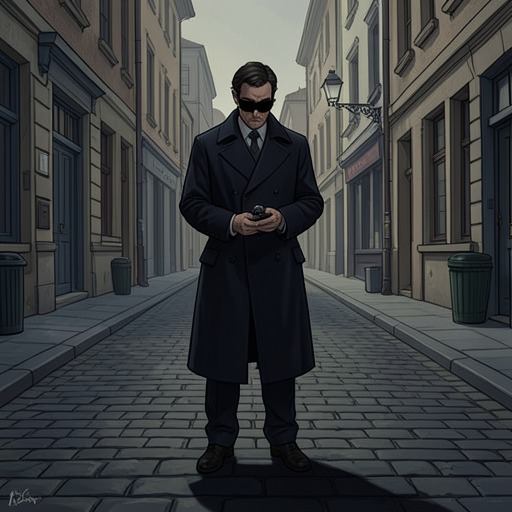
The corridor is empty. Sejer sees only the grey brick walls, an emergency fire box containing an axe, and the cast-iron handrail. He hears the lift descend, then notices the small envelope on his mat. Rather than finding its sender at the door, he watches from the window. A figure crosses the car park and disappears into the darkness. Sejer judges the person to be a slender young man, probably under thirty, and is certain this is the person who left the message. It is his assessment of a fleeting figure, not an identification: neither the envelope nor the scene establishes the visitor’s name.
The envelope is made of recycled paper and has no writing on it. Sejer opens it with a sharp kitchen knife. The postcard shows a brown-black animal with a large, shaggy tail; its printed caption identifies it as a wolverine and credits photographer Gøran Jansson. The deliberate contrast between the unmarked envelope and the specific, unsettling image gives the delivery its spare form: no address, explanation, or signature, only an animal and a sentence.
The Message and Its Recipient
The message reads “Hell begins now.” Its brevity leaves the threat open-ended. It does not say what will happen, when it will happen, or who will carry it out. The uncertainty is part of the pressure: Sejer must consider the possibility of further action without being given anything concrete to investigate in the message itself. He holds the postcard carefully, studies it, and later keeps looking at the image under his bedside lamp.
The threat also reaches him at a vulnerable point in the case. Sejer has been thinking about the press gathered outside and the risk that publicity will magnify the perpetrator’s drama. He and Jacob Skarre describe the case as unusually dramatic and recognize that reporters are eager for details. Sejer considers whether publicity gives a criminal the attention he wants, while Skarre worries that silence could make the offender angrier or more dangerous. Their discussion concerns the wider case, including the sleeping baby found covered in blood; the postcard shifts that uncertainty into Sejer’s private life. The public spectacle has acquired a message addressed to the investigator himself.
Publicity, Recognition, and Fear
The delivery follows an investigation already surrounded by sensational coverage. After buying meatballs for Frank, Sejer sees newspaper headlines describing a blood-soaked baby found in a garden and a grotesque joke in Bjerketun. The reports establish how quickly the crime has become a public story. Earlier, Skarre had looked down at the journalists gathered in the square and compared their eagerness to a swarm of wasps. Their presence embodies the attention Sejer is trying to contain; the postcard suggests that the person staging these events may also be attentive to that attention.
Sejer’s response connects the anonymous threat to his public identity. While unable to sleep, he imagines his face appearing on television on three channels and his name at the bottom of the screen. He recognizes that it would be easy to find him in the telephone directory. The thought does not identify the visitor or prove how the sender located him, but it makes the threat’s practical reach clear: the investigator is visible, accessible, and no longer separate from the story he is handling.
The scene’s movement from the public square to Sejer’s darkened home sharpens that change. In the office, he can weigh what to tell journalists and hope to keep his remarks brief. At home, an empty corridor and a blank envelope offer none of that control. The figure is gone before Sejer reaches the door, and the postcard supplies no demand he can answer. His professional caution meets a private warning whose terms remain deliberately unclear.
Aftermath and Significance
Sejer thinks of Margrete Sundelin and of what has already happened and what might happen next. The repetition of “Hell begins now” at the close gives the postcard a force beyond its physical arrival: its wording persists in his thoughts after he has put the card down and turned toward bed. The threat does not disclose a specific next act, but it changes the horizon of the investigation by making future danger part of Sejer’s immediate calculations.
Later, Johnny Beskow takes pleasure in the attention generated by his campaign of intimidation. People give him nicknames, and he thinks he has finally made something of himself; he intends to continue the game. When required to report to the police station three times a week because he is a minor, he admits to Sejer that frightening people had been fun, though he says he never meant to hurt anyone. Sejer insists that the harm is real and may endure. These later disclosures place the postcard within a broader pattern of staged fear and attention-seeking, without making the card itself a signed confession: the scene of its delivery leaves its sender unnamed. Its narrative importance lies in that double effect—an identifiable threat to Sejer, and an unanswered question about how far the campaign will go.