Theo Bosch’s Fatal Dog Attack
The CallerTheo Bosch’s fatal dog attack is revealed through the discovery of his mutilated body on the Glenna Trail, where the evidence points Konrad Sejer toward a pack of dogs and transforms a search for a missing child into an investigation of a killing.
Discovery on the Glenna Trail
Jacob Skarre summons Konrad Sejer to the trail near Saga in Bjerkås, explaining that Sverre Skarning has opened the metal barrier so officers can drive in. At the first fork, called Skillet, a wooden map sign marks the scene. Skarre cannot yet explain what has happened, but warns that the remains appear to belong to a little boy. Sejer reaches Glenna about thirty minutes later and finds officers gathered around a green tarpaulin in the road. Its small rise gives the covering a terrible scale: the body beneath it is very small.
When the tarpaulin is pulled back, the remains are badly torn. Sejer sees a blank, staring eye, exposed shafts of bone, a left arm severed at the elbow, and parts of the face missing. Small children’s teeth show against red gums. A white trainer lies among the remains, but Sejer cannot find its match; the torn-off arm is missing too. Nearby, an open rucksack bears a Kvikklunsj chocolate-bar patch, and a toy has fallen from it. The details make the victim’s childhood unmistakable while leaving the scene’s violence difficult to comprehend.
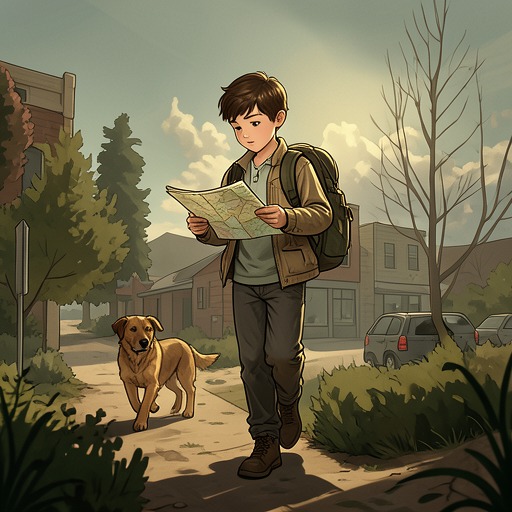
The circumstances of Theo’s last outing begin to emerge from what others saw on the trail. Hikers had encountered him on the way up to Snellevann, sitting on a rock and eating his lunch. He appears to have been alone. Jacob Skarre lifts the fallen toy and identifies it as an Optimus Prime toy. Faced with the remains and these fragments of an ordinary hike, Sejer concludes that a pack of dogs attacked the boy.
Hannes Bosch and Wilma Bosch arrive looking for their son, who had gone hiking and had not answered their calls. Hannes introduces himself and explains that they came to be safe, then notices the tarpaulin and asks what has happened. Sejer initially tells them there has been an accident and prevents them from passing. Wilma sees the ambulance and presses for an explanation; Sejer tells her that the boy found is dead. She breaks away from Hannes and tries to cross the road, but Sejer holds her back as her knees give way. Hannes still hopes the officers may have found someone else, even as he sees Jacob holding Theo’s mobile phone. Sejer, meanwhile, recognizes that the immediate question is no longer only what happened to Theo, but who owns the dogs.
The Dogs and the Investigation
Sejer’s next step is to confront Bjørn Schillinger, who keeps dogs at his house on Sagatoppen. When Sejer tells him that a boy was found near Glenna and Skillet and was probably attacked by dogs, Schillinger turns pale. His first questions are whether the boy is badly hurt and whether he will lose the dogs. Sejer answers that the child is dead and that the dogs will be taken from him. The exchange makes the consequences immediate: the search for the owner is now also an inquiry into the animals’ custody and the conditions that allowed them to reach the trail.
Schillinger’s room is crowded with photographs of dogs, their names written beneath them, with separate walls for females and males. He insists that he has kept dogs for thirty years, has never had trouble with them, and has always managed them responsibly. He describes a repeated locking routine when he enters to feed or care for them: he shuts the door, bolts it, lowers the hook, and listens for the click. To him, the sequence is ingrained, almost reflexive; he says the dogs are his life. Yet he also argues that the police cannot establish that his animals killed Hannes Bosch’s son, since other dogs live in the area and some may run loose. His attachment and his denial sit beside the missing certainty at the heart of the investigation.
Sejer does not treat Schillinger’s account as a resolution. The dogs are to be confiscated and DNA-tested, and investigators will establish where they have been and what they have done. They will also examine the crime scene to determine how the dogs got out; Schillinger may be held in custody while that investigation proceeds. Thus the attack leaves two related questions open: whether these particular dogs were responsible, and how they could have reached a child on the Glenna Trail. The planned tests and examination turn Sejer’s first inference into a case that must be supported by evidence.
The Scene's Human Impact
The discovery unsettles not only the family but the people charged with responding to it. At the fork, eight or ten crime-scene officers stand around the covered body; some hold their heads, while others sit on logs beside the track, and one woman officer sobs into her hands. When Konrad Sejer approaches, they step aside. He is shaken by what lies beneath the tarpaulin, and his instinct is to retreat. Before the examination proceeds, he asks whether anyone has touched the remains. The assembled officers shake their heads; the sobbing officer wipes away her tears, though pain remains plain on her face. Their silence preserves the scene, but it cannot make the task impersonal: Sejer tells them he has never seen anything so awful, then turns that shock toward the work still required.
Suspicion Without a Verdict
In the first moments of the confrontation, suspicion registers in small physical details rather than in any settled finding. While Sejer speaks, Schillinger picks at a splinter in his rough hand; a pale band marks the finger where a ring had long been worn but was now absent. When Sejer says the boy was probably attacked by dogs, Schillinger turns deathly pale and tears at the splinter. His insistence that he has always secured his animals meets the weight of the scene, but it does not establish what happened: Sejer still has to determine how the dogs got out, and the investigation must test whether they were responsible. As Schillinger’s defiance gives way to trembling, Sejer feels compassion for him. The exchange holds grief, attachment, and suspicion together without turning distress into proof.