
The Clerical Double Standard
The Canterbury TalesThis flow compares religious offices that serve communities with offices that exploit them, exposing corruption through contrast.
increasing Bearing strength in each event
 decreasing
Bearing strength in each eventdecreasingParson’s Practice
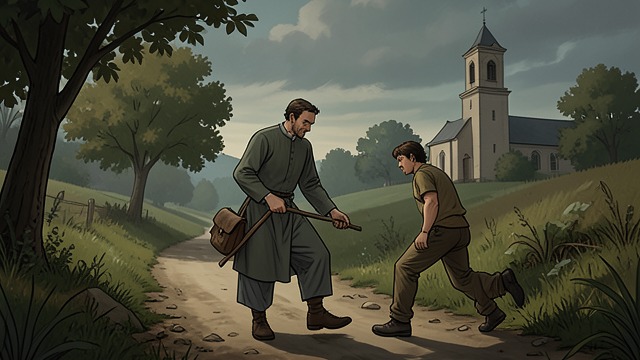
Parson’s Practice
Lived Doctrine
The Parson teaches the Gospel through visitation, poverty, and example. He gives from his own substance rather than demanding payment.
Moral Authority
His authority grows from consistency between word and deed. The tale collection establishes him as a standard against which other clerics can be measured.
Monastic Defiance
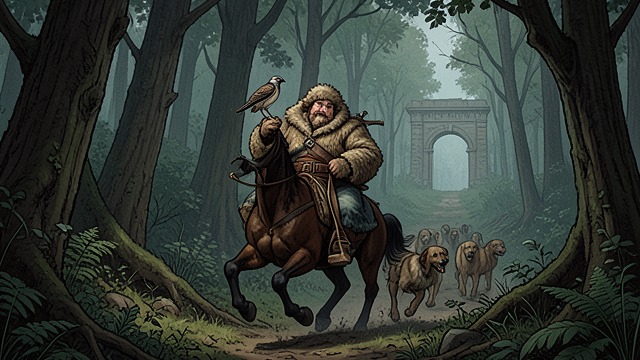
Monastic Defiance
Rejected Discipline
The Monk dismisses older rules as unsuitable to active modern life. Hunting, rich clothing, and horses replace enclosure and manual labor.
Institutional Ambiguity
He is not presented as ignorant, but as someone who treats office as privilege. The conflict lies between inherited rule and self-chosen lifestyle.
Summoner’s Extortion

Summoner’s Extortion
Law for Sale
The Summoner threatens offenders and accepts payment to erase or soften charges. His office turns justice into a private market.
Paradox of Authority
He invokes Church discipline while undermining its moral purpose. The tale’s supernatural ending makes the institutional corruption visibly damnable.
Pardoner’s Relics

Pardoner’s Relics
Fabricated Sanctity
The Pardoner sells bones, cloth, and official-looking documents as spiritual remedies. His objects exploit the audience’s desire for certainty.
Hypocrisy as Method
He preaches against greed while collecting money through greed. The sermon’s truth survives only as an accidental by-product of fraud.
Host’s Rejection
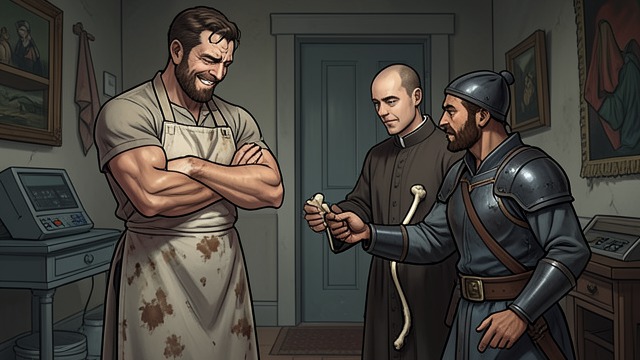
Host’s Rejection
Counterattack
The Pardoner asks Harry Bailly to submit to his ritual, but the Host refuses and insults the relics. Commercial holiness is answered by obscene exposure.
Restored Fellowship
The Knight intervenes and makes them kiss. Social peace returns without erasing the conflict between moral performance and moral reality.
General Prologue
General Prologue before the storytelling contest
The Friar’s Tale
The Pardoner’s Tale
After The Pardoner finishes his tale
