
The Company as Social Microcosm
The Canterbury TalesThis flow follows the General Prologue’s movement from physical description to moral exposure, showing how the pilgrims embody competing social estates.
increasing Bearing strength in each event
 decreasing
Bearing strength in each eventdecreasingEstate Portraits
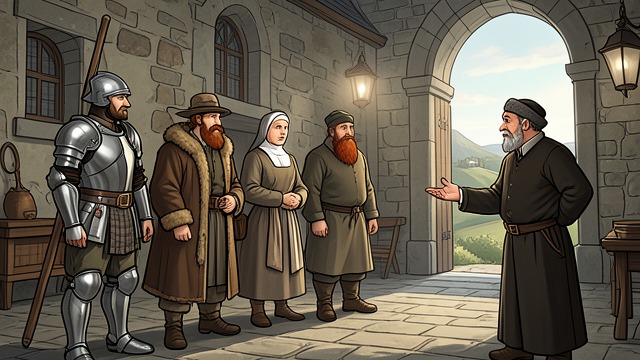
Estate Portraits
Visible Rank
The company is introduced through clothing, occupation, speech, and bodily appearance. Social identity is presented as something performed and read.
Uneven Credibility
Some figures embody their offices honorably, while others reveal corruption beneath respectable surfaces. The catalogue prepares readers to compare appearance with conduct.
Honest Shepherds

Honest Shepherds
Moral Example
The Parson and The Plowman represent service grounded in practice. Their poverty does not prevent generosity, learning, or spiritual responsibility.
Contrastive Function
Their conduct silently judges wealthier or more official pilgrims. The social catalogue therefore includes ideals as well as satire.
Predatory Offices
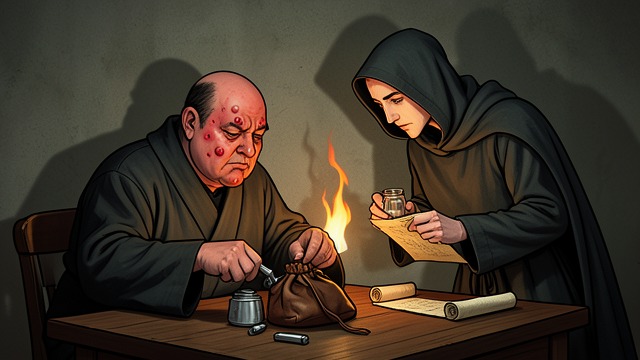
Predatory Offices
Institutional Abuse
The Summoner and The Pardoner turn religious authority into private profit. Their offices become instruments for intimidation, deception, and appetite.
Self-Revelation
Their later tales intensify the portrait already given. The speakers condemn the sins they practice, making hypocrisy part of their narrative identity.
Counter-Satire
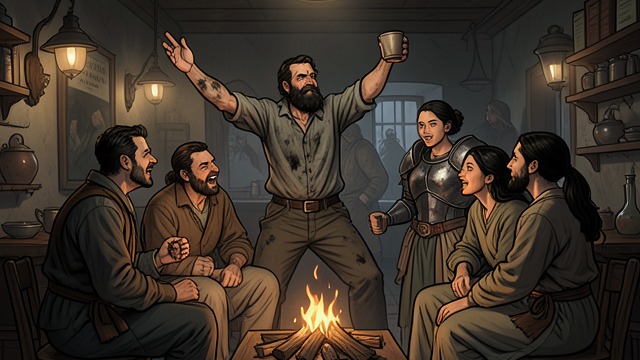
Counter-Satire
Tale Against Tale
The Miller answers aristocratic romance with sexual farce, and later speakers answer him in turn. Storytelling becomes a contest over whose vision of society will dominate.
Fragile Courtesy
The Host and The Knight repeatedly restrain the company from open collapse. Their interventions show that fellowship depends on negotiated limits.
Plural Ending
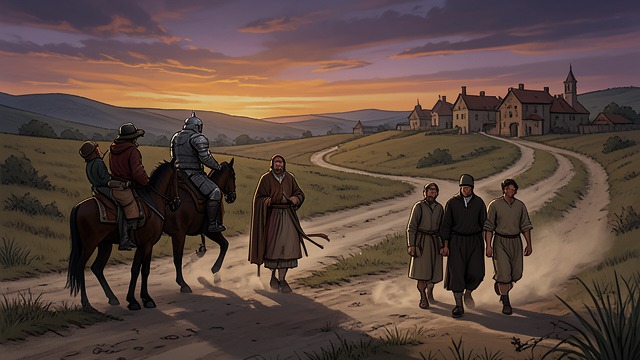
Plural Ending
No Single Social Lesson
The collection moves among chivalry, clerical corruption, marriage, greed, and providence. Each tale offers a moral pressure without erasing the others.
Society in Motion
The pilgrims remain a temporary public, not a unified community. Their unresolved diversity is the collection’s final social form.
General Prologue before departure
Late in the General Prologue
Late in the General Prologue
After The Miller’s interruption
Near the close of the supplied collection
