
The Fortune Pattern
The Canterbury TalesThis flow follows repeated rises and falls in the tales, showing Fortune as a narrative mechanism that unsettles human confidence.
increasing Bearing strength in each event
 decreasing
Bearing strength in each eventdecreasingArcite’s Release
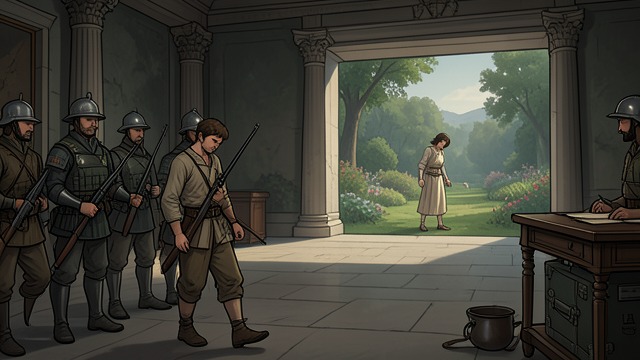
Arcite’s Release
Apparent Fortune
Arcite leaves prison without ransom and gains service at Theseus’s court. His disguise as Philostrate brings him honor and proximity to Emily.
Hidden Loss
The freedom he receives is also exile. His apparent rise intensifies the impossibility of the desire that governs him.
Arcite’s Triumph
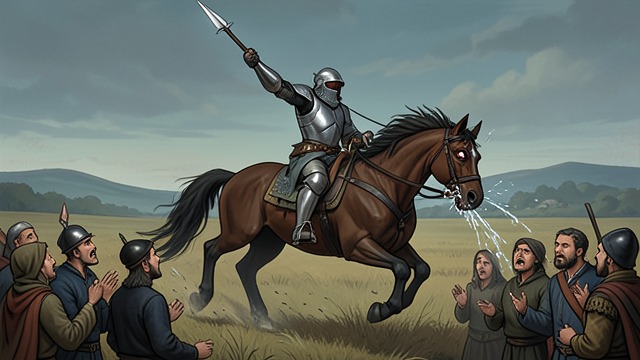
Arcite’s Triumph
Victory in the Lists
Arcite’s force prevails and Theseus awards him Emily. The outcome appears to reward Mars and the fighter’s worldly effort.
Fragile Celebration
His triumph lasts only moments. The horse’s panic reveals that Fortune can overturn success without warning.
Zenobia’s Parade
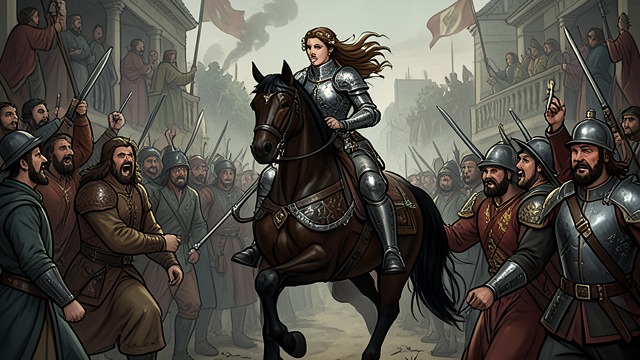
Zenobia’s Parade
Imperial Height
Zenobia rules widely, fights successfully, and commands the fear of kings. Her courage makes her fall seem almost impossible.
Captive Display
Aurelianus defeats her and exhibits her in chains. The same jewels that marked sovereignty now decorate humiliation.
Count’s Starvation
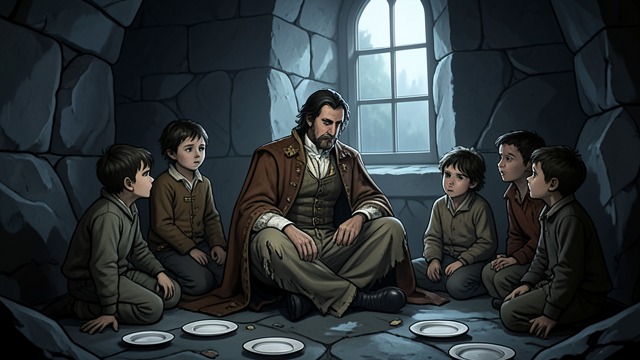
Count’s Starvation
Political Reversal
Count Ugolino falls from power into a tower with his children. Confinement strips away rank and turns government into helpless waiting.
Familial Ruin
The children die one by one, followed by their father. Fortune’s reversal becomes most terrible when it destroys a household rather than an individual.
Croesus’s Misread Dream
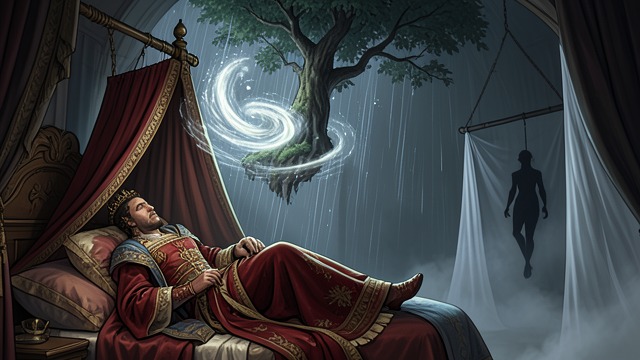
Croesus’s Misread Dream
Warning Concealed as Favor
Croesus dreams of rain, sunlight, and a tree, but interprets the vision as encouragement. His daughter identifies the gallows that he refuses to see.
Fall Despite Escape
He survives one danger and then returns to war. His confidence converts temporary rescue into a final downfall.
After Perotheus intercedes
The tournament day
In The Monk’s Tale’s historical exempla
During Count Ugolino’s imprisonment
Near the end of The Monk’s Tale
