The Canterbury Tales storytelling contest
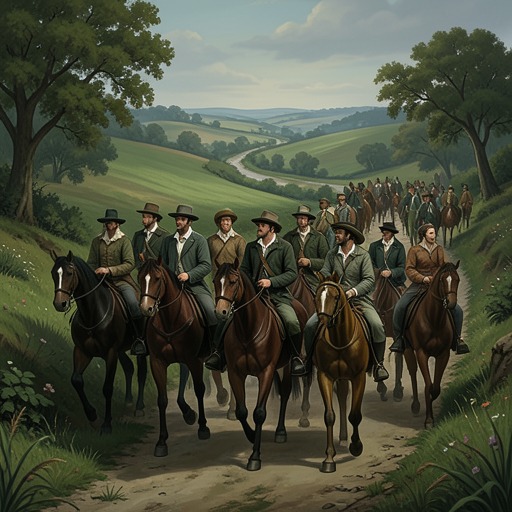
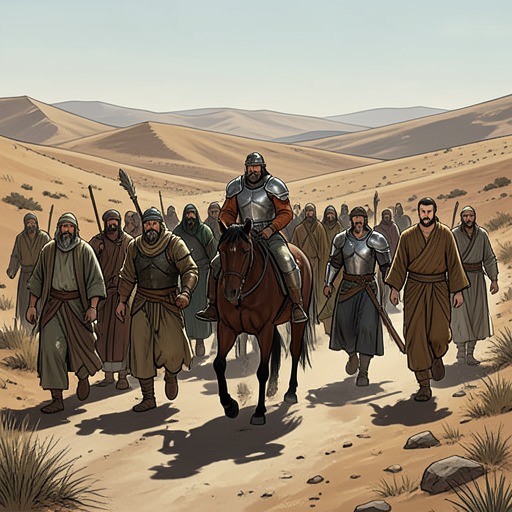
The Canterbury TalesThe Canterbury Tales storytelling contest is the organizing game that converts a pilgrimage into a collective narrative enterprise. As the travelers set out toward Canterbury, the Host, Harry Bailly, responds to the prospect of a long and otherwise silent journey by proposing that they entertain one another with stories. The contest therefore joins movement and narration: the pilgrims travel toward a shrine while simultaneously creating a temporary society governed by speech, rivalry, judgment, and mutual assent.
Origins and Purpose
The contest arises from the pilgrims' desire to begin their journey and from the practical problem of keeping a large company engaged on the road. The travelers are described as eager to travel to distant shrines, but Harry Bailly imagines that the ride will offer little amusement if everyone remains silent. His proposal is presented as a free form of entertainment rather than as a solemn religious exercise, yet it immediately gives the pilgrimage a second purpose. The road becomes both a physical route to Canterbury and a narrative space in which the participants can reveal their values, occupations, resentments, ideals, and habits of judgment.
Harry Bailly introduces the destination in explicitly devotional terms, sending the company toward Canterbury under the blessing of God and the blissful martyr. This religious frame does not prevent the contest from being playful. Instead, the sacred destination and the secular game coexist from the beginning: pilgrimage supplies the shared occasion, while storytelling supplies the pleasure that makes the journey socially bearable. The contrast establishes the distinctive mixture of devotion, sociability, comedy, and competition that governs the larger work.
Rules and Competitive Structure
The central rule is that each pilgrim will tell two tales on the way to Canterbury. The plan is reciprocal and extensive: everyone is expected to contribute, so narration is not reserved for an official speaker or for the socially powerful. Each traveler receives a turn within the same broad framework, even though the tales themselves can differ sharply in tone, subject, moral emphasis, and form. The rule creates a rotating sequence of voices and makes the company both audience and performers.
The contest also includes a return journey. After the pilgrims have reached Canterbury, they are expected to come back, and the storytelling arrangement consequently gives the whole trip a symmetrical design. The proposed total of two tales in each direction promises a substantial body of shared entertainment rather than a single isolated performance. The journey is imagined as a complete narrative circuit whose stages are marked by departures, tales, arrival, and return.
Victory is defined by a combination of aim and wit. The pilgrim judged to have told the tales that excel in both respects will win a supper paid for by the company at the very place where the agreement is made, after the travelers return from Canterbury. The prize is modest but carefully chosen: it binds literary excellence to food, fellowship, and a future reunion. Judgment is not merely abstract criticism, since the result will be celebrated in a communal meal and financed collectively by the lot.
Authority and Consent
Harry Bailly does more than suggest a pastime. He asks the travelers to accept him as governor of the game, responsible for hearing the tales and overseeing the contest. His authority is therefore procedural rather than political in the larger sense: he is to organize turns, receive performances, and maintain the rules that make competition possible. The group is not forced into the arrangement. The proposal is granted with happy hearts, and the pilgrims give their oath before asking the Host to undertake the office.
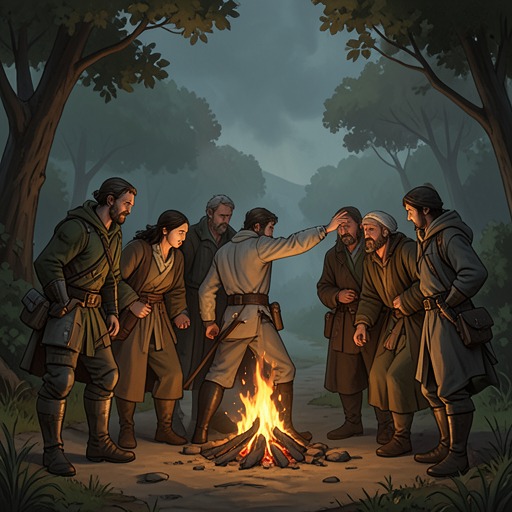
The oath is important because it changes an informal gathering into a temporary institution. The travelers begin as individuals sharing a road, but their assent creates a company with rules, obligations, an adjudicator, and a promised reward. The contest's authority rests on collective consent, even as it places Harry Bailly in a position to regulate the others. His role also anticipates the continual negotiation between control and resistance that makes the storytelling sequence dramatic: a teller may answer another teller, challenge a genre, interrupt the expected order, or expose the limits of the Host's governance.
Narrative Function
The contest supplies the frame that allows many distinct stories to coexist without losing their connection to the pilgrimage. Its structure is episodic, but not random. Each tale is attached to a speaker within the traveling company, and the movement from one performance to another creates relationships among speakers as well as among stories. The narrative is thus built from two simultaneous journeys: the literal passage toward Canterbury and the discursive passage through successive acts of telling and hearing.
The frame also turns character into performance. Because the pilgrims must speak before one another, their tales become extensions, disguises, or reversals of their public identities. A participant may present a moral lesson, a romance, a fabliau, a tragedy, or a beast fable, but the choice and delivery of that material also shape the audience's understanding of the teller. The contest makes storytelling an action with consequences: a tale can entertain, instruct, provoke, defend, retaliate, or expose social pretensions.
Its rules establish a productive tension between equality and hierarchy. Every pilgrim is promised a voice, yet the company still contains pronounced differences of rank, profession, wealth, gender, and religious standing. The common game temporarily places these people within one system, but it does not erase their differences. Instead, the shared rules make those differences audible. The contest becomes a social instrument through which the company tests what counts as wit, virtue, authority, and truth.
Significance and Continuation
The Canterbury Tales storytelling contest is decisive because it gives the entire pilgrimage its formal engine. Without it, the travelers would remain a moving company described from outside; with it, they become narrators, listeners, rivals, and judges. The Host's proposal converts passing time into literary production and transforms a road crowded with different estates into a miniature public arena.
The planned supper further reveals the contest's social logic. Storytelling begins as a response to boredom, but it ends in an imagined act of hospitality shared by the whole company. The prize is awarded not in isolation but at a meal, and the event is deferred until the return from Canterbury. The game therefore holds the group together through anticipation as well as present amusement: every tale contributes to a future judgment, and every participant has a stake in the company's continued journey.
The contest's most enduring significance lies in its ability to make variety itself into a form of order. The pilgrims do not need to tell the same kind of story, agree about morality, or possess the same social identity. They need only accept the common framework of taking turns, listening, and submitting their performances to judgment. Through that framework, the pilgrimage becomes a living anthology whose unity comes not from uniformity, but from the shared act of narration.