America is not Polotzk
The Captain and Ann BarbaraAmerica is not Polotzk is the governing maxim of Mary Antin's memoir The Promised Land, a phrase her father repeats to his children as they struggle to make sense of their new life in Boston. The saying is at once a simple statement of fact and a profound declaration of faith: it announces that the social hierarchies, religious obligations, and economic constraints that defined Jewish life in the Russian Pale of Settlement have no authority in the New World. For the Antin family, the phrase becomes a kind of secular scripture, a formula for shedding the Old-World identity and embracing the promise of American equality. It is the verbal bridge between the medieval world of Polotzk and the modern world of Boston, and it carries within it both the exhilaration of liberation and the quiet tragedy of what must be left behind.
The Saying and Its Meaning
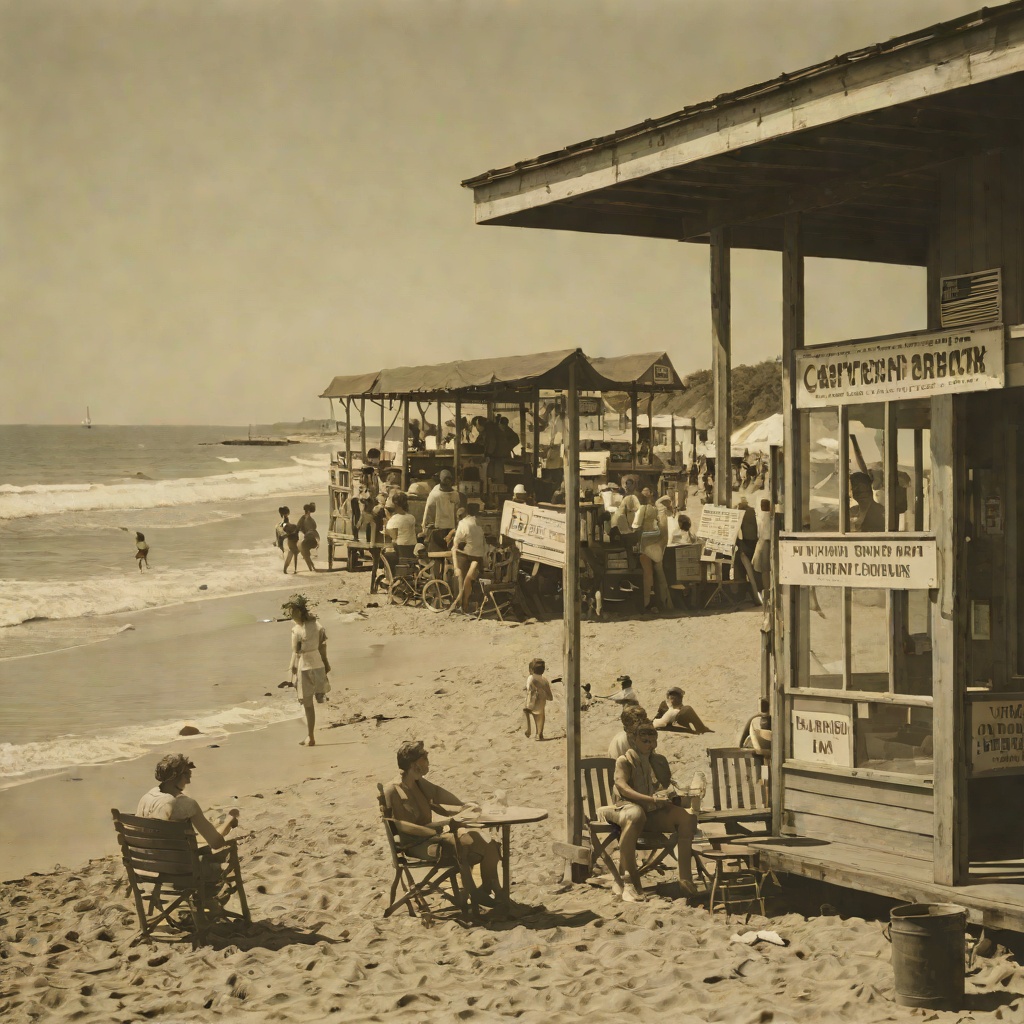
The phrase first takes on its full significance in the context of the family's reduced circumstances in America. In Russia, the Antins had been accustomed to upholstered parlors, embroidered linen, silver spoons and candlesticks, goblets of gold, and kitchen shelves shining with copper and brass. In Boston, they were ushered into three small rooms up one flight of stairs, containing only necessary beds with lean mattresses, a few wooden chairs, a table or two, a mysterious iron structure that later turned out to be a stove, a couple of unornamental kerosene lamps, and a scanty array of cooking-utensils and crockery. Yet the children were impressed with their new home, not because of its comforts but because these wooden chairs and tin pans were American chairs and pans, and therefore shone glorious in their eyes. It was in this context that Mary learned by heart her father's saying, "America is not Polotzk." The maxim meant that all occupations were respectable and all men were equal in America, a belief that allowed the family to accept their diminished material circumstances without shame. When Mary watched her father dispense cold lemonade, hot peanuts, and pink popcorn at their refreshment stand on Crescent Beach, wearing a long white apron and shirt sleeves, it never occurred to her to compare his present occupation with the position for which he had been originally destined. She was just as well content, because the saying had taught her that in America, a man's dignity did not depend on his trade.
The Saying as a Response to Bewilderment
The maxim also served as the family's answer to the profound disorientation of immigration. In Polotzk, the Antins had been trained and watched, their days regulated, their conduct prescribed by religious law and communal expectation. In America, suddenly, they were let loose on the street. The father having renounced his faith and the mother being uncertain of hers, they had no particular creed to hold the children to. The conception of a system of ethics independent of religion could not at once enter as an active principle in their life, so they could give a child no reason why to be truthful or kind. In public deportment, in etiquette, in all matters of social intercourse, they had no standards to go by, seeing that America was not Polotzk. The saying was thus both a confession of ignorance and a surrender to the new order. In their bewilderment and uncertainty, the parents trusted their children to learn from such models as the tenements afforded, and they stepped down from their throne of parental authority to take the law from their children's mouths, for they had no other means of finding out what was good American form. The result was that laxity of domestic organization, that inversion of normal relations which makes for friction and sometimes ends in breaking up a family that was formerly united and happy. The maxim, in this sense, was the family's way of rationalizing their loss of authority: if America was not Polotzk, then the old rules simply did not apply, and the children must find their own way.
The Saying and the Meaning of America
The phrase also crystallized the transformation of "America" from a distant place name into the centre of all Mary's dreams and speculations. She knew the day when "America" as a world entirely unlike Polotzk lodged in her brain. She was in bed, sharing the measles with some of the other children, when her mother brought a thick letter from her father, written just before boarding the ship. The letter was full of excitement, though the words themselves were plain: the emigration committee was taking good care of everybody, the weather was fine, and the ship comfortable. But Mary heard something more than the words seemed to say, an elation, a hint of triumph, such as had never been in her father's letters before. She felt a stirring, a straining in the letter, and understood that her father was inspired by a vision, that he saw something and promised them something, and that this something was "America." The saying "America is not Polotzk" was the verbal distillation of that vision, the promise that the New World would be fundamentally different from the Old. It was the answer to the question that haunted every immigrant family: what would life be like on the other side of the sea? The maxim promised that it would be better, freer, more equal, and that the hardships of the present were the price of that transformation.
The Saying and the Cost of Americanization
Yet the maxim carried a hidden cost, one that Mary came to recognize with painful clarity in the fate of her sister Frieda. The saying's promise of equality and opportunity was not equally available to all. Frieda came to America too late to avail herself of the gifts of an American girlhood; had she been two years younger, she might have dodged her circumstances and evaded her Old-World fate. She would have gone to school and imbibed American ideas, clung to her girlhood longer instead of marrying at seventeen. The family tradition held that Mary was the quicker, the brighter of the two, and that hers could be no common lot; Frieda was relied upon for help, and her sister for glory. When Mary failed as a milliner's apprentice while Frieda made excellent progress at the dressmaker's, their fates were sealed: it was understood, even before they reached Boston, that Frieda would go to work and Mary to school. The father divided the world between his children in accordance with the laws of the country and the compulsion of his circumstances, and Mary accepted the arrangements without much reflection, taking everything planned for her advantage as a matter of course. The maxim "America is not Polotzk" had promised equality, but the family's own internal hierarchy, rooted in Old-World assumptions about gender and intelligence, remained intact. Frieda was engaged to be married before they had been two years in America, released from the workshop not because the family could spare her wages but because her father would not stand in the way of what he considered her welfare. The saying had opened the door to America for Mary, but for Frieda it had only changed the shape of her confinement.
The Saying and the Larger Immigrant Story
The maxim also connected the Antin family's private experience to the larger story of Jewish emigration from the Pale. The wall that the Czar with all his minions could not shake, the priests with their instruments of torture could not pierce, the mob with their firebrands could not destroy, was the religious integrity of the Jews, a fortress erected by the prisoners of the Pale in defiance of their jailers. Harassed on every side, thwarted in every normal effort, the Russian Jew fell back upon his hereditary faith in God, finding in the study of the Torah the balm for all his wounds. The saying "America is not Polotzk" was the secular counterpart to that religious faith, a new creed for a new world. It was what the emigrants carried with them when they left, what they repeated to themselves when the new world proved bewildering, and what they taught their children so that the next generation could move as Americans among Americans. The maxim was part of the process of Americanization, an upheaval preceding the state of repose, the cross that the first and second generations must bear as an involuntary sacrifice for the sake of the future generations. And as the mother forgets her agonies in the bliss of clasping her babe to her breast, so the bent and heart-sore immigrant forgets exile and homesickness and ridicule and loss and estrangement when he beholds his sons and daughters moving as Americans among Americans. The saying was the formula of that forgetting, the incantation that turned loss into gain and exile into homecoming.
The Saying's Enduring Significance
By the end of the memoir, Mary had so thoroughly absorbed the maxim that she could declare herself made over, a new person in a new world. She went to college, not to Radcliffe as she had proposed, but to Barnard College, receiving an invitation to live in New York that she did not like to refuse. There she took all the honors that she deserved, and if she did not learn to write poetry as she once supposed she should, she learned at least to think in English without an accent. She earned enough to pay Mrs. Hutch the arrears and satisfy all her wants, and her favorite abode became a tent in the wilderness. The saying "America is not Polotzk" had been fulfilled in her life, but its very success revealed its limits. The maxim had promised that America was a place where all men were equal, yet Mary's own story showed that the promise was unevenly distributed, that the Old World's hierarchies of gender and family expectation could survive the crossing. The saying was both the family's liberation and its blind spot, a phrase that opened the door to America while quietly closing the door on Frieda's American girlhood. It remains the most resonant expression of the memoir's central theme: that the immigrant's journey is not merely a change of place but a remaking of the self, and that the cost of that remaking is measured in the lives of those who cannot or will not be made over.