Blood libel
The Captain and Ann BarbaraThe blood libel is the false accusation that Jews murder Christian children to use their blood in the Passover festival. In Mary Antin's memoir, this accusation is the central emblem of the persecution that drove her family from the Pale of Settlement, and its shadow persists even after her emigration to America, where it resurfaces in her own internalized fears and in the very different tests of assimilation she faces. The accusation is not merely a historical backdrop but a living force that shapes the narrator's childhood fears, her understanding of the Gentile world, and her eventual American identity, making it a crucial lens through which the book's central themes of persecution, freedom, and transformation are refracted.
The Accusation and Its Horrors in Polotzk
The blood libel is introduced as one of the principal lies the Gentiles told about the Jews. The accusation was that Jews used the blood of murdered Christian children at the Passover festival. Mary Antin, even as a very little girl, knew this to be a wicked lie, and the thought of it made her sick. She knew everything that was done for Passover, from the cleaning of the house to the bringing out of special vessels and dishes, and she would help unpack the new dishes and find her own blue mug. When she asked the Four Questions about the unleavened bread and the bitter herbs, and her family answered her from their books, she knew all about Passover and what was on the table and why. The youngest child in the house knew how Passover was kept, which made the Gentile lies about the festival all the more wicked.
The Passover season, when the Jews celebrated their deliverance from the land of Egypt and felt so glad and thankful as if it had only just happened, was precisely the time the Gentile neighbors chose to remind them that Russia was another Egypt. It was not so bad in Polotzk, within the Pale, but in Russian cities and even more in the country districts, where Jewish families lived scattered by special permission of the police, the Gentiles made the Passover a time of horror. Somebody would start up the lie about murdering Christian children, and the stupid peasants would get mad about it, fill themselves with vodka, and set out to kill the Jews. They attacked them with knives and clubs and scythes and axes, killed them or tortured them, and burned their houses. This was called a pogrom. Jews who escaped the pogroms came to Polotzk with wounds on them and horrible stories of little babies torn limb from limb before their mothers' eyes. Only to hear these things made one sob and choke with pain. People who saw such things never smiled any more, no matter how long they lived, and sometimes their hair turned white in a day, and some people became insane on the spot.
The Cross and the Fear It Instilled
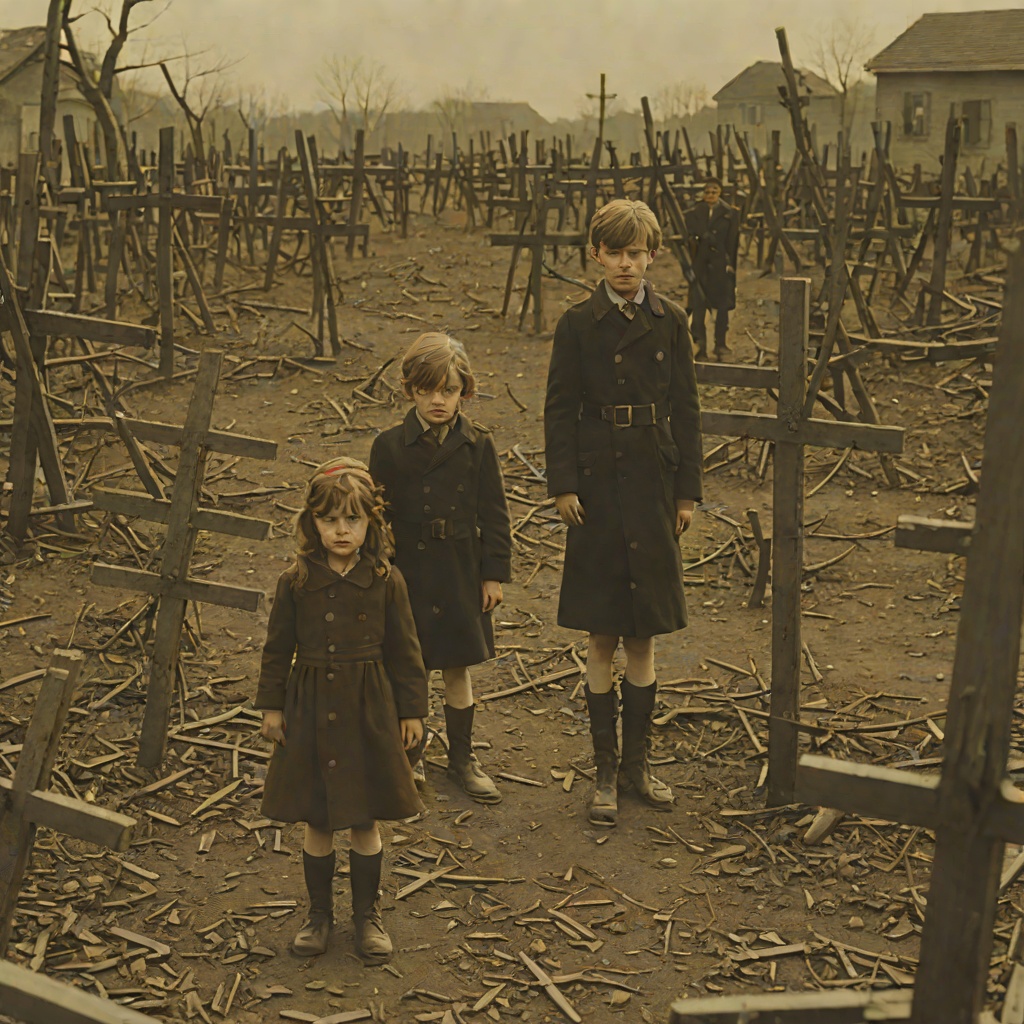
The blood libel was inseparable from the symbol of the cross in the narrator's childhood imagination. The Gentiles were always crossing themselves, when they went into a church and when they came out, when they met a priest, or passed an image in the street. In every Gentile house there was an icon, an image or picture of the Christian god, hung up in a corner with a light always burning before it, and in front of it the Gentiles said their prayers on their knees, crossing themselves all the time. Mary Antin tried not to look in the corner where the icon was when she came into a Gentile house, because she was afraid of the cross. Everybody in Polotzk, all the Jews, was afraid of it, for it was the cross that made the priests, and the priests made their troubles. The Gentiles said that the Jews had killed their God, which was absurd, as they never had a God but only images. Yet they put up crosses everywhere and wore them on their necks on purpose to remind themselves of these false things, and they considered it pious to hate and abuse the Jews. To worship the cross and to torment a Jew was the same thing to them. Often the family heard that a pogrom was led by a priest carrying a cross before the mob, and the enemies always held up the cross as the excuse of their cruelty. Mary Antin never was in an actual pogrom, but there were times when it threatened them even in Polotzk, and in all her fearful imaginings, as she hid in dark corners thinking of the horrible things the Gentiles were going to do to her, she saw the cross, the cruel cross.
The Persistence of Fear in the New World
The fear instilled by the blood libel did not vanish with emigration to America. The narrator's first meal at a Gentile board, at Miss Dillingham's tea, became an unexpected test of her liberation. She came in much trepidation, as it was her first entrance into a genuine American household and her first meal at a Christian table. She proceeded cautiously with her spoons and forks, trying to conceal her uncertainty by being just a little bit slow, not getting to any given spoon until the others at the table had shown her which it was. All went well until a platter was passed with a kind of meat that was strange to her. Some mischievous instinct told her that it was ham, forbidden food, and she, the liberal, the free, was afraid to touch it. She had a terrible moment of surprise, mortification, and self-contempt, but she helped herself to a slice of ham nevertheless and hung her head over her plate to hide her confusion. She was furious with herself for her weakness, that she should be afraid of a pink piece of pig's flesh who had defied at least two religions in defence of free thought. She began to reduce her ham to indivisible atoms, determined to eat more of it than anybody at the table. But she learned that to eat in defence of principles was not so easy as to talk, and she ate with squirming, with protesting of the inner man, with exquisite abhorrence of herself. The blood libel's legacy of fear and taboo had been so deeply internalized that even her conscious rejection of religion could not immediately overcome it.
The Contrast with American Justice
The blood libel's world of arbitrary persecution and mob violence is sharply contrasted with the American system of justice that the narrator witnesses in Chelsea. Once a great, hulky colored boy, who was the torment of the neighborhood, treated her roughly while she was playing on the street. Her father, determined to teach the rascal a lesson, had him arrested and brought to court. The boy was locked up overnight and emerged from his brief imprisonment with a respect for the rights and persons of his neighbors. But what interested Mary Antin more than her revenge on a bully was what she saw of the way justice was actually administered in the United States. Here they were gathered in the little courtroom, bearded Arlington Street against wool-headed Arlington Street, accused and accuser, witnesses, sympathizers, sight-seers, and all. Nobody cringed, nobody was bullied, nobody lied who didn't want to. They were all free and all treated equally, just as it said in the Constitution. The evil-doer was actually punished, and not the victim, as might very easily happen in a similar case in Russia. This courtroom scene stands as the direct antithesis of the pogrom, where the mob, led by a priest with a cross, attacked the Jews without any pretense of justice. In America, the rule of law replaced the rule of the mob, and the blood libel's world of accusation without evidence gave way to a system where the accused and accuser were treated equally.
The Blood Libel as a Measure of Assimilation
The blood libel also serves as a measure of how far the family has come in their Americanization. The narrator's mother, in her assiduous imitation of everything American, has forgotten the secrets of Polotzk cookery, and the narrator is the richer in memories for her omissions. The Polotzk cheese cake, which she remembers with such relish, has in it the flavor of daisies and clover picked on the Vall, the sweetness of Dvina water, the richness of newly turned earth, the ripeness of red cherries bought by the dipperful in the market place, and the fragrance of all her childhood's summers. The memory of this food, so intimately connected to the Passover feasts that the blood libel slandered, becomes a way of preserving the positive aspects of her heritage while leaving behind the fear. The narrator's eventual success, going to Barnard College instead of Radcliffe, taking all the honors that she deserved, and learning to think in English without an accent, represents the full realization of the American promise that stood in such stark contrast to the persecution of the Old World. The blood libel, which had once threatened to define her life, becomes a distant memory, a relic of the world she left behind, even as its emotional legacy continues to shape her understanding of what America means to her and her family.