Boston
The Captain and Ann BarbaraBoston is the pivotal American city in Mary Antin's memoir, the fixed point toward which her family's emigration from Polotzk is directed and the stage upon which her transformation from a Russian Jewish child into an American citizen unfolds. It is the destination her father reaches first, the city whose name becomes synonymous with the family's hopes, and the place where Mary's double voyage of discovery—exploring both a new outer universe and her own heart—takes place. Boston is not merely a setting but the concrete embodiment of the 'Promised Land,' a place where the abstract ideals of the American Constitution are tested against the gritty realities of immigrant life, and where the narrator's personal history becomes a 'concrete illustration of a multitude of statistical facts' about the immigrant experience.
The Promised Land Across the Sea
Before Mary ever sets foot in Boston, the city exists for her as a dream, a word charged with meaning that transforms her understanding of the world. When her father emigrates, 'America' initially means little more to her than other distant Russian place names like Kherson or Odessa. The shift occurs when she is in bed with the measles, and her mother brings a thick letter from her father, written just before boarding the ship. Reading it together in the darkened room, Mary senses something beyond the words—an elation, a hint of triumph that had never been in her father's letters before. This 'America' becomes her dream, the center of all her speculations, and Boston is the specific, tangible destination of that dream. The city is thus established not just as a geographical location but as a psychological and emotional landmark, the object of a family's collective aspiration.
Arrival and the Shock of the New
The family's initiation into American ways begins with their first step on the new soil, even before they reach their new home. On the journey from the pier to Wall Street in the West End, crowded together in a rickety cab, Mary's father instructs them not to lean out of the windows, not to point, and explains the word 'greenhorn.' They do not want to be 'greenhorns' and give strict attention to his instructions. Their new home on Union Place, off Wall Street, is a stark contrast to their former affluence in Russia, where they had been accustomed to upholstered parlors, embroidered linen, silver spoons, and goblets of gold. The three small rooms contain only necessary beds with lean mattresses, a few wooden chairs, a mysterious iron structure that turns out to be a stove, and a scanty array of cooking utensils. Yet the family is impressed, because these wooden chairs and tin pans are American chairs and pans, and they shine glorious in their eyes. Only Mary's mother, perhaps, appreciates the shabbiness of the little apartment and realizes that for her there is no laying down of the burden of poverty.
The Slums as a Crucible
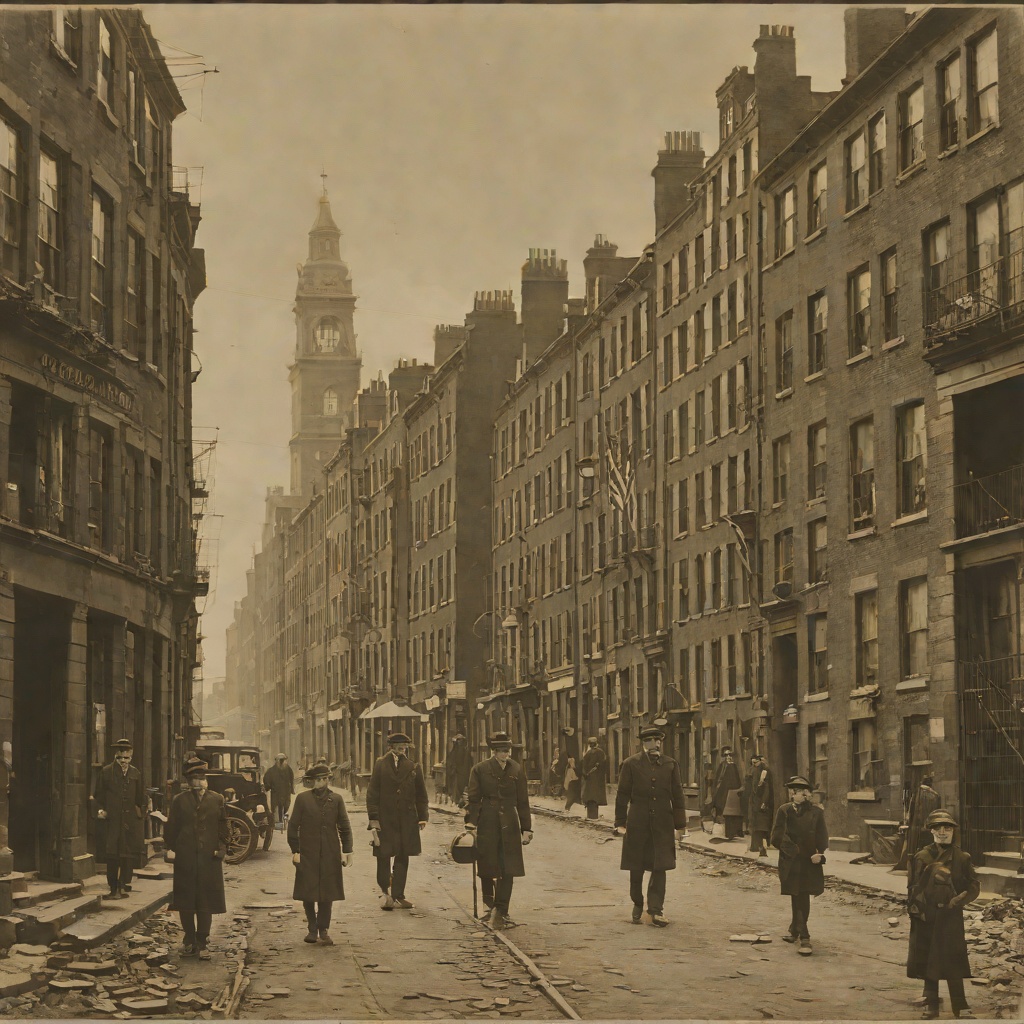
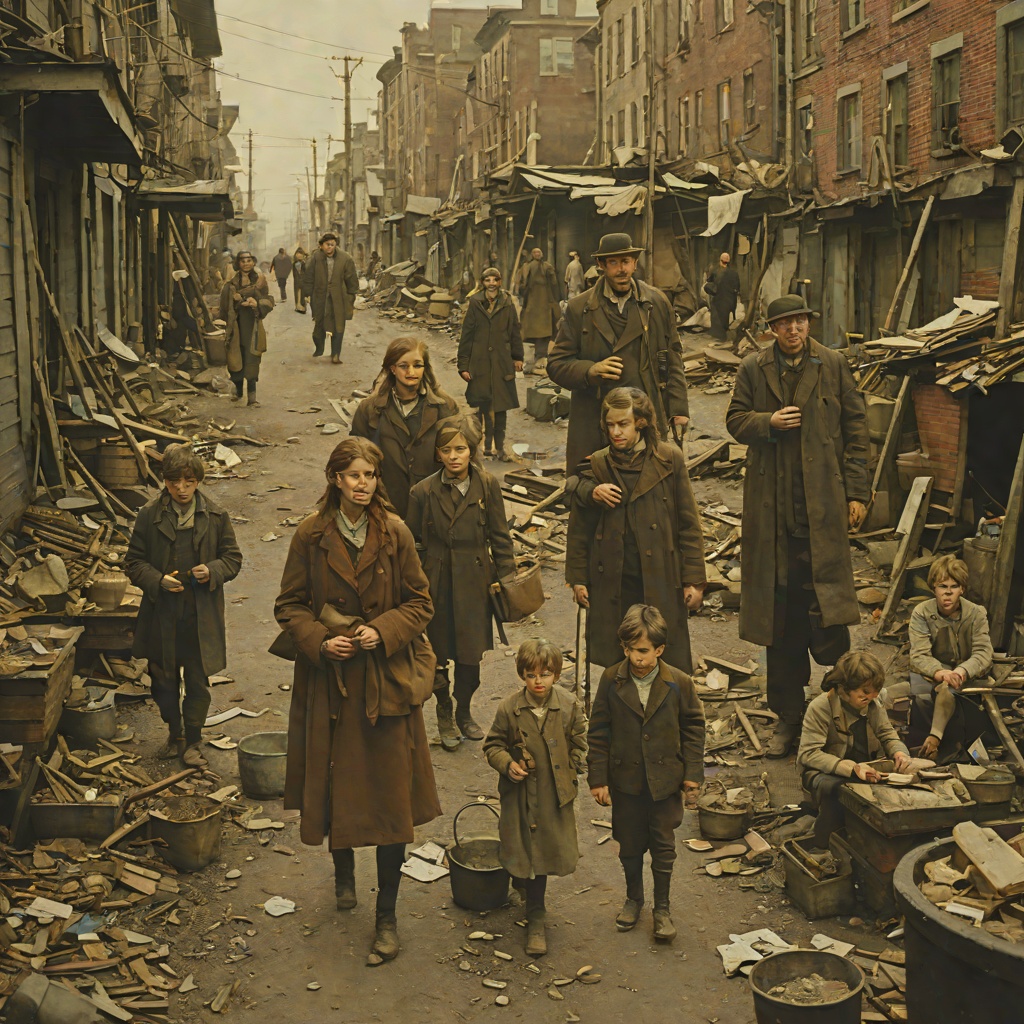
Boston's West End, where the family first settles, is described as one of the 'wrong ends' of the city, forming the tenement district or slums. It is the quarter where poor immigrants foregather, living as unkempt, toiling, unaspiring foreigners—pitiful in the eyes of social missionaries, the despair of boards of health, the hope of ward politicians. Yet Mary sees a very different picture on her introduction to Union Place: two imposing rows of brick buildings, loftier than any dwelling she had ever lived in, with many friendly windows filled with uncovered heads of women and children. The family later moves to Wheeler Street in the lower South End, a neighborhood with more Negroes than Arlington Street, which promised more numerous outstanding accounts for their basement grocery. The narrator describes Wheeler Street as a place with no real homes, only miserable flats where families cook, wash, eat, sleep two to four in a bed in windowless bedrooms, quarrel in the gray morning, and make up in the smoky evening. The neighborhood goes in search of salvation to Morgan Memorial Hall, Barnard Memorial, and Morgan Chapel, and Mary and her siblings are introduced to some of the clubs by their young neighbors, glad to go because their home gives them little besides meals in the kitchen and beds in the dark.
Justice and Democracy in Practice
Boston is also the place where Mary witnesses the American legal system in action, a moment that crystallizes her faith in the nation's ideals. When a great, hulky colored boy, the torment of the neighborhood, treats her roughly while she is playing on the street, her father has him arrested and brought to court. The boy is locked up overnight and emerges with a respect for the rights and persons of his neighbors. But what interests Mary more than her revenge is what she sees of the way justice is actually administered in the United States. In the little courtroom, with bearded Arlington Street against wool-headed Arlington Street, nobody cringes, nobody is bullied, nobody lies who doesn't want to. They are all free and treated equally, just as it says in the Constitution. The evil-doer is actually punished, and not the victim, as might very easily happen in a similar case in Russia. This experience leads her to exclaim, 'Liberty and justice for all. Three cheers for the Red, White, and Blue!'
The Heart of the Ghetto and Beyond
The family's final move within Boston is to Dover Street, near its eastern end, intersected by Harrison Avenue. This street is described as the heart of the South End ghetto, its multifarious business bursting through narrow shop doors and overrunning basements, sidewalks, and the street itself in pushcarts and open-air stands. The narrator notes that the City Fathers provide soap and water for the slums in the form of excellent schools, kindergartens, and branch libraries, but they stop at the curbstone of the people's life, cleansing and disciplining the children's minds while their bodies are pitched into the gutter, for there are no parks and almost no playgrounds in the Harrison Avenue district. Yet Boston is also the city of opportunity and refinement. Mary later takes possession of Beacon Street, learns to distinguish the lord of the manor from the butler in full dress, and traces her steps from her bare room overlooking the lumber-yard to the satin drawing-rooms of the Back Bay, where she drinks afternoon tea with gentle ladies whose hands are as delicate as their porcelain cups. The shock of the contrast between the cushioned refinement of Beacon Street and the reeking slums is like a searchlight turned suddenly on her life, and she ponders over the revelation, writing touching poems in which she figures as a heroine of two worlds. Boston, in the end, is not a single place but a landscape of extremes, encompassing both the degradation of the slums and the splendor of aristocratic society, and it is the negotiation of this double life that defines Mary Antin's American experience.