Boston Latin School
The Captain and Ann BarbaraThe Boston Latin School stands in Mary Antin's memoir as the summit of her American educational ascent, the institution where the immigrant girl from the slums of Dover Street measured herself against the daughters of the Back Bay aristocracy. It was not merely a school but a social threshold: the place where her poverty became conspicuous, where her scholarship became her passport, and where she learned to inhabit an alien world with the same practiced skill she had been developing since her first day in an American classroom. The Latin School represents the institutional embodiment of the promise that had drawn her family across the ocean—the promise that her father, who could never master English himself, would walk by proxy in the Elysian Fields of liberal learning through his children's education.
Entry into the Latin School
Mary Antin entered the Latin School in September, after a deliberate and self-possessed campaign to secure her place there. She had gone to consult Mr. Tetlow, the headmaster, appearing as a daily visitor on Cedar Street and stating her errand without trepidation. She was, at that moment, a solemn little person earnestly seeking advice on a matter of great importance, and Mr. Tetlow received her with corresponding gravity and courtesy, discussing her business seriously and showing her to the door with respect. She was not conscious of her shabby dress, and she was sure he did not smile at her appearance, even when her back was turned. This encounter was the culmination of her years of waiting and conscious ambition, the moment when her determination to rise through education was formally acknowledged by the gatekeeper of one of Boston's most prestigious institutions.
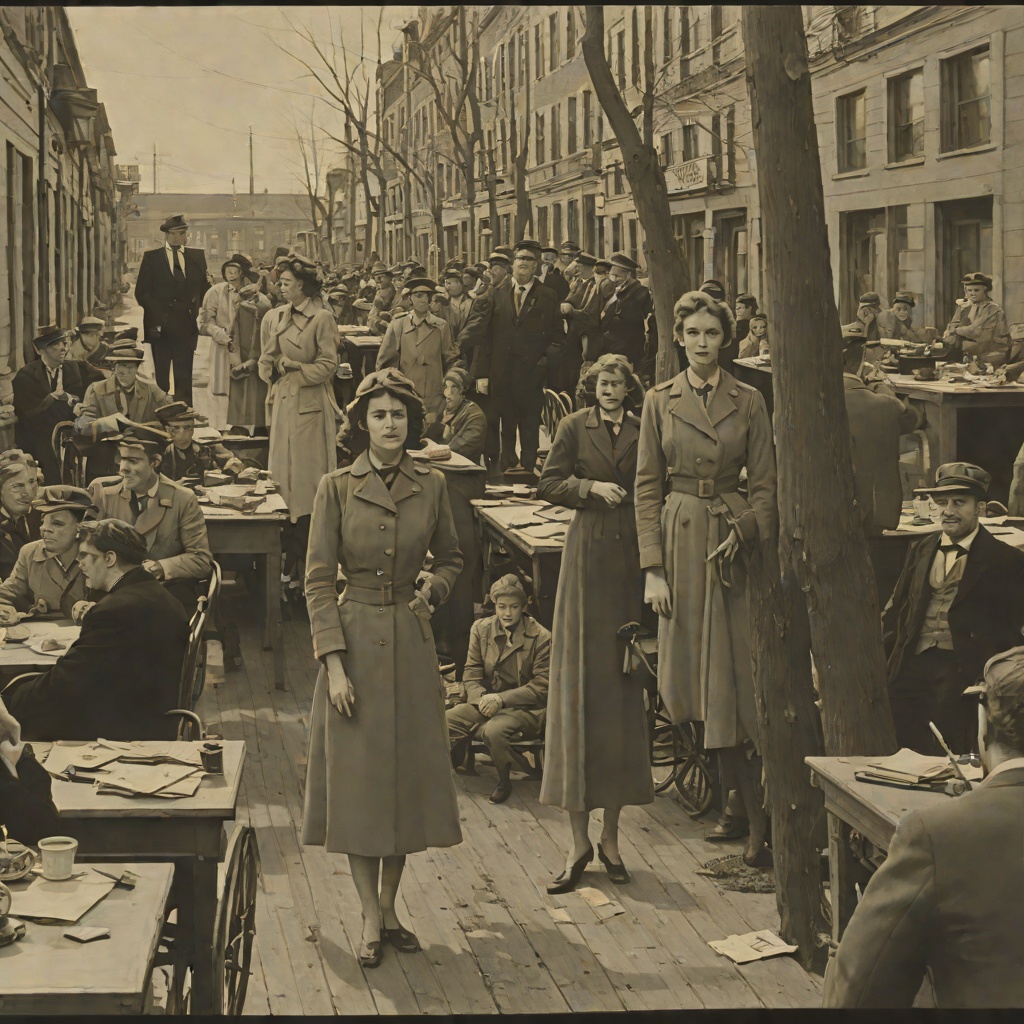
The transition was stark. Until then she had gone to school with her equals, as a matter of course. Now it was distinctly a feat for her to keep in school, and her schoolmates were socially so far superior to her that her poverty became conspicuous. The pupils of the Latin School, from the nature of the institution, were an aristocratic set, coming from refined homes, dressing well, and spending their recess hours talking about parties, beaux, and the matinée. The course of study was considered stiff, and the weeding process was relentless: the girl with half her brain asleep, or with too many beaux, dropped out by the end of the first year, and by the end of the course the once numerous tribe of academic candidates had been reduced to a cozy little family.
The Scholar Among Aristocrats
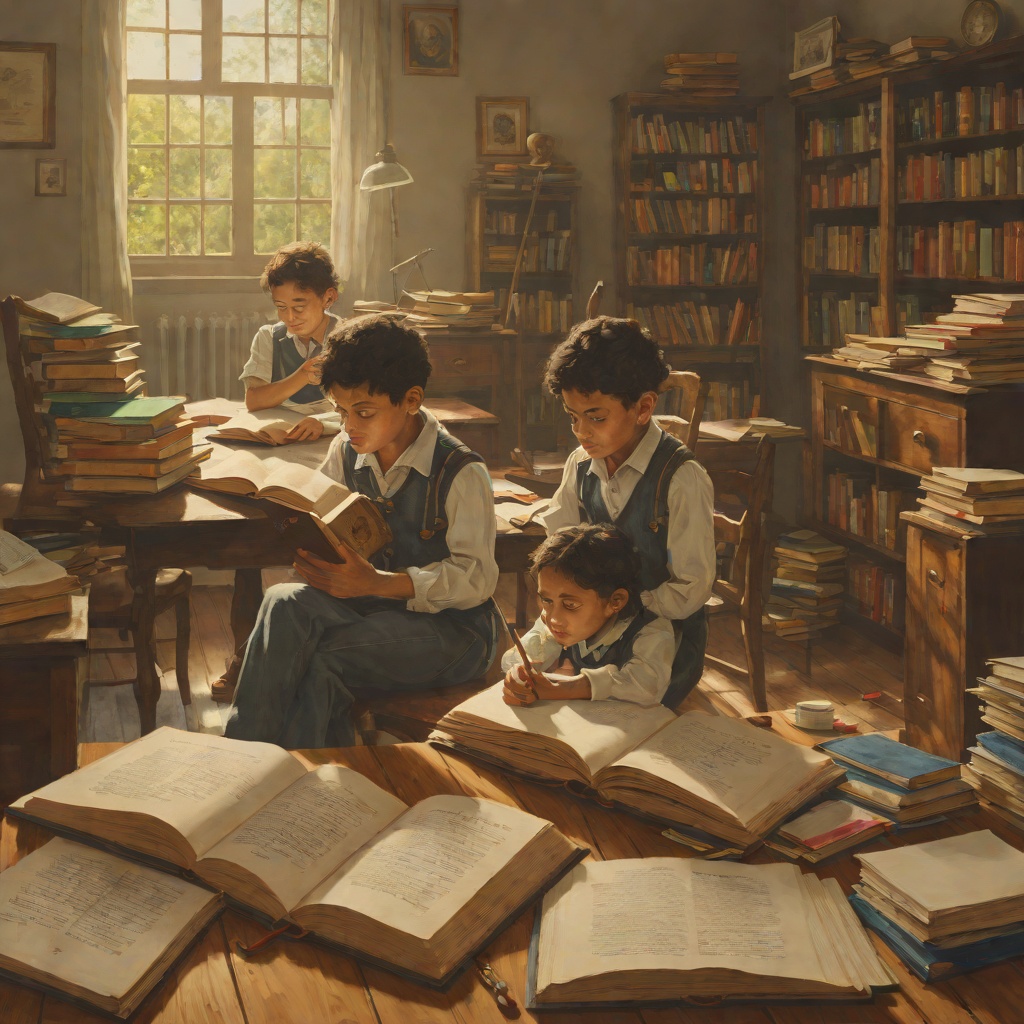
Against all these tokens, Mary did not find the Latin School hard. Making herself letter-perfect in her lessons required long hours of study, but that was her delight. Making herself at home in an alien world was also within her talents; she had been practicing it day and night for the past four years. She had learned to remain unconscious of her shabby and ill-fitting clothes when the rustle of silk petticoats in the schoolroom protested against them. Half a dress a year had been her allowance for many seasons, and since she did not grow much she could wear her dresses as long as they lasted. She had stood before editors and exchanged polite calls with school-teachers, untroubled by the detestable colors and archaic design of her garments. Even standing up to recite Latin declensions without trembling from hunger was a feat she managed, for she sometimes went to school with little or no breakfast; but even that required no special heroism, at most a matter of self-control. She had the advantage of a poor appetite, and if she was hungry it would hardly show, for she coughed so much that her unsteadiness was self-explained.
Her schoolmates helped her in ways they may not have realized. Aristocrats though they were, they did not hold themselves aloof from her. Some of the girls who came to school in carriages were especially cordial, rating her by her scholarship and not by her father's occupation. They teased and admired her by turns for learning the footnotes in the Latin grammar by heart, and they never reproached her for her ignorance of the latest comic opera. It was more than good breeding that made them seem unaware of the incongruity of her presence; it was a generous appreciation of what it meant for a girl from the slums to be in the Latin School, on the way to college. If their intimacy ended on the steps of the school-house, it was more her fault than theirs. Most of the girls were democratic enough to have invited her to their homes, although to some, of course, she was impossible. But she had no time for visiting; school work and reading and family affairs occupied all the daytime, and much of the night time.
The One Exception: Florence Connolly
The one exception to this rule of friendly distance was her chum, Florence Connolly, though Mary herself would hardly have said chum. Florence and Mary occupied adjacent seats for three years, but they did not walk arm in arm, nor call each other nicknames, nor share their lunch, nor correspond in vacation time. Florence was quiet as a mouse, and Mary was reserved as an oyster, and perhaps the two had no more in common fundamentally than those two creatures in their natural state. Still, as both were very studious and never strayed far from their desks at recess, they practiced a sort of intimacy of propinquity. Although Florence was of Mary's social order, her father presiding over a cheap lunch room, Mary did not on that account feel especially drawn to her. She spent more time studying Florence than loving her, and yet she ought to have loved her, for Florence was such a good girl, always perfect in her lessons.
The Meaning of the Latin School
The Latin School was the place where Mary's double life became most acute. She discovered something inimitable in the way the Back Bay girls carried themselves, and she was the first to perceive the incongruity of Commonwealth Avenue entwining arms with Dover Street. Some day, perhaps, when she should be famous and rich, but not just then. So her companions and she parted on the steps of the school-house, in mutual respect, they guiltless of snobbishness, she innocent of envy. It was, she reflected, a graciously American relation, and she was happy to this day to recall it.
The school also stood in pointed contrast to the world she came from. The Harrison Avenue district, the heart of the South End ghetto where she lived, had no parks and almost no playgrounds in her day, and the City Fathers provided soap and water for the slums in the form of excellent schools, kindergartens, and branch libraries—but stopped at the curbstone of the people's life, cleansing and disciplining the children's minds while pitching their bodies into the gutter. The Latin School was the exception that proved the rule, the one institution that carried a girl from the slums all the way to college. It was there that Mary's father's dream was realized, the dream of a man who had failed in his primary quest for education and culture, who had only the most antiquated methods of communicating his precious learning, and who could never learn to write correctly or lose his foreign pronunciation. He sent his children to school to learn all those things that he knew by fame to be desirable, and the Latin School was the highest reach of that ambition. Mary, walking home from the grammar school years earlier with the great big geography book under her arm, feeling that the earth was conscious of her step, had already understood what the Latin School would confirm: she was a student now, in earnest, learning out-of-the-way things, things that had nothing to do with ordinary life—things to know. The Latin School was where that promise was kept, and where the girl who had once been Mashke, the granddaughter of Raphael the Russian, born to a humble destiny, learned to dream her dreams in English phrases.