Boston Public Library
The Captain and Ann BarbaraThe Boston Public Library stands at the heart of Mary Antin's account of her Americanization, a building she repeatedly claims as "my palace" and invests with the full weight of her transformation from a child of the Pale of Settlement to a citizen of the republic. It is not merely a repository of books but the physical embodiment of everything America promised her: openness, learning, and belonging. The library's significance in her memoir is inseparable from the contrast between the cramped, impoverished spaces of her immigrant life and the grand, soaring architecture of this public institution, which she enters not as a supplicant but as an owner.
A Palace in Copley Square
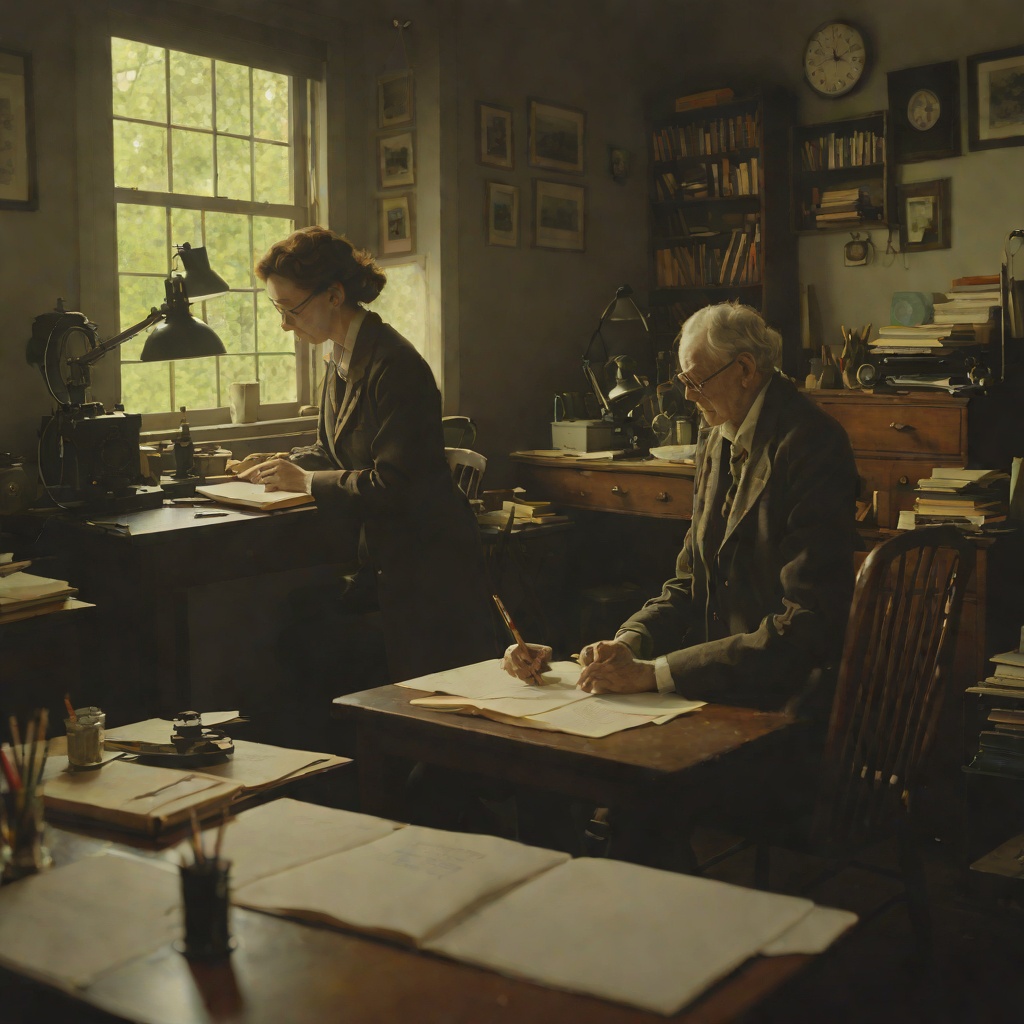
The library that Mary Antin adopted as her own was a low, wide-spreading building with a dignified granite front, flanked on all sides by noble old churches, museums, and schoolhouses harmoniously disposed around a spacious triangle called Copley Square. Two thoroughfares that came straight from the green suburbs swept past the building, one on either side, converging at the apex of the triangle and pointing off, past the Public Garden, across the historic Common, to the domed State House sitting on a height. The building's setting was thus woven into the monumental civic geography of Boston, a landscape of democratic institutions that she learned to read as her inheritance. It was her habit to go very slowly up the low, broad steps to the palace entrance, pleasing her eyes with the majestic lines of the building and lingering to read again the carved inscriptions: "Public Library—Built by the People—Free to All." These words were not ornamental to her; they were a declaration of her own standing. She insisted on the possessive: the library was hers because she was a citizen, hers though she was born an alien, hers though she lived on Dover Street.
The Immigrant's Claim to the Palace
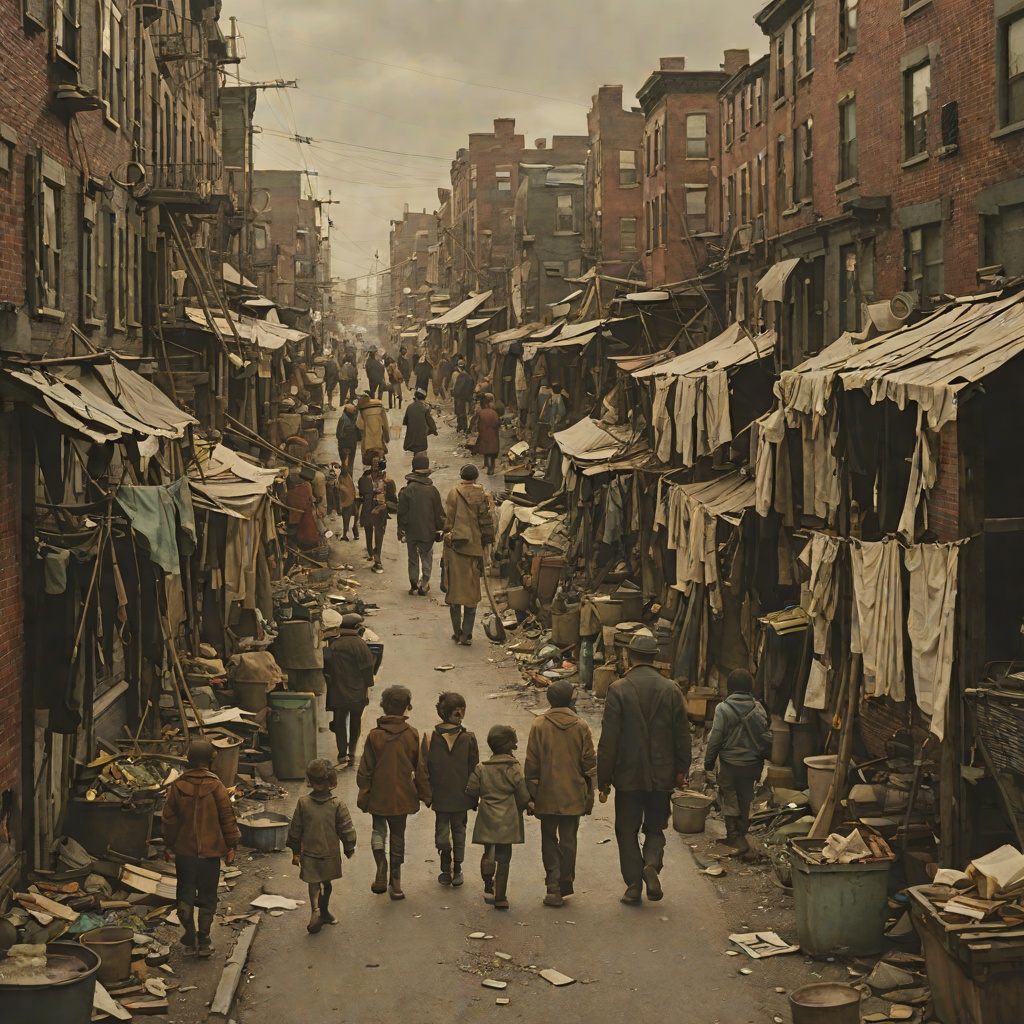
The library's meaning for Mary Antin is sharpened by the poverty and confinement that surrounded her daily life. Her new home on Dover Street consisted of five small rooms up two flights of stairs, with the right of way through dark corridors; in the "parlor" the dingy paper hung in rags and the plaster fell in chunks, one bedroom was absolutely dark and air-tight, and the kitchen windows looked out on a dirty court at the back of which stood the rear tenement of the estate. To the family belonged, along with the five rooms and the right of way, a block of upper space the length of a pulley line across the court and the width of an arc described by a windy Monday's wash in its remotest wanderings. Against this backdrop of dinginess and constriction, the library's soaring arches and grand spaces felt like a personal attribute of her being. She loved to lean against a pillar in the entrance hall, watching the people go in and out: groups of children hushed their chatter at the entrance and skipped, whispering and giggling in their fists, up the grand stairway, patting the great stone lions at the top with an eye on the aged policemen down below; spectacled scholars came slowly down the stairs loaded with books, heedless of the lofty arches that echoed their steps; visitors from out of town lingered long in the entrance hall, studying the inscriptions and symbols on the marble floor. Standing in the midst of all this, she reminded herself that she was there, that she had a right to be there, that she was at home there. All these eager children, all these fine-browed women, all these scholars going home to write learned books—she and they had this glorious thing in common, this noble treasure house of learning. It was wonderful to say, "This is mine"; it was thrilling to say, "This is ours."
Bates Hall and the Courtyard of Dreams
Within the library, Mary Antin found two spaces that answered different needs of her imagination. Bates Hall was the place where she spent her longest hours in the library; she chose a seat far at one end so that looking up from her books she would get the full effect of the vast reading-room, and she felt the grand spaces under the soaring arches as a personal attribute of her being. The courtyard, by contrast, was her sky-roofed chamber of dreams. Slowly strolling past the endless pillars of the colonnade, she listened to the fountain murmur in her ear of all the beautiful things in all the beautiful world. There she imagined herself a Greek of the classic days, treading on sandalled feet through the glistening marble porticoes of Athens, expecting to see, if she looked over her shoulder, a bearded philosopher in a drooping mantle surrounded by beautiful youths with wreathed locks. Everything she read in school, in Latin or Greek, everything in her history books, became real to her in that courtyard set about with stately columns. The library thus served as the stage on which her classical education and her immigrant imagination met and fused.
The Miracle of the Enchanted Cradle
The library was also the place where Mary Antin most powerfully confronted the wonder of her own life. She liked to remind herself of Polotzk, the better to bring out the wonder of her life: that she who was born in the prison of the Pale should roam at will in the land of freedom was a marvel that it did her good to realize; that she who was brought up to her teens almost without a book should be set down in the midst of all the books that ever were written was a miracle as great as any on record; that an outcast should become a privileged citizen, that a beggar should dwell in a palace—this was a romance more thrilling than poet ever sung. She concluded that surely she was rocked in an enchanted cradle. The library, in this reading, is the enchanted cradle itself: the institution that converts the beggar into a palace-dweller and the outcast into a citizen, the concrete proof that America's promise of free public education and democratic access could be fulfilled in a single immigrant girl's lifetime. Her visits to the library were not escapes from her life on Dover Street but the very means by which she reinterpreted that life, finding in the crooked cobblestones of her neighborhood the lessons that would become the strength of her convictions and the illumined index of her purpose.