First-school calico dress
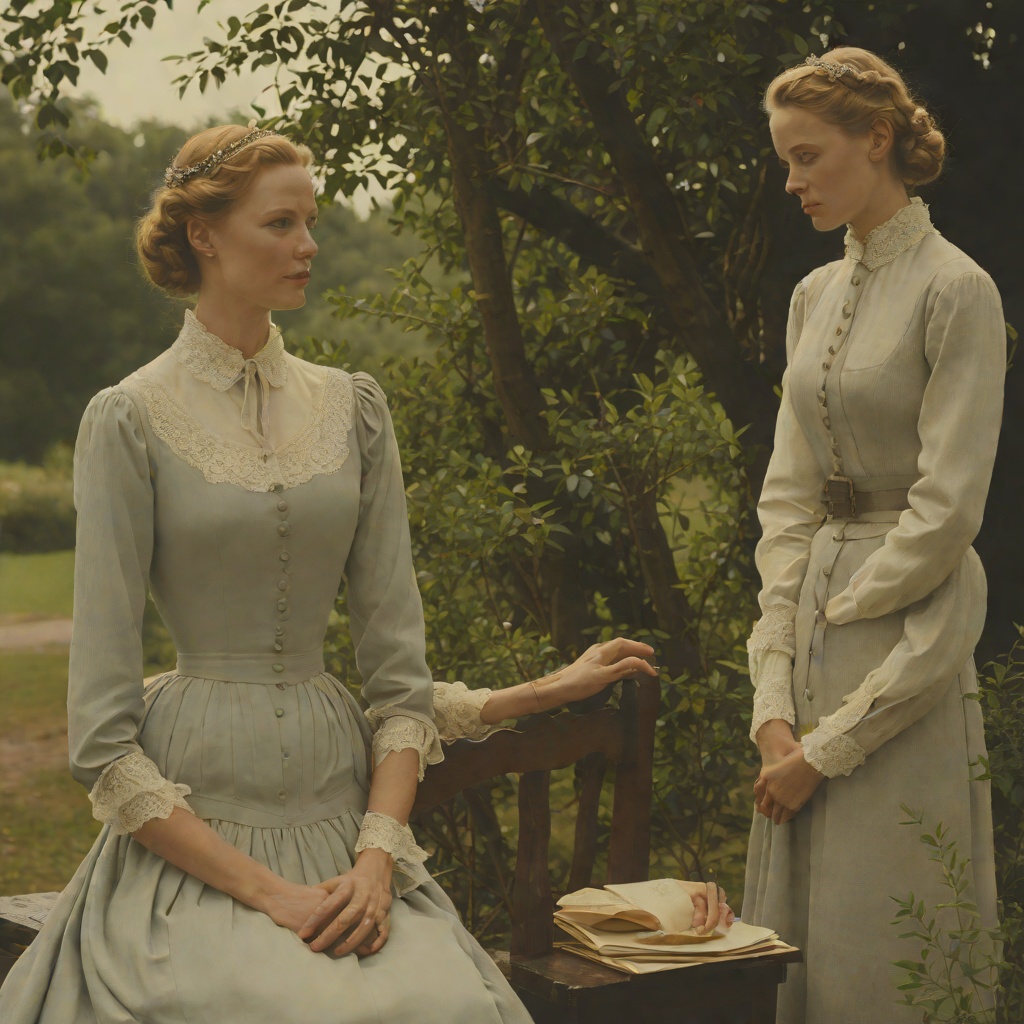
The Captain and Ann BarbaraThe first-school calico dress is the gray-patterned frock that Mary Antin wore on her first day at the Chelsea public school, a garment that becomes the memoir's most concentrated symbol of the division between the immigrant child's promised future and her sister Frieda's sacrificed girlhood. Sewn by Frieda on the eve of Mary's entry into American education, the dress transforms from a simple piece of clothing into what Mary calls her "consecration robe," marking the moment when the Antin family's hopes for the New World were vested in one daughter's schooling while the other was sent to the workshop. The dress is not merely an article of clothing but the material embodiment of a family decision made under the compulsion of poverty, a decision that would shape both sisters' lives in America.
The Making of the Dress and the Division of Fates
The dress was made by Frieda, Mary's older sister, who was led not to the schoolroom but to the workshop on the day Mary first entered public school. While Mary was brought to "the schoolroom, with its sunshine and its singing and the teacher's cheery smile," Frieda was taken to "the workshop, with its foul air, care-lined faces, and the foreman's stern command." The sisters' going to school was the fulfilment of their father's best promises, but Frieda's share in it was to fashion and fit the calico frocks in which the baby sister and Mary made their first appearance in a public schoolroom. The division was not arbitrary but rooted in family circumstances: Frieda was the oldest, the strongest, the best prepared, and the only one of legal age to be put to work. The family tradition held that Mary was the quicker, the brighter of the two, and that hers could be no common lot; Frieda was relied upon for help, and her sister for glory.
The Dress as Consecration Robe
Mary remembered to her last days the gray pattern of the calico, so affectionately did she regard it as it hung upon the wall—her "consecration robe awaiting the beatific day." Frieda, too, remembered it, "so longingly did she regard it as the crisp, starchy breadths of it slid between her fingers." But whatever her longings, Frieda said nothing of them; she bent over the sewing-machine humming an Old-World melody. In every straight, smooth seam, perhaps, she tucked away some lingering impulse of childhood; but she matched the scrolls and flowers with the utmost care. If a sudden shock of rebellion made her straighten up for an instant, the next instant she was bending to adjust a ruffle to the best advantage. The dress thus carried within its very construction the suppressed longings of the sister who made it, each seam a small burial of a childhood impulse.
The Morning of the First Day
When the momentous day arrived, and the little sister and Mary stood up to be arrayed, it was Frieda herself who patted and smoothed the stiff new calico; who made Mary turn round and round, to see that she was perfect; who stooped to pull out a disfiguring basting-thread. If there was anything in Frieda's heart besides sisterly love and pride and good-will, as they parted that morning, it was a sense of loss and a woman's acquiescence in her fate; for the sisters had been close friends, and now their ways would lie apart. Longing Frieda felt, but no envy; she did not grudge Mary what she was denied. Until that morning the sisters had been children together, but now, at the fiat of her destiny, Frieda became a woman, with all a woman's cares, whilst Mary, so little younger, was bidden to dance at the May festival of untroubled childhood.
Mary's Unreflecting Acceptance
Mary wished, for her comfort, that she could say she had some notion of the difference in their lots, some sense of the injustice to her sister, of the indulgence to herself. She wished she could even say she gave serious thought to the matter. But she accepted the arrangements made for her and her sister without much reflection, and everything that was planned for her advantage she took as a matter of course. She was no heartless monster, but a decidedly self-centred child. If her sister had seemed unhappy it would have troubled her; but Mary was ashamed to recall that she did not consider how little it was that contented her. She was so preoccupied with her own happiness that she did not half perceive the splendid devotion of Frieda's attitude towards her, the sweetness of her joy in Mary's good luck. Frieda not only stood by approvingly when Mary was helped to everything; she cheerfully waited on her.
The Dress in the Context of Old-World Womanhood
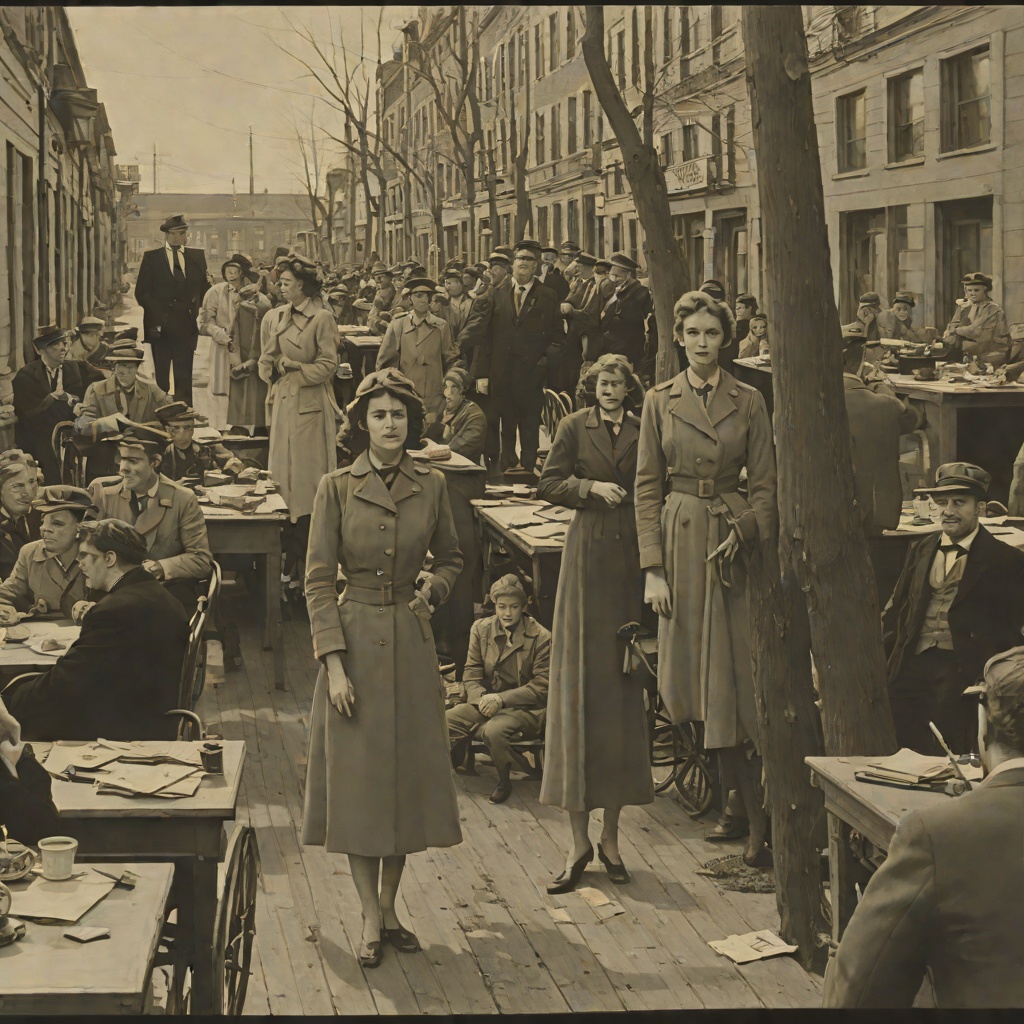
The dress and the division it symbolized must be understood against the background of the Old-World expectations for Jewish girls that the family had left behind in Polotzk. In the Pale of Settlement, a girl's real schoolroom was her mother's kitchen, where she learned to bake and cook and manage, to knit, sew, and embroider; and while her hands were busy, her mother instructed her in the laws regulating a pious Jewish household and in the conduct proper for a Jewish wife, for every girl hoped to be a wife—a girl was born for no other purpose. Marriage was a sacrament, and to rear a family of children was to serve God; while men might busy themselves with the study of the Law, woman's only work was motherhood. Frieda's fate, though enacted on American soil, was a continuation of this Old-World logic: she came to America too late to avail herself of the gifts of an American girlhood. Had she been two years younger she might have dodged her circumstances, evaded her Old-World fate, gone to school and imbibed American ideas, clung to her girlhood longer instead of marrying at seventeen. The calico dress marked the precise point where the two sisters' paths diverged—one toward the American promise of education and self-fulfillment, the other toward the workshop and an early marriage under the old dispensation.
The Dress as a Recurring Symbol of Sacrifice
The gray calico dress resonates beyond its single appearance, echoing through the memoir's larger meditation on what was given up and what was gained in the family's Americanization. The dress connects to the broader pattern of Frieda's self-denial, which continued after the first day of school: Frieda never called her earnings her own, but spent everything on the family, denying herself all but necessities. The dress also stands in implicit contrast to the graduation dress Mary would later wear, arrayed "like unto a princess" with frills, lace, patent-leather shoes, and a sash with silk fringes—the visible reward of the education that the calico frock had inaugurated. Where the calico dress was made by a sister's hands out of longing and acquiescence, the graduation dress was the public confirmation of the path that calico had opened. The first-school calico dress thus remains the more powerful garment of the two, because it carries within its gray pattern the entire weight of a family's sacrifice and a sister's unspoken renunciation, the material proof that one child's consecration was purchased with another's childhood.